.png)

Product Fruits and Appcues are optimized for different problems.
Product Fruits is built for speed-to-launch with Elvin AI doing more of the building, transparent pricing starting at $111/month for 1,500 users, and a single-channel web product that's quick to set up.
Appcues is built for program depth across awareness, adoption, and engagement, with native mobile SDKs, cross-channel workflows across in-app, email, and push, advanced segmentation, broader integrations including Salesforce, and Captain AI woven through planning, building, and analysis.
Pick Product Fruits if your problem is "we need something live this quarter."
Pick Appcues if your problem is "we need this to work across channels and compound over time."
If you're searching for "Appcues vs Product Fruits," you're somewhere in the messy middle of a buying decision. Both platforms promise to help your team build product tours, run surveys, and improve product adoption without leaning on engineering. Both have loyal customers, both demo well, and both are designed to feel like the right answer in their first conversation. The harder question is which one fits where your team is now and where it's heading next.
This post is meant to make that decision easier. We'll walk through what each platform does well, where they actually diverge, what they cost in real numbers, and which kinds of teams tend to thrive on each. We're Appcues, so we have a perspective. We've also spent more than a decade in this space, and pretending Product Fruits has no merits would be both dishonest and unhelpful. Where Product Fruits is the better choice, we'll say so. Where it isn't, we'll explain why with specifics rather than spin.
Here's the framing worth holding in mind as you read: Product Fruits is built around speed. Appcues is built around depth. Both are real values. The right answer for your team depends on which one your problem actually needs.
A quick comparison table comparing Appcues and Product Fruits follows below:
We'd be doing readers a disservice if we skipped past this. Product Fruits has built a real product with a real audience, and there are circumstances where it's the better choice for a team. Specifically:
Product Fruits offers transparent pricing across three plans designed to accommodate companies at different growth stages. The Core Plan starts at $79/month for up to 1,500 users, an accessible entry point for an early-stage product team that needs to ship something this quarter without going through procurement. Their pricing scales based on monthly active users, similar to most onboarding platform pricing models, but the floor is lower than most peers.
This is one of Product Fruits' genuine differentiators in this comparison. Product Fruits includes a built in knowledge base where teams can publish help articles, organize them by category, and link them through their Life Ring button (a persistent in-app help launcher). For teams that don't already own an Intercom, Zendesk, or Notion-based knowledge base, this is a meaningful piece of the puzzle they don't have to source elsewhere. Product Fruits customers reported a 20-30% reduction in support tickets after rolling it out, with that figure climbing to 50-60% when their AI Copilot is added on top to answer user queries directly from the knowledge base content.
Product Fruits has leaned into AI hard, branding their assistant Elvin AI and positioning the entire platform around speed-to-launch with the headline "AI builds it. You launch it." and the promise of going from idea to live onboarding in under an hour. Elvin generates feature tours from short prompts, drafts surveys from text descriptions, and powers a conversational layer over the built in knowledge base that helps users find answers without writing to support. For non technical teams who want AI to do more of the building, the speed positioning is a genuine selling point.
Product Fruits now positions itself across more than first-time user onboarding. Their current site markets adaptive onboarding flows that respond to user behavior, internal employee training as a separate use case, expansion guidance for customer success teams, and support ticket deflection through Elvin. They pitch themselves as a single platform for product, customer success, support, and marketing teams. The shape of those use cases is real. The thing worth knowing is that they all happen inside a single channel: your web app. That single-channel scope is where the comparison with Appcues gets interesting.
Product Fruits ships a feedback widget that lets users send messages along with screenshots or short videos. It's a small thing that closes a real gap; most onboarding platforms collect text feedback and stop there.
Product Fruits' visual builder is approachable. Interactive tours, checklists, and surveys come together quickly, and the learning curve is shallow. For a small team with one or two people building experiences, that simplicity is a feature.
If your team is a startup with a web app, a tight budget, no mobile presence, and a use case that mostly stops at "help users get started and find help when they're stuck," Product Fruits is a credible choice. We'd rather you know that than discover it after a procurement detour.
Here's the framing that makes this comparison useful: Product Fruits is built around speed. AI does the work, your team launches faster, and the whole platform is optimized for getting something live this quarter. That's a real value, and for some teams it's the right one. Appcues is built around depth. Same use cases, broader channels, deeper segmentation, and AI that helps with planning and analysis, not just creation. Both platforms can claim multi-team support. The structural difference is what each was designed to optimize for. Here's what depth looks like in practice.
Product Fruits delivers everything inside a single channel: your web app. Appcues coordinates experiences across in-app, email, push, and mobile from one customer engagement platform for web and mobile with one set of user data. Behavior-triggered emails can re-engage lapsed users by linking them back to in-app guides. In-app announcements can highlight new features through banners or modals while a parallel email reaches users who haven't logged in for two weeks. That coordination matters once you stop thinking about onboarding as a one-time event and start thinking about engagement as an ongoing program.
Appcues offers full mobile SDK support for iOS, Android, and React Native, which means feature parity with web applications. NPS surveys, interactive tours, checklists, banners, and mobile app tooltips all work natively inside your mobile app. Product Fruits does not offer native mobile support; their only mobile-capable feature is the Life Ring button. If your company has a mobile application, Appcues is the only choice between the two platforms that supports mobile app onboarding. We'll come back to this in its own section because it's the kind of detail that quietly disqualifies one tool the moment it surfaces.
Product Fruits supports basic segmentation. Appcues supports advanced segmentation built around behavioral events, user attributes, account properties, and lifecycle stage. The difference shows up most clearly when teams want to do something specific like "show this checklist only to admins on accounts with more than five users who haven't yet enabled SSO." Both platforms can target. Targeting depth becomes the deciding factor as engagement programs mature.
Elvin AI is optimized for creation speed: generate a tour, draft a survey, answer a support question. Appcues AI is optimized for program quality across planning, execution, and learning. The same assistant that helps you draft a flow also suggests who to target, summarizes performance, and surfaces what to try next. The aim isn't to replace your team's judgment with ai powered shortcuts; it's to take the repetitive parts of the work off your hands so you can focus on what to engage users about. Appcues AI also benefits from Appcues' broader data model, which means its suggestions account for user behavior across channels, not just text prompts in a single web app.
Appcues lets teams define multi-step workflows that respond to user behavior across channels, with goals that tie experiences directly to outcomes like activation, feature adoption, or expansion, and makes it easier to track user onboarding metrics and KPIs tied to those workflows. Product Fruits doesn't offer workflow automation in the same sense. For sophisticated onboarding programs that involve more than a single linear flow, this gap matters.
Appcues has a broader integration ecosystem, particularly for enterprise CRM systems like Salesforce, with deep connections to HubSpot integration, Segment, Mixpanel, Amplitude, and Heap. Both Appcues and Product Fruits provide integration capabilities with various analytics and marketing tools, allowing users to connect their onboarding experiences with existing workflows, but Appcues' ecosystem is broader where it counts for mid-market and enterprise teams.
This one is hard to feel in a feature matrix and easy to feel after you've signed a contract. Appcues has a dedicated customer success and strategy team that works with customers on what to build, when to launch, and how to measure it. Product Fruits is a smaller company; the support is competent, but the bench is thinner.
A B2B fintech platform might use Appcues to run an in-app launchpad surfacing new features for paying users, trigger an email when activation stalls past day three, send a push notification to mobile users who haven't completed identity verification, and pull all of it back through workflow reporting tied to a single activation goal. That's one tool, one set of user data, one place to learn what's working. Captain AI accelerates each step.
Both Appcues and Product Fruits utilize a monthly active user (MAU) based pricing model, which adjusts as the user base grows and impacts overall costs significantly. As your user base expands, your costs follow, which is standard across this category but worth understanding because it's where surprises happen at renewal.
Product Fruits offers transparent pricing across four tiers: Starter, Pro, Business, and a Custom plan for teams that don't fit the standard structure. At 1,500 MAUs, the Starter plan starts at $111/month (billed annually with their 25% discount), Pro at $187/month, and Business at $374/month. The pricing slider on their site scales up to 100k+ MAUs, with monthly costs rising as MAUs grow.
One thing worth flagging: features differ across tiers in ways that matter for evaluation. Salesforce integration, SAML SSO, custom events, advanced adaptive onboarding, and several two-way integrations (Mixpanel, HubSpot, Segment) are gated to Pro or Business. The Starter plan is real but more limited than the platform's marketing suggests. The feature set you see in a demo isn't necessarily the one you'll have on the plan you sign for.

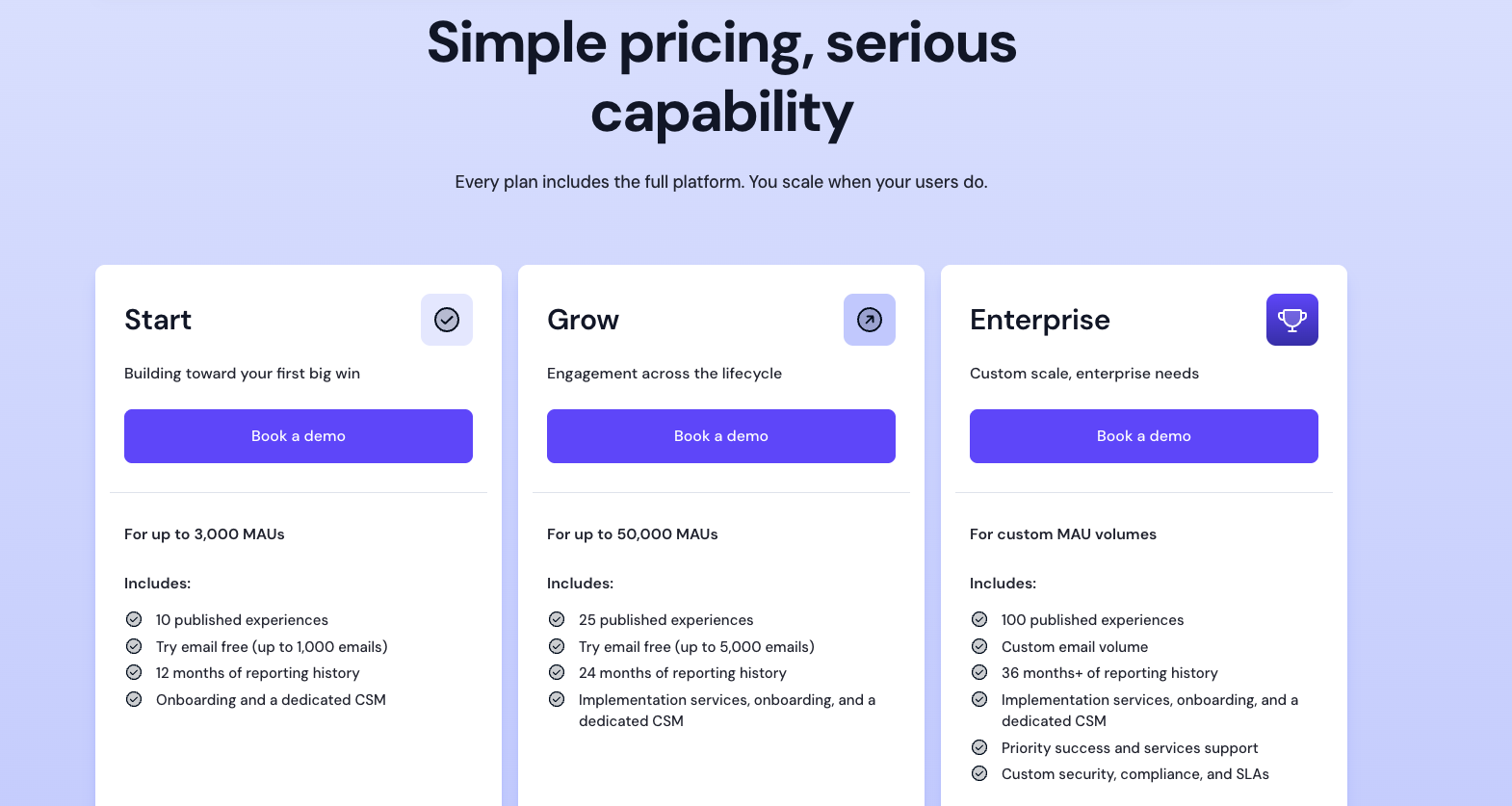
Appcues uses a different model. Pricing is based on monthly active users and number of installations, and every plan includes every experience type, feature, and integration from day one. There's no feature gating across tiers and no premium pricing for the parts of the platform that actually drive results. The structure has three tiers:
When teams ask why Appcues doesn't publish dollar amounts the way Product Fruits does, the honest answer is that pricing reflects the scope of programs teams run on the platform, including the number of installations and how cross-channel work scales over time, as outlined in our pricing plans for midsized and enterprise teams. The savings on Product Fruits' Core Plan are real, especially for small teams. The tradeoff is that Product Fruits gates important features by tier, while Appcues includes the full platform on every plan and grows by capacity rather than feature unlocks.
A quick procurement note worth knowing: Vendr intelligence (the SaaS procurement platform that tracks pricing and negotiation outcomes) shows that Appcues typically negotiates, especially as teams move into the Grow tier or enterprise tier, layer in modules, or connect add ons lists at renewal. If you're evaluating both tools, talk to sales and ask about list price compared with the discount range your procurement team is seeing on similar deals.
If your product runs on iOS, Android, or React Native, this is the part of the article that decides things for you.
Appcues offers full mobile SDKs with feature parity to its web product. You can build interactive tours, run NPS surveys, ship in-app announcements, deliver checklists, and trigger workflows inside your mobile app, with the same targeting logic as your web experience. The mobile and web tools share a single user data model, so a user who sees an onboarding flow on the web won't be re-onboarded on mobile.
Product Fruits is a web product. Their only feature that appears to work on native mobile is the Life Ring button. Everything else (interactive tours, checklists, NPS surveys, banners, the feedback widget) is web-only. There's nothing wrong with that scoping for a web-only company, but if you have a mobile app today or expect to in the next twelve months, this is a constraint that doesn't get easier with time.
For teams running mobile-first or hybrid products, Appcues is the only choice between these two platforms.
Both platforms have AI. They're optimized for different parts of the job.
Product Fruits' Elvin AI is built around speed-to-launch. Elvin generates starter tours from short prompts, drafts surveys from text descriptions, and powers a conversational layer over the built in knowledge base that helps users find answers without writing to support. The whole positioning is "AI builds it; you launch it." For teams whose biggest constraint is "we need to ship something this quarter," that focus is genuinely useful.
Appcues' AI is built around program quality. Appcues AI generates content for flows and emails, suggests audience targeting based on user behavior, drafts full interactive tours, summarizes performance data, and surfaces what to try next as part of a broader product onboarding strategy for activation and retention. It assists creation, but it also assists planning and learning, which is where most onboarding programs actually break down at scale. Appcues AI works against the broader Appcues data model, so its suggestions account for behavior across channels rather than text prompts in a single web app.
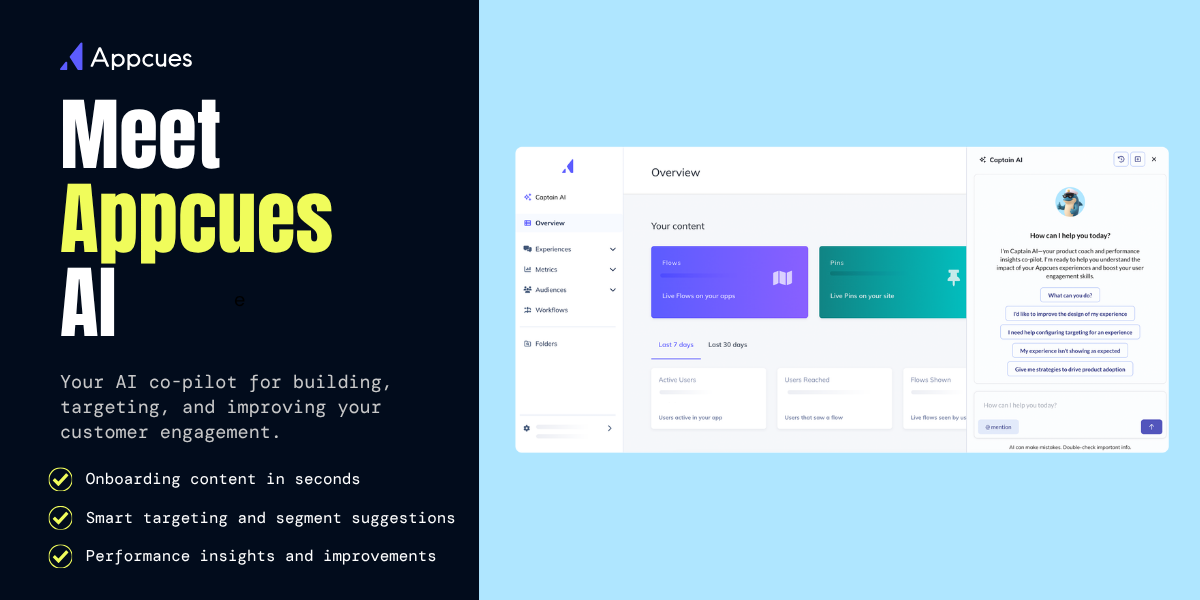
If your primary AI need is "help me launch faster," Elvin is purpose-built for that.
If your AI need is "help me run a smarter program over time," Appcues AI is built for that. Both are real values. Picking depends on which problem you're trying to solve.
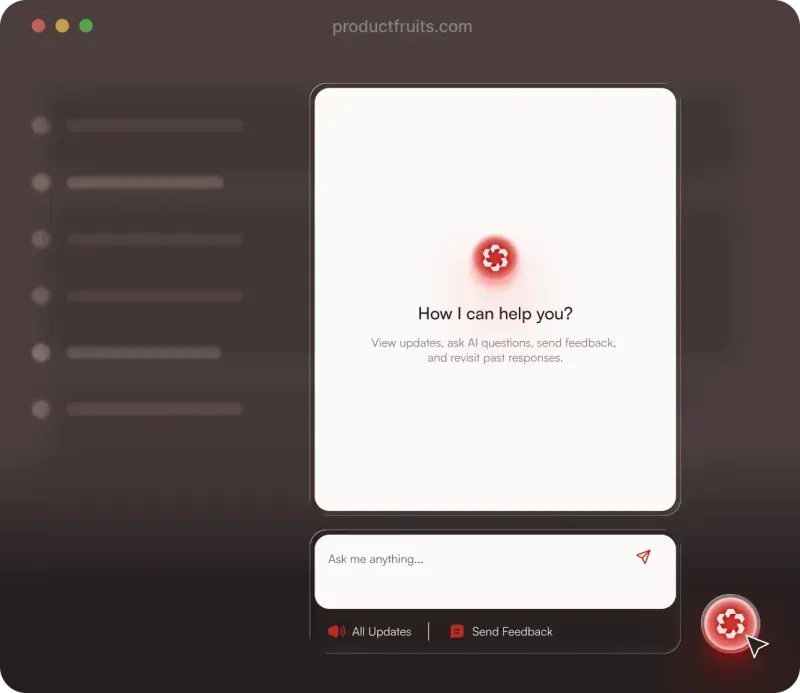
Self serve support is where Product Fruits' built in knowledge base becomes a real asset, especially for teams that haven’t invested in dedicated onboarding UX and in-app patterns yet. Their model is opinionated: a single help launcher (the Life Ring button) gives users access to articles, walkthroughs, support contact, and announcements in one place. Their AI Copilot turns the knowledge base into a conversational layer. For teams that don't already have a knowledge base, this approach gets a coherent self serve support system live without buying a separate tool.
Appcues approaches self serve support a little differently. The resource center (often built as a launchpad) sits inside your product as a persistent, customizable container for whatever's most useful: help articles, in-app onboarding guides and checklists, NPS surveys, recent updates, or links to your existing knowledge base in Zendesk, Intercom, Notion, or wherever it lives. The model assumes you may already own a knowledge base and want Appcues to surface it, not replace it. If that assumption fits, the resource center is faster to integrate. If it doesn't, you'll need a knowledge base tool layered on top of Appcues.
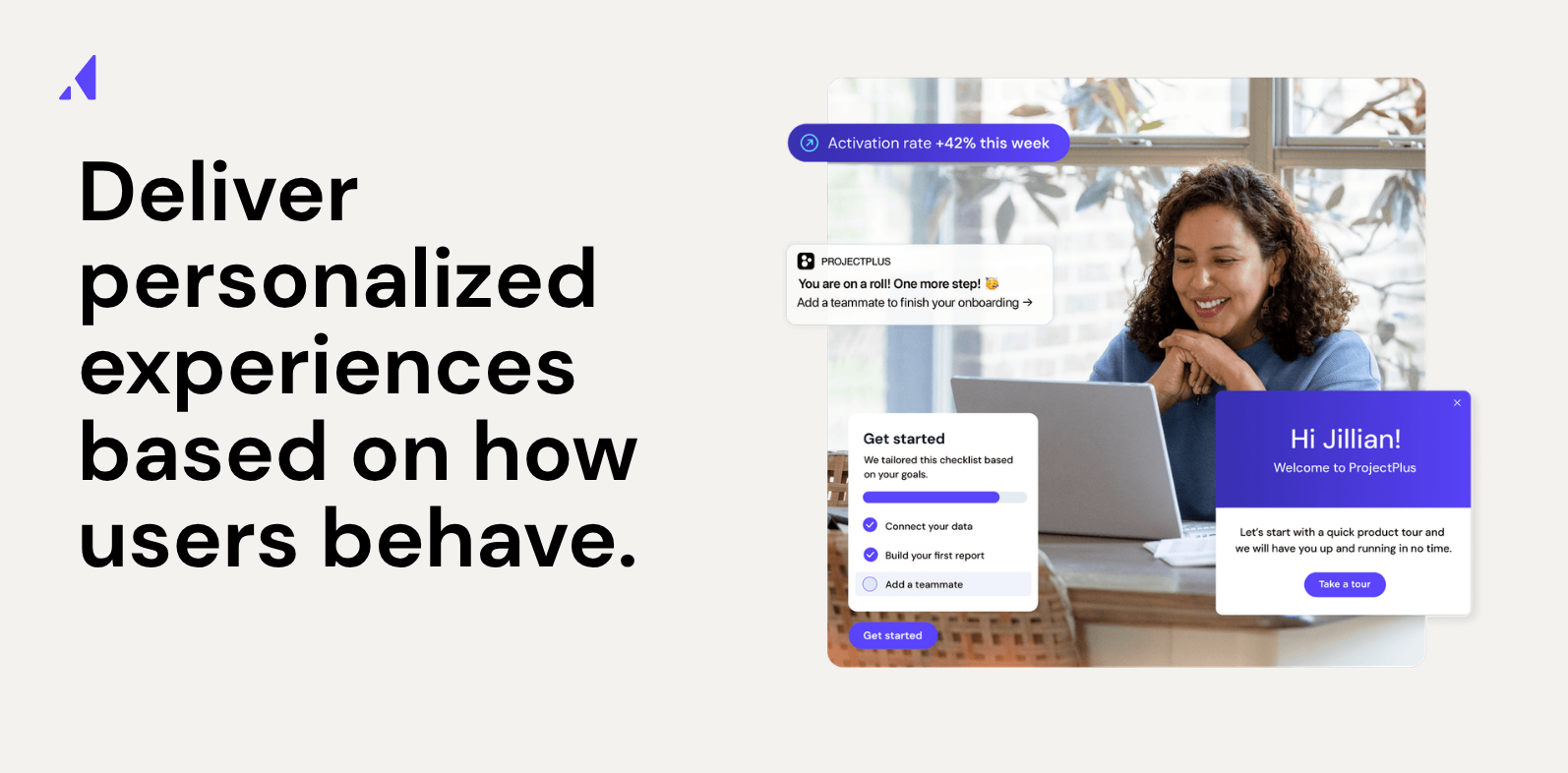
Honest take: if you don't have a knowledge base today and want one bundled with your onboarding platform, Product Fruits has a real advantage. If you already use a help center tool you're happy with, Appcues' resource center is more flexible and ties more naturally to behavior-triggered experiences.
A useful way to compare onboarding platforms is to look at where they sit across three goals: awareness (launching new features, promoting events, surfacing offers), adoption (onboarding new users, activating customers, increasing feature usage) as defined in our guide to what user onboarding is, and engagement (gathering feedback, prompting referrals, connecting users with your team).
Product Fruits is strongest in adoption: interactive tours, checklists, hints, the resource center, NPS surveys, and straightforward SaaS onboarding screen patterns. It also handles awareness through in-app announcements about new features and basic engagement through the feedback widget and surveys. Their newer use case positioning extends into adaptive onboarding, employee training, expansion, and support deflection, but all of those happen inside the web app.
Appcues spans all three goals at depth across channels. Product launches and event promotion across in-app and email, behavior-triggered onboarding flows tied to feature usage milestones inspired by effective SaaS onboarding examples, NPS surveys at high-impact moments, in-app feedback when users are most engaged, and re-engagement of lapsed users through cross-channel workflows. Marketing teams, product teams, and digital engagement teams use Appcues together, often without competing for engineering time.
If your needs map to one row of that table and one channel, either tool can work and Product Fruits will likely be cheaper. If they span multiple rows and more than one channel, Appcues earns its place.
Both platforms support core integrations with analytics tools, CRMs, and marketing platforms. Both Appcues and Product Fruits provide integration capabilities with various analytics and marketing tools, allowing users to connect their onboarding experiences with existing workflows. Integrations are essential for onboarding tools because they allow for seamless data flow between platforms, enhancing user experience and engagement.
Where Appcues pulls ahead is depth and breadth. Appcues has a broader integration ecosystem, particularly for enterprise CRM systems like Salesforce, plus deep ties into Segment, HubSpot, Mixpanel, Amplitude, Heap, and others—making it easier to plug into a broader user onboarding tool stack. Both SSO support is available, though typically at higher tiers on either platform.
For teams whose customer data lives in Salesforce, this is a quiet but important difference. Targeting an Appcues experience based on a Salesforce account property, or pushing experience completion data back into Salesforce as a custom event, is straightforward through the Appcues public API. Doing equivalent work with Product Fruits often involves more glue code or workaround.
Appcues tradeoffs. More flexibility means more decisions upfront. The platform rewards teams who get clear on goals, audiences, and metrics before they start building. The full value of Appcues compounds when teams run multiple use cases (user onboarding, plus feature adoption, plus engagement, plus mobile) on a single platform. For a team that only needs a tour builder and a single survey, Appcues is more platform than they need.
Product Fruits tradeoffs. Speed is the appeal and the ceiling. Workflows across channels aren't there. Mobile is web-only with the Life Ring exception. Analytics depth is basic analytics rather than the multi-channel reporting and goal tracking Appcues offers. Larger teams or teams expecting to scale into more sophisticated onboarding programs often outgrow Product Fruits within twelve to eighteen months.
Appcues is the better choice if you're optimizing for depth. Your team is mid-market or larger; you have a mobile app or plan to in the next year; you need cross-channel engagement across in-app, email, push, and mobile; you run multiple use cases spanning awareness, adoption, and engagement; your data lives in Salesforce or another enterprise CRM; you value strategic support from an experienced team; or you want the full platform on every plan and the ability to layer experiences over time without changing tools.
Product Fruits is the better choice if you're optimizing for speed. Your team is small or budget-constrained; your product is web-only with no mobile plans; your needs stop at simple onboarding flows and a knowledge base; you want a single tool for tours and self serve support without integrating a separate help center; or your AI needs are mostly about creating tours faster.
Both can be the right call. Picking depends less on a feature matrix than on which value your problem actually needs.
Teams that move from Product Fruits to Appcues tend to follow the same pattern.
They start by running their existing onboarding flows in Appcues alongside Product Fruits, often using Captain AI to accelerate the rebuild. They pull in their knowledge base content from a tool like Notion or Zendesk and surface it through an Appcues launchpad. They expand into email and mobile workflows once the in-app experiences are stable, often layering in best practices for in-app notifications that don’t overwhelm users. Most teams complete the migration within a quarter and use Captain AI plus the strategic team to identify which experiences to migrate first based on impact.
The honest framing for the Appcues vs Product Fruits comparison is this: they're optimizing for different things. Product Fruits is optimizing for speed-to-launch with Elvin AI doing the building, transparent pricing, and a single-channel product that's quick to set up. For small teams with a web app and a tight quarter, that focus genuinely helps.
Appcues is optimizing for program depth across awareness, adoption, and engagement, with native mobile, cross-channel workflows, advanced segmentation, deeper integrations, and Captain AI woven through planning, building, and learning. For mid-market and enterprise teams running engagement as an ongoing program rather than a one-time setup, that depth is what compounds over time.
If you're not sure which is the right fit, the easiest test is honest forecasting. Picture where your product, your team, and your engagement program will be in twelve months. If that picture is "we'll have something live and we'll iterate," speed wins. If that picture is "we'll be running multiple programs across channels and we'll need to know what's working," depth wins. Pick the platform built for the version of the work you're heading toward, not just the version you're starting with.
Product Adoption
Email Marketing
In-App Guidance & Self-Serve Support
AI
TL;DR
Product Fruits and Appcues are optimized for different problems.
Product Fruits is built for speed-to-launch with Elvin AI doing more of the building, transparent pricing starting at $111/month for 1,500 users, and a single-channel web product that's quick to set up.
Appcues is built for program depth across awareness, adoption, and engagement, with native mobile SDKs, cross-channel workflows across in-app, email, and push, advanced segmentation, broader integrations including Salesforce, and Captain AI woven through planning, building, and analysis.
Pick Product Fruits if your problem is "we need something live this quarter."
Pick Appcues if your problem is "we need this to work across channels and compound over time."
If you're searching for "Appcues vs Product Fruits," you're somewhere in the messy middle of a buying decision. Both platforms promise to help your team build product tours, run surveys, and improve product adoption without leaning on engineering. Both have loyal customers, both demo well, and both are designed to feel like the right answer in their first conversation. The harder question is which one fits where your team is now and where it's heading next.
This post is meant to make that decision easier. We'll walk through what each platform does well, where they actually diverge, what they cost in real numbers, and which kinds of teams tend to thrive on each. We're Appcues, so we have a perspective. We've also spent more than a decade in this space, and pretending Product Fruits has no merits would be both dishonest and unhelpful. Where Product Fruits is the better choice, we'll say so. Where it isn't, we'll explain why with specifics rather than spin.
Here's the framing worth holding in mind as you read: Product Fruits is built around speed. Appcues is built around depth. Both are real values. The right answer for your team depends on which one your problem actually needs.
A quick comparison table comparing Appcues and Product Fruits follows below:
We'd be doing readers a disservice if we skipped past this. Product Fruits has built a real product with a real audience, and there are circumstances where it's the better choice for a team. Specifically:
Product Fruits offers transparent pricing across three plans designed to accommodate companies at different growth stages. The Core Plan starts at $79/month for up to 1,500 users, an accessible entry point for an early-stage product team that needs to ship something this quarter without going through procurement. Their pricing scales based on monthly active users, similar to most onboarding platform pricing models, but the floor is lower than most peers.
This is one of Product Fruits' genuine differentiators in this comparison. Product Fruits includes a built in knowledge base where teams can publish help articles, organize them by category, and link them through their Life Ring button (a persistent in-app help launcher). For teams that don't already own an Intercom, Zendesk, or Notion-based knowledge base, this is a meaningful piece of the puzzle they don't have to source elsewhere. Product Fruits customers reported a 20-30% reduction in support tickets after rolling it out, with that figure climbing to 50-60% when their AI Copilot is added on top to answer user queries directly from the knowledge base content.
Product Fruits has leaned into AI hard, branding their assistant Elvin AI and positioning the entire platform around speed-to-launch with the headline "AI builds it. You launch it." and the promise of going from idea to live onboarding in under an hour. Elvin generates feature tours from short prompts, drafts surveys from text descriptions, and powers a conversational layer over the built in knowledge base that helps users find answers without writing to support. For non technical teams who want AI to do more of the building, the speed positioning is a genuine selling point.
Product Fruits now positions itself across more than first-time user onboarding. Their current site markets adaptive onboarding flows that respond to user behavior, internal employee training as a separate use case, expansion guidance for customer success teams, and support ticket deflection through Elvin. They pitch themselves as a single platform for product, customer success, support, and marketing teams. The shape of those use cases is real. The thing worth knowing is that they all happen inside a single channel: your web app. That single-channel scope is where the comparison with Appcues gets interesting.
Product Fruits ships a feedback widget that lets users send messages along with screenshots or short videos. It's a small thing that closes a real gap; most onboarding platforms collect text feedback and stop there.
Product Fruits' visual builder is approachable. Interactive tours, checklists, and surveys come together quickly, and the learning curve is shallow. For a small team with one or two people building experiences, that simplicity is a feature.
If your team is a startup with a web app, a tight budget, no mobile presence, and a use case that mostly stops at "help users get started and find help when they're stuck," Product Fruits is a credible choice. We'd rather you know that than discover it after a procurement detour.
Here's the framing that makes this comparison useful: Product Fruits is built around speed. AI does the work, your team launches faster, and the whole platform is optimized for getting something live this quarter. That's a real value, and for some teams it's the right one. Appcues is built around depth. Same use cases, broader channels, deeper segmentation, and AI that helps with planning and analysis, not just creation. Both platforms can claim multi-team support. The structural difference is what each was designed to optimize for. Here's what depth looks like in practice.
Product Fruits delivers everything inside a single channel: your web app. Appcues coordinates experiences across in-app, email, push, and mobile from one customer engagement platform for web and mobile with one set of user data. Behavior-triggered emails can re-engage lapsed users by linking them back to in-app guides. In-app announcements can highlight new features through banners or modals while a parallel email reaches users who haven't logged in for two weeks. That coordination matters once you stop thinking about onboarding as a one-time event and start thinking about engagement as an ongoing program.
Appcues offers full mobile SDK support for iOS, Android, and React Native, which means feature parity with web applications. NPS surveys, interactive tours, checklists, banners, and mobile app tooltips all work natively inside your mobile app. Product Fruits does not offer native mobile support; their only mobile-capable feature is the Life Ring button. If your company has a mobile application, Appcues is the only choice between the two platforms that supports mobile app onboarding. We'll come back to this in its own section because it's the kind of detail that quietly disqualifies one tool the moment it surfaces.
Product Fruits supports basic segmentation. Appcues supports advanced segmentation built around behavioral events, user attributes, account properties, and lifecycle stage. The difference shows up most clearly when teams want to do something specific like "show this checklist only to admins on accounts with more than five users who haven't yet enabled SSO." Both platforms can target. Targeting depth becomes the deciding factor as engagement programs mature.
Elvin AI is optimized for creation speed: generate a tour, draft a survey, answer a support question. Appcues AI is optimized for program quality across planning, execution, and learning. The same assistant that helps you draft a flow also suggests who to target, summarizes performance, and surfaces what to try next. The aim isn't to replace your team's judgment with ai powered shortcuts; it's to take the repetitive parts of the work off your hands so you can focus on what to engage users about. Appcues AI also benefits from Appcues' broader data model, which means its suggestions account for user behavior across channels, not just text prompts in a single web app.
Appcues lets teams define multi-step workflows that respond to user behavior across channels, with goals that tie experiences directly to outcomes like activation, feature adoption, or expansion, and makes it easier to track user onboarding metrics and KPIs tied to those workflows. Product Fruits doesn't offer workflow automation in the same sense. For sophisticated onboarding programs that involve more than a single linear flow, this gap matters.
Appcues has a broader integration ecosystem, particularly for enterprise CRM systems like Salesforce, with deep connections to HubSpot integration, Segment, Mixpanel, Amplitude, and Heap. Both Appcues and Product Fruits provide integration capabilities with various analytics and marketing tools, allowing users to connect their onboarding experiences with existing workflows, but Appcues' ecosystem is broader where it counts for mid-market and enterprise teams.
This one is hard to feel in a feature matrix and easy to feel after you've signed a contract. Appcues has a dedicated customer success and strategy team that works with customers on what to build, when to launch, and how to measure it. Product Fruits is a smaller company; the support is competent, but the bench is thinner.
A B2B fintech platform might use Appcues to run an in-app launchpad surfacing new features for paying users, trigger an email when activation stalls past day three, send a push notification to mobile users who haven't completed identity verification, and pull all of it back through workflow reporting tied to a single activation goal. That's one tool, one set of user data, one place to learn what's working. Captain AI accelerates each step.
Both Appcues and Product Fruits utilize a monthly active user (MAU) based pricing model, which adjusts as the user base grows and impacts overall costs significantly. As your user base expands, your costs follow, which is standard across this category but worth understanding because it's where surprises happen at renewal.
Product Fruits offers transparent pricing across four tiers: Starter, Pro, Business, and a Custom plan for teams that don't fit the standard structure. At 1,500 MAUs, the Starter plan starts at $111/month (billed annually with their 25% discount), Pro at $187/month, and Business at $374/month. The pricing slider on their site scales up to 100k+ MAUs, with monthly costs rising as MAUs grow.
One thing worth flagging: features differ across tiers in ways that matter for evaluation. Salesforce integration, SAML SSO, custom events, advanced adaptive onboarding, and several two-way integrations (Mixpanel, HubSpot, Segment) are gated to Pro or Business. The Starter plan is real but more limited than the platform's marketing suggests. The feature set you see in a demo isn't necessarily the one you'll have on the plan you sign for.
Appcues uses a different model. Pricing is based on monthly active users and number of installations, and every plan includes every experience type, feature, and integration from day one. There's no feature gating across tiers and no premium pricing for the parts of the platform that actually drive results. The structure has three tiers:
When teams ask why Appcues doesn't publish dollar amounts the way Product Fruits does, the honest answer is that pricing reflects the scope of programs teams run on the platform, including the number of installations and how cross-channel work scales over time, as outlined in our pricing plans for midsized and enterprise teams. The savings on Product Fruits' Core Plan are real, especially for small teams. The tradeoff is that Product Fruits gates important features by tier, while Appcues includes the full platform on every plan and grows by capacity rather than feature unlocks.
A quick procurement note worth knowing: Vendr intelligence (the SaaS procurement platform that tracks pricing and negotiation outcomes) shows that Appcues typically negotiates, especially as teams move into the Grow tier or enterprise tier, layer in modules, or connect add ons lists at renewal. If you're evaluating both tools, talk to sales and ask about list price compared with the discount range your procurement team is seeing on similar deals.
If your product runs on iOS, Android, or React Native, this is the part of the article that decides things for you.
Appcues offers full mobile SDKs with feature parity to its web product. You can build interactive tours, run NPS surveys, ship in-app announcements, deliver checklists, and trigger workflows inside your mobile app, with the same targeting logic as your web experience. The mobile and web tools share a single user data model, so a user who sees an onboarding flow on the web won't be re-onboarded on mobile.
Product Fruits is a web product. Their only feature that appears to work on native mobile is the Life Ring button. Everything else (interactive tours, checklists, NPS surveys, banners, the feedback widget) is web-only. There's nothing wrong with that scoping for a web-only company, but if you have a mobile app today or expect to in the next twelve months, this is a constraint that doesn't get easier with time.
For teams running mobile-first or hybrid products, Appcues is the only choice between these two platforms.
Both platforms have AI. They're optimized for different parts of the job.
Product Fruits' Elvin AI is built around speed-to-launch. Elvin generates starter tours from short prompts, drafts surveys from text descriptions, and powers a conversational layer over the built in knowledge base that helps users find answers without writing to support. The whole positioning is "AI builds it; you launch it." For teams whose biggest constraint is "we need to ship something this quarter," that focus is genuinely useful.
Appcues' AI is built around program quality. Appcues AI generates content for flows and emails, suggests audience targeting based on user behavior, drafts full interactive tours, summarizes performance data, and surfaces what to try next as part of a broader product onboarding strategy for activation and retention. It assists creation, but it also assists planning and learning, which is where most onboarding programs actually break down at scale. Appcues AI works against the broader Appcues data model, so its suggestions account for behavior across channels rather than text prompts in a single web app.
If your primary AI need is "help me launch faster," Elvin is purpose-built for that.
If your AI need is "help me run a smarter program over time," Appcues AI is built for that. Both are real values. Picking depends on which problem you're trying to solve.
Self serve support is where Product Fruits' built in knowledge base becomes a real asset, especially for teams that haven’t invested in dedicated onboarding UX and in-app patterns yet. Their model is opinionated: a single help launcher (the Life Ring button) gives users access to articles, walkthroughs, support contact, and announcements in one place. Their AI Copilot turns the knowledge base into a conversational layer. For teams that don't already have a knowledge base, this approach gets a coherent self serve support system live without buying a separate tool.
Appcues approaches self serve support a little differently. The resource center (often built as a launchpad) sits inside your product as a persistent, customizable container for whatever's most useful: help articles, in-app onboarding guides and checklists, NPS surveys, recent updates, or links to your existing knowledge base in Zendesk, Intercom, Notion, or wherever it lives. The model assumes you may already own a knowledge base and want Appcues to surface it, not replace it. If that assumption fits, the resource center is faster to integrate. If it doesn't, you'll need a knowledge base tool layered on top of Appcues.
Honest take: if you don't have a knowledge base today and want one bundled with your onboarding platform, Product Fruits has a real advantage. If you already use a help center tool you're happy with, Appcues' resource center is more flexible and ties more naturally to behavior-triggered experiences.
A useful way to compare onboarding platforms is to look at where they sit across three goals: awareness (launching new features, promoting events, surfacing offers), adoption (onboarding new users, activating customers, increasing feature usage) as defined in our guide to what user onboarding is, and engagement (gathering feedback, prompting referrals, connecting users with your team).
Product Fruits is strongest in adoption: interactive tours, checklists, hints, the resource center, NPS surveys, and straightforward SaaS onboarding screen patterns. It also handles awareness through in-app announcements about new features and basic engagement through the feedback widget and surveys. Their newer use case positioning extends into adaptive onboarding, employee training, expansion, and support deflection, but all of those happen inside the web app.
Appcues spans all three goals at depth across channels. Product launches and event promotion across in-app and email, behavior-triggered onboarding flows tied to feature usage milestones inspired by effective SaaS onboarding examples, NPS surveys at high-impact moments, in-app feedback when users are most engaged, and re-engagement of lapsed users through cross-channel workflows. Marketing teams, product teams, and digital engagement teams use Appcues together, often without competing for engineering time.
If your needs map to one row of that table and one channel, either tool can work and Product Fruits will likely be cheaper. If they span multiple rows and more than one channel, Appcues earns its place.
Both platforms support core integrations with analytics tools, CRMs, and marketing platforms. Both Appcues and Product Fruits provide integration capabilities with various analytics and marketing tools, allowing users to connect their onboarding experiences with existing workflows. Integrations are essential for onboarding tools because they allow for seamless data flow between platforms, enhancing user experience and engagement.
Where Appcues pulls ahead is depth and breadth. Appcues has a broader integration ecosystem, particularly for enterprise CRM systems like Salesforce, plus deep ties into Segment, HubSpot, Mixpanel, Amplitude, Heap, and others—making it easier to plug into a broader user onboarding tool stack. Both SSO support is available, though typically at higher tiers on either platform.
For teams whose customer data lives in Salesforce, this is a quiet but important difference. Targeting an Appcues experience based on a Salesforce account property, or pushing experience completion data back into Salesforce as a custom event, is straightforward through the Appcues public API. Doing equivalent work with Product Fruits often involves more glue code or workaround.
Appcues tradeoffs. More flexibility means more decisions upfront. The platform rewards teams who get clear on goals, audiences, and metrics before they start building. The full value of Appcues compounds when teams run multiple use cases (user onboarding, plus feature adoption, plus engagement, plus mobile) on a single platform. For a team that only needs a tour builder and a single survey, Appcues is more platform than they need.
Product Fruits tradeoffs. Speed is the appeal and the ceiling. Workflows across channels aren't there. Mobile is web-only with the Life Ring exception. Analytics depth is basic analytics rather than the multi-channel reporting and goal tracking Appcues offers. Larger teams or teams expecting to scale into more sophisticated onboarding programs often outgrow Product Fruits within twelve to eighteen months.
Appcues is the better choice if you're optimizing for depth. Your team is mid-market or larger; you have a mobile app or plan to in the next year; you need cross-channel engagement across in-app, email, push, and mobile; you run multiple use cases spanning awareness, adoption, and engagement; your data lives in Salesforce or another enterprise CRM; you value strategic support from an experienced team; or you want the full platform on every plan and the ability to layer experiences over time without changing tools.
Product Fruits is the better choice if you're optimizing for speed. Your team is small or budget-constrained; your product is web-only with no mobile plans; your needs stop at simple onboarding flows and a knowledge base; you want a single tool for tours and self serve support without integrating a separate help center; or your AI needs are mostly about creating tours faster.
Both can be the right call. Picking depends less on a feature matrix than on which value your problem actually needs.
Teams that move from Product Fruits to Appcues tend to follow the same pattern.
They start by running their existing onboarding flows in Appcues alongside Product Fruits, often using Captain AI to accelerate the rebuild. They pull in their knowledge base content from a tool like Notion or Zendesk and surface it through an Appcues launchpad. They expand into email and mobile workflows once the in-app experiences are stable, often layering in best practices for in-app notifications that don’t overwhelm users. Most teams complete the migration within a quarter and use Captain AI plus the strategic team to identify which experiences to migrate first based on impact.
The honest framing for the Appcues vs Product Fruits comparison is this: they're optimizing for different things. Product Fruits is optimizing for speed-to-launch with Elvin AI doing the building, transparent pricing, and a single-channel product that's quick to set up. For small teams with a web app and a tight quarter, that focus genuinely helps.
Appcues is optimizing for program depth across awareness, adoption, and engagement, with native mobile, cross-channel workflows, advanced segmentation, deeper integrations, and Captain AI woven through planning, building, and learning. For mid-market and enterprise teams running engagement as an ongoing program rather than a one-time setup, that depth is what compounds over time.
If you're not sure which is the right fit, the easiest test is honest forecasting. Picture where your product, your team, and your engagement program will be in twelve months. If that picture is "we'll have something live and we'll iterate," speed wins. If that picture is "we'll be running multiple programs across channels and we'll need to know what's working," depth wins. Pick the platform built for the version of the work you're heading toward, not just the version you're starting with.

Sign up for Quickcues and get our monthly updates!
.svg)