.png)
.png)

Product adoption is not just about user growth - it is the key to long-term retention and sustainable revenue. In this guide, you will learn how to measure adoption with 12 essential metrics, organize them using a four-part framework (breadth, depth, timing, and duration), and drive continuous improvement. You will also learn where the product adoption curve fits in, common measurement mistakes to avoid, and real-world examples of companies that got it right.
Most product teams track dozens of metrics. Dashboards light up with MAU counts, session times, and feature clicks. But when leadership asks, "Are users actually adopting this product?" - the room goes quiet.
That is because raw usage data and true product adoption are not the same thing. Adoption means users have chosen your product as their go-to solution, not just that they logged in once or clicked around during a free trial. And measuring it well requires knowing which signals actually predict retention, expansion, and long-term revenue.
Get this wrong and you are flying blind. Teams that do not track the right adoption metrics miss early churn signals, invest engineering resources in features nobody uses, and lose winnable accounts to competitors who simply onboarded users faster. Product adoption is a process that unfolds in stages, and if you are not measuring each stage, you cannot optimize it.
This guide is for product managers tracking activation rates and time-to-value, and for growth and marketing teams connecting product behavior to pipeline and revenue outcomes. You will get 12 specific metrics to measure, a framework for organizing them, a breakdown of the product adoption curve, step-by-step measurement guidance, improvement tactics, common mistakes, and real-world examples to benchmark against.
Product adoption metrics are the specific measurements that tell you whether users are moving from initial signup to habitual, value-driven usage of your product. They go beyond surface-level engagement data (like page views or login counts) to capture the behavioral signals that actually predict whether someone will stick around.
Think of it this way: user acquisition metrics tell you how many people showed up. Engagement metrics tell you what they clicked on. Product adoption metrics tell you whether they found enough value to make your product part of their workflow.
What falls under the adoption metrics umbrella:
What does not count as adoption: raw signup numbers, total page views, or vanity metrics like "registered users" that do not distinguish between someone who signed up and never came back versus someone who uses your product daily.
A common misconception is that adoption equals signup count. A SaaS product with 10,000 signups and a 15% activation rate has a very different adoption story than one with 3,000 signups and a 60% activation rate. The second product is winning the adoption game, even though the first has more users on paper.
The 12 metrics in this guide cover the full adoption spectrum, from initial conversion through long-term retention and expansion.
Adoption metrics are leading indicators. By the time churn shows up in your monthly report, the damage happened weeks or months ago. Adoption metrics catch the warning signs early, while you still have time to act.
Here is what strong adoption measurement enables:
For product managers: Adoption metrics reveal which features drive stickiness and where users get stuck. If your activation rate drops after a redesign, you know immediately. If a new feature has low adoption depth but high satisfaction among the users who do find it, that is a discovery problem, not a value problem. These signals let you prioritize roadmap decisions with behavioral evidence instead of guesswork.
For growth and marketing teams: Adoption metrics connect product behavior to pipeline and revenue outcomes. When you can show that users who complete three key actions in their first week have 2x higher lifetime value, you can build campaigns and onboarding sequences around those specific actions. Adoption data turns "we think onboarding matters" into "users who finish onboarding convert to paid at 40% versus 12% for those who do not."
For the business: Companies that track adoption metrics closely tend to spot churn risks earlier, identify expansion opportunities faster, and allocate resources more effectively. When you know that your time-to-value is 14 days but your trial is only 7, you have found a structural problem worth fixing. When you see that enterprise users adopt deeply but SMB users plateau after one feature, you know where to invest in onboarding.
Adoption is not a passive measurement exercise. It is active, campaign-driven work. Tracking these metrics is the first step toward building the in-app experiences, targeted messages, and personalized journeys that move users from signup to "I cannot work without this."
To improve product adoption, you will need to measure it over time by identifying the metrics that make the most sense for your product. Here are 12 metrics you should start with to get a real feel for how your product is doing.
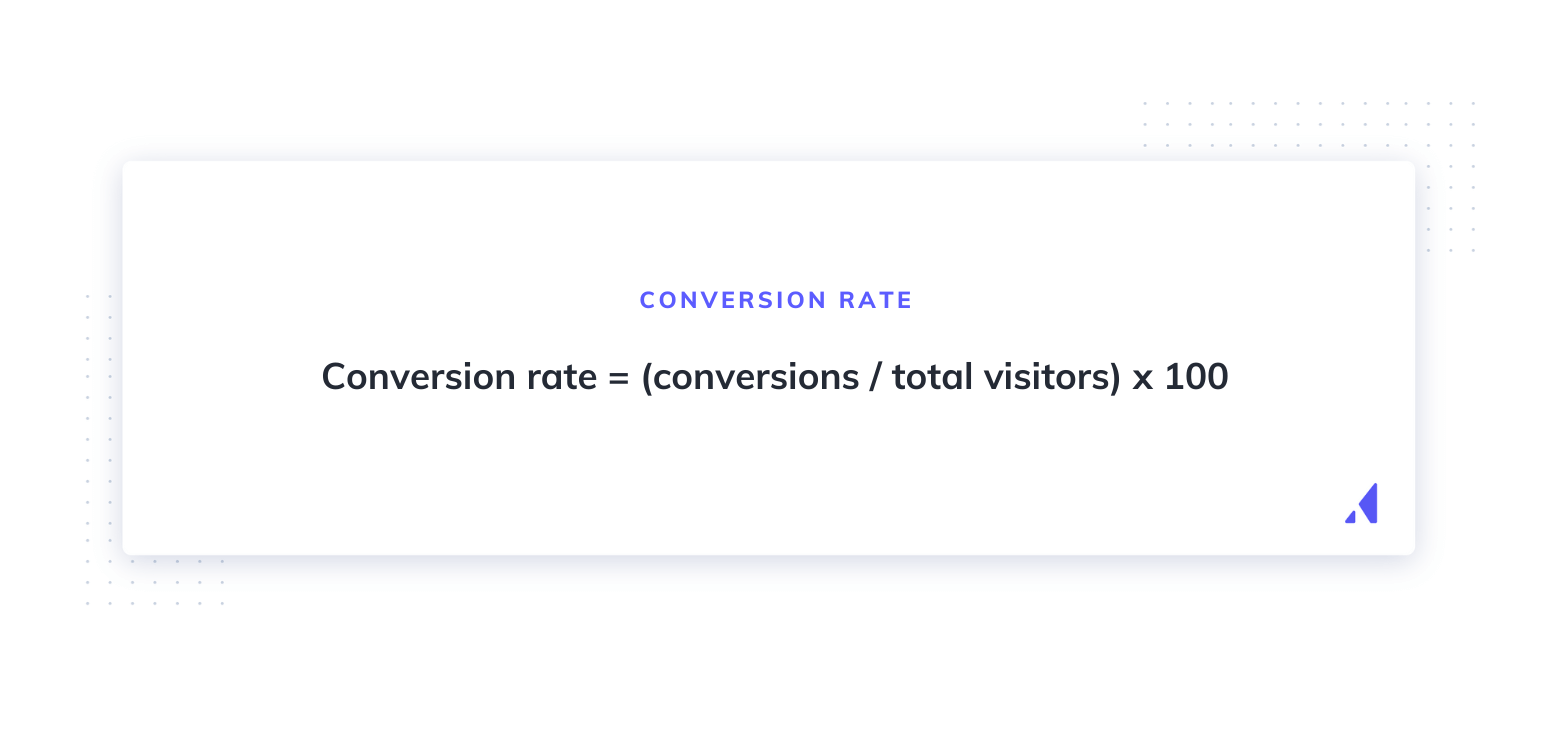
Your conversion rate measures how many people "look at your product" versus "begin using your product." Your "total visitors" will vary based on how you define a conversion: it could be everyone who signs up for a free trial, clicks on an ad, or becomes a paying customer.
For example, if your free trial conversion rate is low, that means users do not see the value or it is taking too long to show them that value. A B2B SaaS product with a free trial conversion rate of 15-25% is generally performing well, while anything below 10% suggests significant friction in the trial experience.
Adoption rate measures the percentage of your total user base that has adopted a specific feature or product capability. The formula is straightforward:
Adoption rate = (Number of users who used the feature / Total number of users) x 100
This metric helps you identify features that suffer from adoption friction. Maybe users were not aware of that feature or it took too long for them to adopt it, and they gave up. In any case, the product adoption rate will show you the breadth of adoption for that feature so that you can take steps to shore up poorly performing features.
For example, if you launch a new reporting dashboard and see a 12% adoption rate after 30 days, that is a red flag. Compare it against your average feature adoption rate to determine whether the issue is awareness, usability, or relevance.
Time to value is the amount of time it takes for a user to experience the core value of your product after signing up. It measures the period between initial user interaction and the moment they reach their aha moment - when the product's value becomes clear.
How you define that tipping point will depend on your product. It could be using your product 3 times or setting up a customer profile. Search through your product usage metrics, figure out a leading activation indicator, and use that to start measuring time to value.
For a project management tool, TTV might be "time from signup to creating and sharing a first project with a teammate." For an analytics platform, it might be "time from signup to building a first dashboard." The more precisely you define it, the more actionable the metric becomes.

Activation rate measures the percentage of users who complete a key action that signals they have experienced initial value - often called the "aha" moment.
Just as you need to measure the time to value, you should also measure how successful you are at getting them to achieve your activation event. Making your time to value only 30 seconds is fantastic, but if you are only getting 40% of your users to complete your activation event, you still have a lot of work to do.
If your activation rate is low, retool your onboarding flow to encourage users to activate. You need to motivate users by making your onboarding simple, displaying their progress, and rewarding their effort in any way you can. Do all this, and you will see activation rates heading in the right direction soon enough.
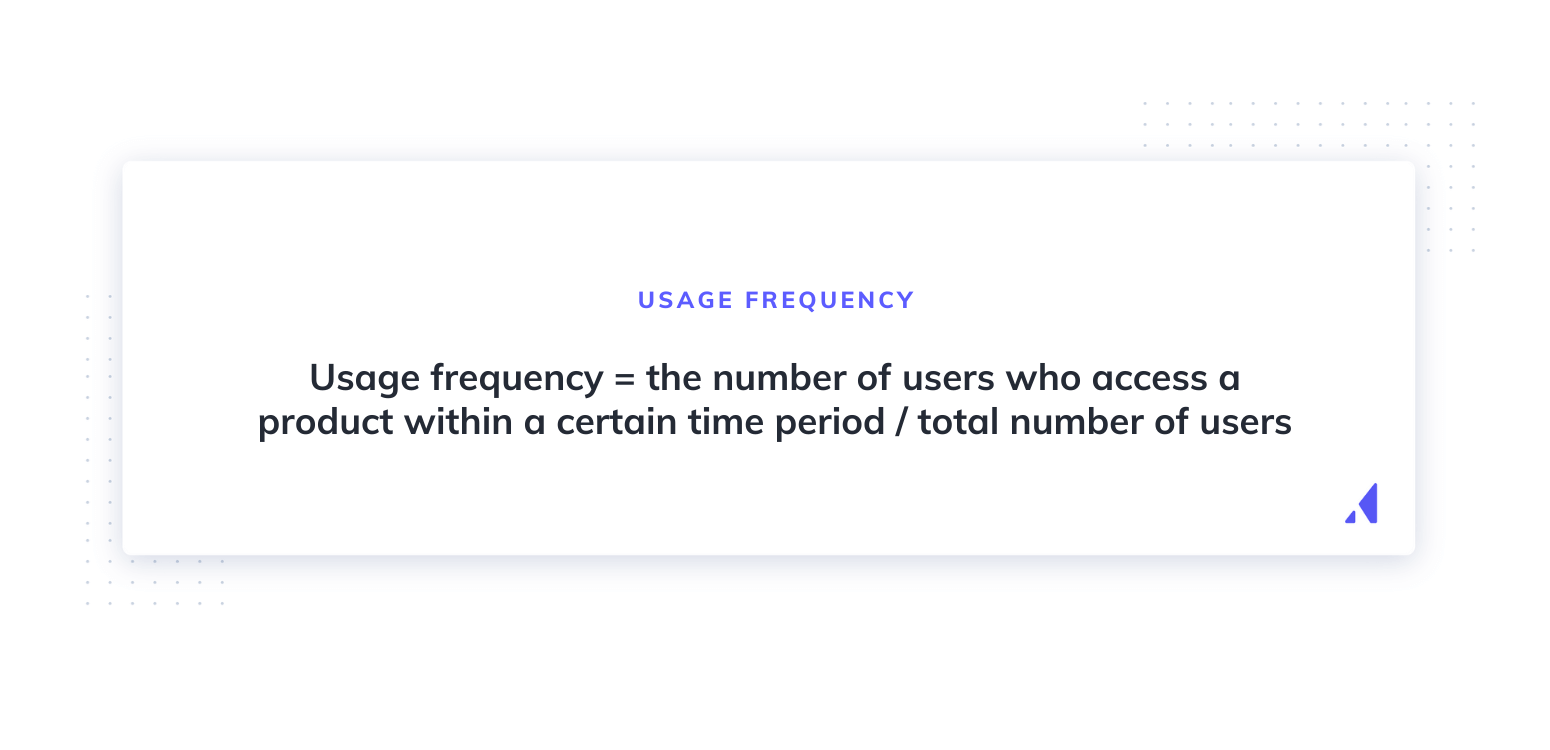
Usage frequency tracks how often users return to your product after completing their initial onboarding. It reflects ongoing engagement and helps you understand whether users continue to find value - even after reaching their initial "aha" moment. Usually, usage frequency is measured after your users complete their initial onboarding phase.
Look at your Daily Active Users (DAUs), Weekly Active Users (WAUs), or Monthly Active Users (MAUs) as a percentage of the total users to see your product's usage frequency. By looking at usage frequency, you can identify users who may lack product knowledge and need additional support to stick around.
A DAU/MAU ratio above 20% is generally considered strong for most B2B SaaS products, indicating that a meaningful portion of your monthly users are coming back daily.
Churn rate measures the percentage of customers who stop using your product over a given time period. It helps you track user retention and identify how well you are maintaining long-term engagement and satisfaction.
Users leave products all the time. It is a natural part of the user life cycle - but that does not mean you should not be doing everything you can to slow or stop churn. Churn can be measured in a number of ways, and one of the best is simply to look at the percentage of customer churn. Essentially, this metric tells you what percentage of your customers are leaving compared to your total customer base.
Track your churn rates monthly to see how well your long-term user adoption strategies are working. If you are chipping away at friction points and improving feature flows, you will see that churn line improve over time.
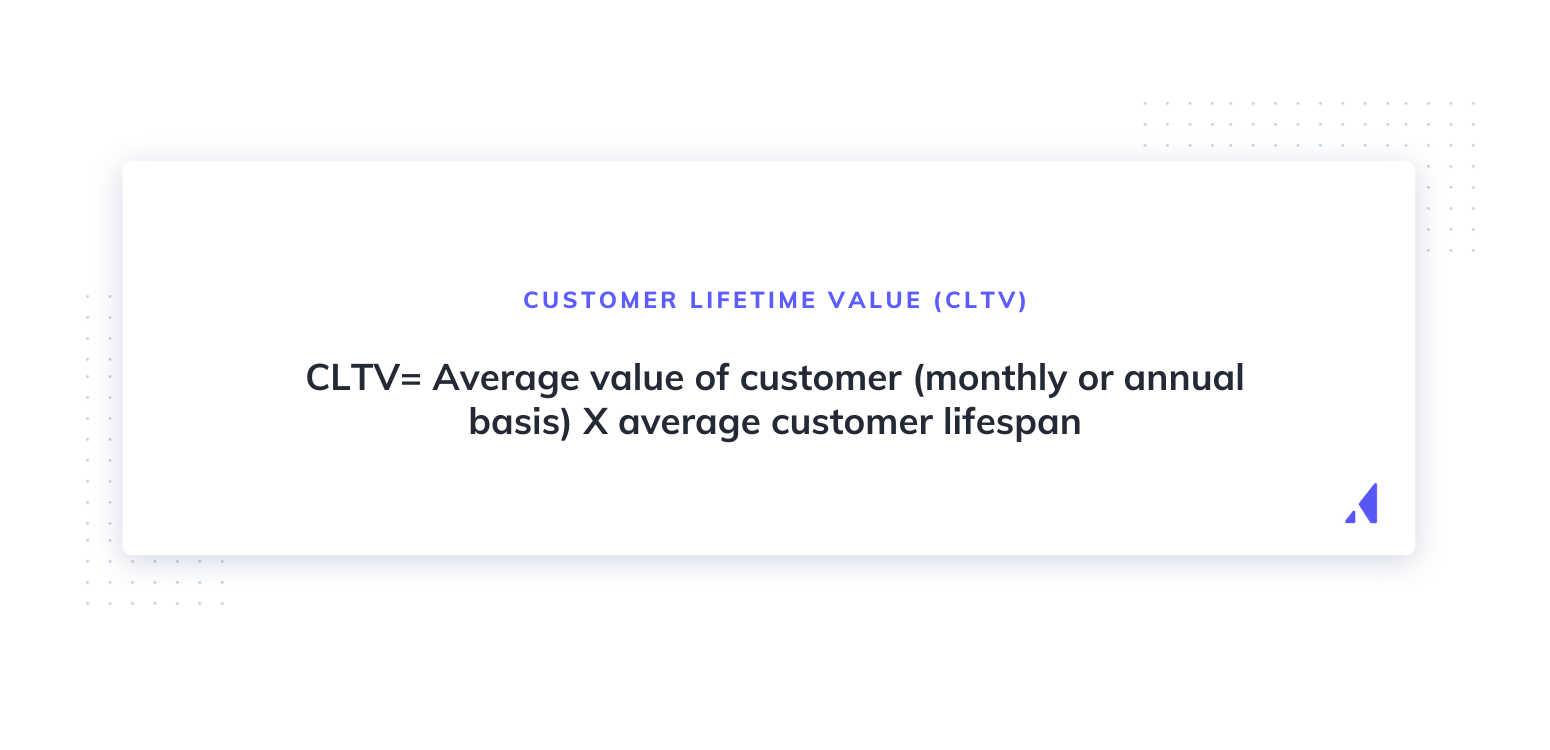
Customer Lifetime Value (CLTV) estimates the total revenue a business can expect from a single customer over the course of their relationship. It reflects long-term product adoption and is a key metric for assessing the overall health and profitability of your user base.
When user adoption metrics trend in the right direction for SaaS products, the average value of a customer over their lifetime goes up as they stick around longer. For that reason, tracking CLTV is a high-level way of making sure your product adoption game is still going strong.
CLTV is a broad metric that accounts for many factors, one of which is product adoption. PMs should not take this metric as gospel, as a high CLTV could hide other lingering issues in the funnel. However, CLTV is great for getting buy-in from other stakeholders as it demonstrates how user adoption tracking and optimizations benefit the bottom line.
Average session duration measures how long users stay active in your product during a single session. It helps you gauge user engagement and whether your product experience encourages deeper or more sustained use over time.
Many SaaS products are built on attention. The more they can keep users logged in and using their product, the better they are doing their jobs. Average session duration measures how well your product engages users and encourages them to come back for longer and longer sessions.
Consider the goal of your product when evaluating average session duration. If you are trying to save users' time, a longer session duration might not be a positive indicator. Instead, set a target session duration and use that to measure success. For a task automation tool, shorter sessions with higher task completion rates might be the better signal.
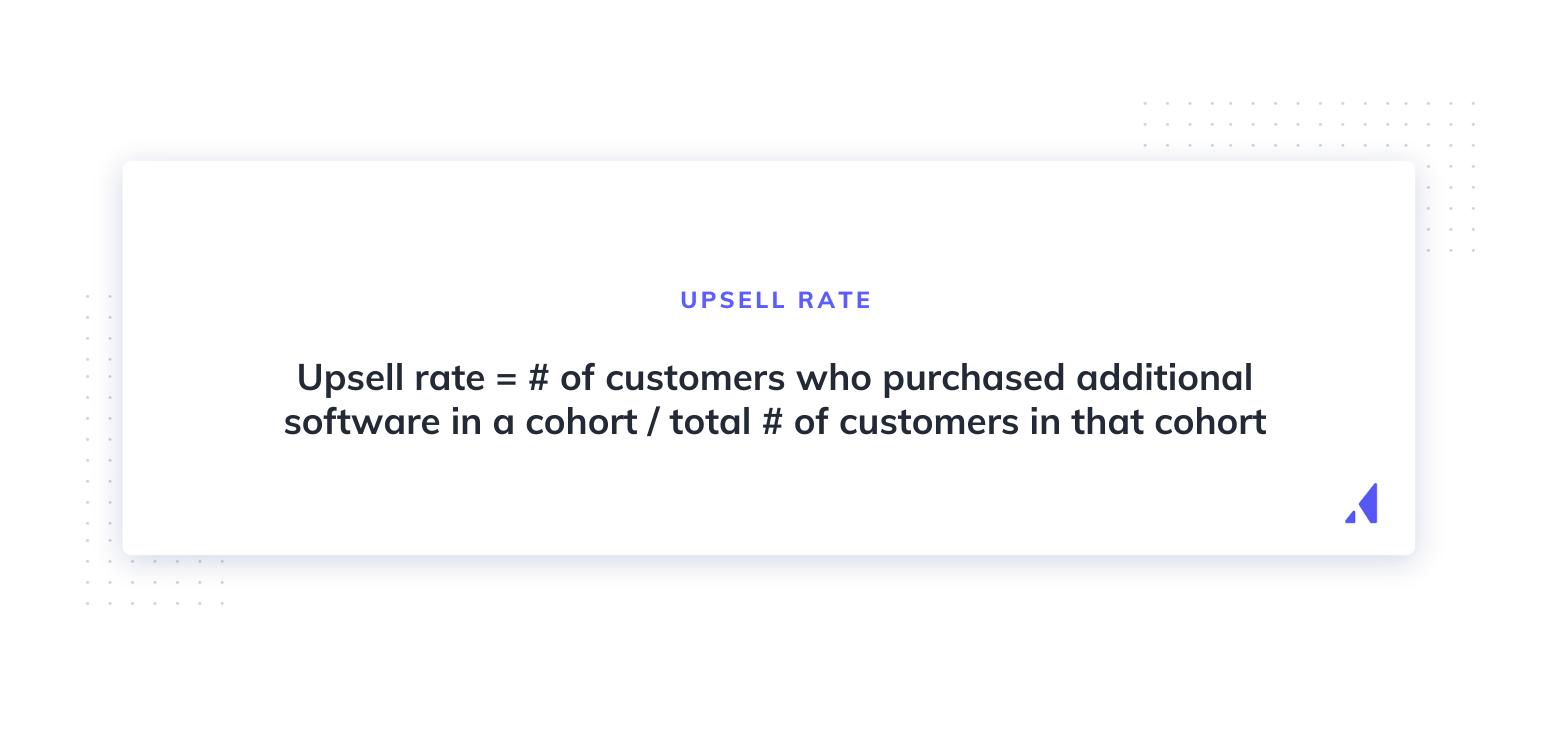
Upsell rate measures the percentage of users who upgrade to a higher-tier plan or purchase additional features. It indicates how well your product drives continued value and deeper adoption among existing users.
People do not upgrade or upsell if they are not hooked on what you have to offer. For this reason, your upsell rate indicates how well you have gotten those users to buy into your product and its vision.
The best way to use your upsell rate metric is to look at it by user segment. With that data, it becomes clear which user groups are adopting your product the most. Study what is working with these groups to improve upsell metrics or change things up for lower-performing segments to get them caught up.
Net Promoter Score (NPS) measures how likely users are to recommend your product to others. It reflects customer loyalty and is a strong indicator of whether users have fully adopted and embraced your product.
Regular people do not recommend products they are just lukewarm about. If you are going to recommend a friend or colleague use something, it is probably a tool you are 100% sold on as the best solution for that problem. In other words, that person has completely adopted that product and is now urging others to adopt it too.
NPS scores are one way to measure how well your product is getting people to this level of product adoption. The best part is that NPS is usually measured right after the user finishes using your product. This means their opinion is fresh and gives you a real insight into how good your most important or new features really are.
Customer Satisfaction (CSAT) measures how satisfied users are with your product, typically through short surveys scored on a scale (e.g., 1 to 5). It captures user sentiment and helps assess whether the experience meets expectations after key interactions.
CSAT surveys are short questionnaires that measure user sentiment on a scale of 1 to 5. The scores are then collected to see how satisfied your customers are with your product - this makes it ideal for taking the pulse of users after they have finished your onboarding process or other important flows.
Other adoption metrics on this list measure product usage but fail to understand sentiment. Do users actually like your product? Did they enjoy using it? CSAT gives you that info so you can work on mapping out a more user-friendly product with a better overall experience.
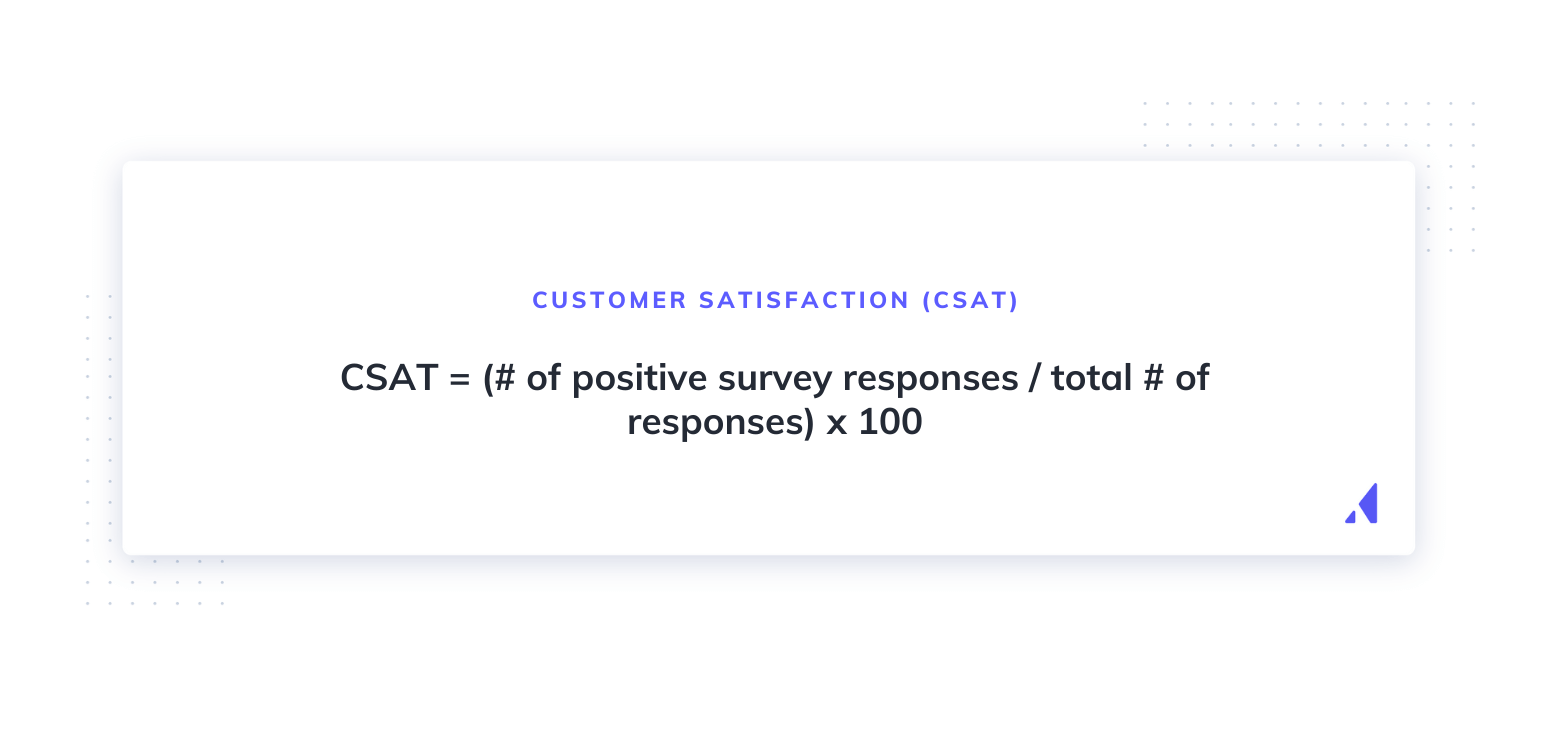
Customer tickets by feature tracks the volume and nature of support requests tied to specific product features. A spike in tickets for a particular feature often signals usability issues, confusing UI, or missing documentation - all of which directly impact adoption.
This metric is the qualitative complement to your quantitative adoption data. If a feature has a high adoption rate but also generates a high volume of support tickets, users are trying to use it but struggling. If tickets are low and adoption is also low, users may not even know the feature exists.
Review ticket trends weekly by feature to catch adoption blockers early. Pay special attention to tickets that come in during the first week after a feature launch, as these often reveal gaps in your onboarding or in-app guidance.
The best product adoption metrics help you understand four key things:
Every product is different, so your adoption metrics should be tailored to reflect your unique customer journey and business goals. By aligning your metrics with this four-part framework - breadth, depth, timing, and duration of adoption - you will gain clearer insights into user behavior and where to optimize.
The sections below break down each of these dimensions and suggest the most relevant metrics for tracking them. Once you identify the right fit, you will be better equipped to guide more users to their "aha moment" - and keep them coming back.
Breadth of adoption refers to how widely your product has been adopted across your customer base. If people are not using the product regularly or not using it as expected, they likely will not benefit from it and will be more likely to churn.
Determine the ideal usage frequency for your product: how often do people need to use it within a time frame for the product to be valuable? Then look at your total user base and break down the number of users who are DAUs, WAUs, or MAUs. Note how many users meet your ideal frequency and how many do not fall into any category. People in the latter group probably have not reached their "aha moment" yet.
For example, a CRM tool might define ideal breadth as "at least 80% of licensed users logging in weekly." If only 45% meet that bar, you know nearly half your user base is at risk.
Metrics to track breadth of adoption:
Strong product adoption often results from helpful features users cannot live without. Figure out which features are driving adoption - as well as which are not - by identifying those with the most traction.
While a good percentage of your users may be DAUs, some users within that group might not use a key feature. Also, if users only touch one feature (out of many), that may indicate a weak depth of adoption.
Weak product adoption depth causes issues with a feature's relevance, difficulty in use, or lack of overall user engagement. For instance, if your analytics platform has 8 core features but the average user only engages with 2, that is a depth problem worth investigating.
Metrics to track depth of adoption:
Timing is everything when it comes to product adoption. Users who fail to see value quickly may switch to another product.
This can also hold true when you roll out a new feature and users take too long to adopt it because they miss an opportunity to see additional value from your product. It can also indicate user frustration if they "cannot figure something out" (which could be due to UI/UX issues).
Metrics to track time to adopt:
You may discover that users adopt a product quickly (an amazing onboarding experience can help!) but then lose interest over time. Duration shows if users continue to see value beyond the initial novelty.
When the duration of product adoption is low, it may mean that your product needs a refresh or that users prefer emerging competitor products. Either way, if the duration of adoption is low and you cannot increase it, users will likely churn over time. Track duration by looking at 30-, 60-, and 90-day retention cohorts to see exactly when drop-off happens.
Metrics to track duration of adoption:
The product adoption curve, based on Everett Rogers' diffusion of innovations model, describes how different segments of your user base adopt new products or features over time. Understanding where your users fall on this curve helps you tailor your adoption strategy to each group.
The five user types on the adoption curve:
The critical gap between early adopters and the early majority is what Geoffrey Moore calls "crossing the chasm." This is where many products stall. Your innovators and early adopters loved your product, but the early majority needs a different value proposition: reliability, ease of use, and social proof.
Different adoption metrics matter at different stages of this curve. Early on, focus on activation rate and time-to-value to ensure new users find value quickly. During growth, shift attention to usage frequency and feature adoption to deepen engagement. At maturity, churn rate and NPS become your primary signals for sustaining adoption over the long term.
To measure product adoption, track key user actions and engagement over time using product analytics tools. The goal is to understand how users interact with your product - especially during onboarding, feature discovery, and long-term usage.
Here is how to set up a reliable measurement plan:
Determine the specific user actions that align with each metric. For example:
In practice, a project management tool might track events like "created_first_project," "invited_team_member," and "completed_first_task" as the activation sequence. Map out the 3-5 events that most strongly correlate with long-term retention for your product.
Use a product analytics platform (like Amplitude, Heap, or your own data warehouse) to track behavior inside your product. You can also incorporate:
The key is connecting these sources so you can correlate product behavior with business outcomes. For instance, linking your analytics platform to your billing system lets you answer questions like "Do users who adopt Feature X in their first week have higher CLTV?"
Choose a reporting frequency that matches the natural pace of change for each metric:
Tip: Some metrics (like TTV) need longer timelines to show meaningful movement - do not over-report them too early. A SaaS company that reduced its reporting frequency for TTV from weekly to monthly found that the data became far more actionable because noise was filtered out.
Once you have collected your data:
The goal is to turn behavior into insight - and insight into action. Tools like Appcues' AI Growth Analyst can surface patterns in your adoption data and suggest specific improvement areas, making stakeholder reviews more focused and productive. With the right tracking setup and cadence, your adoption metrics become a roadmap for driving user success and business growth.
You are tracking product adoption metrics and have results to analyze - great! Now what? Ask yourself, "How can I help users better understand or use this product?" Here are several winning tactics you can try to increase overall product adoption.
Not all users will discover the value of your product on their own. A great onboarding can hold the hands of those users to show them exactly what they would be missing if they choose to walk away from your product.
If your metrics show that users are not activating or even completing onboarding, you need to revamp your onboarding to reduce time to value and improve overall customer satisfaction. That way, customers will not get stuck in onboarding and churn before you have even had a chance to win them over.
Common elements of a great user onboarding experience include:
Check out these 10 great user onboarding examples for inspiration.
Users may not even realize new features are available. Do not expect users to read your product release notes and learn about new features on their own. Instead, use in-app messaging and announcements to alert users about new features.
Feature announcements can direct users to other resources, such as videos or blog posts, which explain the feature in more detail. Teach users about the value of these new features, and they will be more likely to embrace them in the product.
Check out our guide to improving feature adoption through in-app messaging.
What about those "infrequent" users who do not open your app often enough to be aware of new features or other changes? Email is an easy way to stay connected with these users and improve their product adoption.
You can also use emails to remind users of your product's value, offer tips and tricks, and make users aware of new product features. These messages can help improve usage frequency by encouraging people to return to your product.
Your product launch strategy should feature not just one but a series of emails to build momentum around new features to get users committing to your product from Day 1.
Even teams that commit to tracking adoption metrics can fall into traps that undermine their data. Here are four common mistakes and how to fix them.
It is tempting to report on MAU counts or total signups because the numbers look impressive. But these metrics do not tell you whether users are actually adopting your product. A growing MAU count can mask a leaky bucket where new users sign up, poke around, and never come back.
The fix: Define your activation event first, then measure the rate of completion. "500 users completed onboarding this month" is more actionable than "5,000 users signed up."
Many teams start tracking adoption metrics before they have agreed on what activation looks like for their product. Without a clear definition, every team member has a different mental model of success, and the data becomes meaningless.
The fix: Map the specific actions that correlate with long-term retention. Run a cohort analysis to find which behaviors in the first 7-14 days predict 90-day retention. Those behaviors are your activation events.
A user who logs in 10 times in their first week but never completes a meaningful action has not adopted your product. Raw usage counts can create a false sense of security when users are actually churning in slow motion.
The fix: Measure the time from signup to first value moment, not just login frequency. If your median time-to-value is 12 days, focus your onboarding efforts on compressing that window.
A startup founder, an enterprise admin, and a team member joining an existing account all have different adoption paths. Lumping them into one cohort hides important differences in behavior, needs, and conversion potential.
The fix: Segment by role, plan tier, or use case and track adoption metrics separately. You may find that your enterprise activation rate is 70% while your self-serve activation rate is 25% - two very different problems requiring two very different solutions.
Theory is useful, but seeing how real companies approach adoption measurement makes the concepts concrete. Here are three examples of companies that improved specific adoption metrics with measurable results.
Slack famously identified that teams who sent 2,000 messages almost never churned. This was not a vanity metric - it was a behavioral signal that correlated directly with long-term retention. By identifying this threshold, Slack could focus its onboarding and growth efforts on getting new teams to that activation point as quickly as possible. Their approach to measuring breadth of adoption was not "how many people signed up" but "how many teams reached the engagement level that predicts retention."
HubSpot discovered that users who set up their first email campaign within the first week of signing up were significantly more likely to become paying customers. By restructuring their onboarding to guide users toward this activation event faster, they compressed time-to-value and improved conversion rates. The key insight was measuring not just whether users activated, but how quickly - and then designing the entire onboarding experience around reducing that timeline.
Dropbox tracked a specific depth metric: the number of files stored and synced across devices. Users who stored files on multiple devices had dramatically higher retention rates. Combined with their referral program (which increased breadth by incentivizing new user signups with extra storage), Dropbox created a flywheel where deeper adoption led to longer duration and broader reach. Their adoption rate for the referral program drove growth from 100,000 to 4 million users in 15 months.
So what is a good product adoption rate? It varies significantly by product type and industry. B2B SaaS products typically see feature adoption rates between 20-40%, while consumer apps may see higher initial adoption but lower sustained engagement. The key is not comparing your numbers to industry averages but tracking your own rates over time and improving them consistently.
The difference between teams that grow sustainably and those that constantly fight churn often comes down to whether they measure adoption with precision and act on what they find. Growth starts with understanding how users adopt your product - and building experiences that accelerate that journey.
Tracking product adoption metrics is the first step. Acting on them is where growth happens. Appcues helps product and growth teams build the in-app experiences, targeted onboarding flows, and multi-channel messages that turn adoption data into real user engagement.
Book a demo to see how Appcues can help your team drive adoption at every stage of the user journey.
Lifecycle Marketing
User Onboarding & Adoption Metrics
Retention & Churn
Upsell & Cross-sell
TL;DR
Product adoption is not just about user growth - it is the key to long-term retention and sustainable revenue. In this guide, you will learn how to measure adoption with 12 essential metrics, organize them using a four-part framework (breadth, depth, timing, and duration), and drive continuous improvement. You will also learn where the product adoption curve fits in, common measurement mistakes to avoid, and real-world examples of companies that got it right.
Most product teams track dozens of metrics. Dashboards light up with MAU counts, session times, and feature clicks. But when leadership asks, "Are users actually adopting this product?" - the room goes quiet.
That is because raw usage data and true product adoption are not the same thing. Adoption means users have chosen your product as their go-to solution, not just that they logged in once or clicked around during a free trial. And measuring it well requires knowing which signals actually predict retention, expansion, and long-term revenue.
Get this wrong and you are flying blind. Teams that do not track the right adoption metrics miss early churn signals, invest engineering resources in features nobody uses, and lose winnable accounts to competitors who simply onboarded users faster. Product adoption is a process that unfolds in stages, and if you are not measuring each stage, you cannot optimize it.
This guide is for product managers tracking activation rates and time-to-value, and for growth and marketing teams connecting product behavior to pipeline and revenue outcomes. You will get 12 specific metrics to measure, a framework for organizing them, a breakdown of the product adoption curve, step-by-step measurement guidance, improvement tactics, common mistakes, and real-world examples to benchmark against.
Product adoption metrics are the specific measurements that tell you whether users are moving from initial signup to habitual, value-driven usage of your product. They go beyond surface-level engagement data (like page views or login counts) to capture the behavioral signals that actually predict whether someone will stick around.
Think of it this way: user acquisition metrics tell you how many people showed up. Engagement metrics tell you what they clicked on. Product adoption metrics tell you whether they found enough value to make your product part of their workflow.
What falls under the adoption metrics umbrella:
What does not count as adoption: raw signup numbers, total page views, or vanity metrics like "registered users" that do not distinguish between someone who signed up and never came back versus someone who uses your product daily.
A common misconception is that adoption equals signup count. A SaaS product with 10,000 signups and a 15% activation rate has a very different adoption story than one with 3,000 signups and a 60% activation rate. The second product is winning the adoption game, even though the first has more users on paper.
The 12 metrics in this guide cover the full adoption spectrum, from initial conversion through long-term retention and expansion.
Adoption metrics are leading indicators. By the time churn shows up in your monthly report, the damage happened weeks or months ago. Adoption metrics catch the warning signs early, while you still have time to act.
Here is what strong adoption measurement enables:
For product managers: Adoption metrics reveal which features drive stickiness and where users get stuck. If your activation rate drops after a redesign, you know immediately. If a new feature has low adoption depth but high satisfaction among the users who do find it, that is a discovery problem, not a value problem. These signals let you prioritize roadmap decisions with behavioral evidence instead of guesswork.
For growth and marketing teams: Adoption metrics connect product behavior to pipeline and revenue outcomes. When you can show that users who complete three key actions in their first week have 2x higher lifetime value, you can build campaigns and onboarding sequences around those specific actions. Adoption data turns "we think onboarding matters" into "users who finish onboarding convert to paid at 40% versus 12% for those who do not."
For the business: Companies that track adoption metrics closely tend to spot churn risks earlier, identify expansion opportunities faster, and allocate resources more effectively. When you know that your time-to-value is 14 days but your trial is only 7, you have found a structural problem worth fixing. When you see that enterprise users adopt deeply but SMB users plateau after one feature, you know where to invest in onboarding.
Adoption is not a passive measurement exercise. It is active, campaign-driven work. Tracking these metrics is the first step toward building the in-app experiences, targeted messages, and personalized journeys that move users from signup to "I cannot work without this."
To improve product adoption, you will need to measure it over time by identifying the metrics that make the most sense for your product. Here are 12 metrics you should start with to get a real feel for how your product is doing.
Your conversion rate measures how many people "look at your product" versus "begin using your product." Your "total visitors" will vary based on how you define a conversion: it could be everyone who signs up for a free trial, clicks on an ad, or becomes a paying customer.
For example, if your free trial conversion rate is low, that means users do not see the value or it is taking too long to show them that value. A B2B SaaS product with a free trial conversion rate of 15-25% is generally performing well, while anything below 10% suggests significant friction in the trial experience.
Adoption rate measures the percentage of your total user base that has adopted a specific feature or product capability. The formula is straightforward:
Adoption rate = (Number of users who used the feature / Total number of users) x 100
This metric helps you identify features that suffer from adoption friction. Maybe users were not aware of that feature or it took too long for them to adopt it, and they gave up. In any case, the product adoption rate will show you the breadth of adoption for that feature so that you can take steps to shore up poorly performing features.
For example, if you launch a new reporting dashboard and see a 12% adoption rate after 30 days, that is a red flag. Compare it against your average feature adoption rate to determine whether the issue is awareness, usability, or relevance.
Time to value is the amount of time it takes for a user to experience the core value of your product after signing up. It measures the period between initial user interaction and the moment they reach their aha moment - when the product's value becomes clear.
How you define that tipping point will depend on your product. It could be using your product 3 times or setting up a customer profile. Search through your product usage metrics, figure out a leading activation indicator, and use that to start measuring time to value.
For a project management tool, TTV might be "time from signup to creating and sharing a first project with a teammate." For an analytics platform, it might be "time from signup to building a first dashboard." The more precisely you define it, the more actionable the metric becomes.
Activation rate measures the percentage of users who complete a key action that signals they have experienced initial value - often called the "aha" moment.
Just as you need to measure the time to value, you should also measure how successful you are at getting them to achieve your activation event. Making your time to value only 30 seconds is fantastic, but if you are only getting 40% of your users to complete your activation event, you still have a lot of work to do.
If your activation rate is low, retool your onboarding flow to encourage users to activate. You need to motivate users by making your onboarding simple, displaying their progress, and rewarding their effort in any way you can. Do all this, and you will see activation rates heading in the right direction soon enough.
Usage frequency tracks how often users return to your product after completing their initial onboarding. It reflects ongoing engagement and helps you understand whether users continue to find value - even after reaching their initial "aha" moment. Usually, usage frequency is measured after your users complete their initial onboarding phase.
Look at your Daily Active Users (DAUs), Weekly Active Users (WAUs), or Monthly Active Users (MAUs) as a percentage of the total users to see your product's usage frequency. By looking at usage frequency, you can identify users who may lack product knowledge and need additional support to stick around.
A DAU/MAU ratio above 20% is generally considered strong for most B2B SaaS products, indicating that a meaningful portion of your monthly users are coming back daily.
Churn rate measures the percentage of customers who stop using your product over a given time period. It helps you track user retention and identify how well you are maintaining long-term engagement and satisfaction.
Users leave products all the time. It is a natural part of the user life cycle - but that does not mean you should not be doing everything you can to slow or stop churn. Churn can be measured in a number of ways, and one of the best is simply to look at the percentage of customer churn. Essentially, this metric tells you what percentage of your customers are leaving compared to your total customer base.
Track your churn rates monthly to see how well your long-term user adoption strategies are working. If you are chipping away at friction points and improving feature flows, you will see that churn line improve over time.
Customer Lifetime Value (CLTV) estimates the total revenue a business can expect from a single customer over the course of their relationship. It reflects long-term product adoption and is a key metric for assessing the overall health and profitability of your user base.
When user adoption metrics trend in the right direction for SaaS products, the average value of a customer over their lifetime goes up as they stick around longer. For that reason, tracking CLTV is a high-level way of making sure your product adoption game is still going strong.
CLTV is a broad metric that accounts for many factors, one of which is product adoption. PMs should not take this metric as gospel, as a high CLTV could hide other lingering issues in the funnel. However, CLTV is great for getting buy-in from other stakeholders as it demonstrates how user adoption tracking and optimizations benefit the bottom line.
Average session duration measures how long users stay active in your product during a single session. It helps you gauge user engagement and whether your product experience encourages deeper or more sustained use over time.
Many SaaS products are built on attention. The more they can keep users logged in and using their product, the better they are doing their jobs. Average session duration measures how well your product engages users and encourages them to come back for longer and longer sessions.
Consider the goal of your product when evaluating average session duration. If you are trying to save users' time, a longer session duration might not be a positive indicator. Instead, set a target session duration and use that to measure success. For a task automation tool, shorter sessions with higher task completion rates might be the better signal.
Upsell rate measures the percentage of users who upgrade to a higher-tier plan or purchase additional features. It indicates how well your product drives continued value and deeper adoption among existing users.
People do not upgrade or upsell if they are not hooked on what you have to offer. For this reason, your upsell rate indicates how well you have gotten those users to buy into your product and its vision.
The best way to use your upsell rate metric is to look at it by user segment. With that data, it becomes clear which user groups are adopting your product the most. Study what is working with these groups to improve upsell metrics or change things up for lower-performing segments to get them caught up.
Net Promoter Score (NPS) measures how likely users are to recommend your product to others. It reflects customer loyalty and is a strong indicator of whether users have fully adopted and embraced your product.
Regular people do not recommend products they are just lukewarm about. If you are going to recommend a friend or colleague use something, it is probably a tool you are 100% sold on as the best solution for that problem. In other words, that person has completely adopted that product and is now urging others to adopt it too.
NPS scores are one way to measure how well your product is getting people to this level of product adoption. The best part is that NPS is usually measured right after the user finishes using your product. This means their opinion is fresh and gives you a real insight into how good your most important or new features really are.
Customer Satisfaction (CSAT) measures how satisfied users are with your product, typically through short surveys scored on a scale (e.g., 1 to 5). It captures user sentiment and helps assess whether the experience meets expectations after key interactions.
CSAT surveys are short questionnaires that measure user sentiment on a scale of 1 to 5. The scores are then collected to see how satisfied your customers are with your product - this makes it ideal for taking the pulse of users after they have finished your onboarding process or other important flows.
Other adoption metrics on this list measure product usage but fail to understand sentiment. Do users actually like your product? Did they enjoy using it? CSAT gives you that info so you can work on mapping out a more user-friendly product with a better overall experience.
Customer tickets by feature tracks the volume and nature of support requests tied to specific product features. A spike in tickets for a particular feature often signals usability issues, confusing UI, or missing documentation - all of which directly impact adoption.
This metric is the qualitative complement to your quantitative adoption data. If a feature has a high adoption rate but also generates a high volume of support tickets, users are trying to use it but struggling. If tickets are low and adoption is also low, users may not even know the feature exists.
Review ticket trends weekly by feature to catch adoption blockers early. Pay special attention to tickets that come in during the first week after a feature launch, as these often reveal gaps in your onboarding or in-app guidance.
The best product adoption metrics help you understand four key things:
Every product is different, so your adoption metrics should be tailored to reflect your unique customer journey and business goals. By aligning your metrics with this four-part framework - breadth, depth, timing, and duration of adoption - you will gain clearer insights into user behavior and where to optimize.
The sections below break down each of these dimensions and suggest the most relevant metrics for tracking them. Once you identify the right fit, you will be better equipped to guide more users to their "aha moment" - and keep them coming back.
Breadth of adoption refers to how widely your product has been adopted across your customer base. If people are not using the product regularly or not using it as expected, they likely will not benefit from it and will be more likely to churn.
Determine the ideal usage frequency for your product: how often do people need to use it within a time frame for the product to be valuable? Then look at your total user base and break down the number of users who are DAUs, WAUs, or MAUs. Note how many users meet your ideal frequency and how many do not fall into any category. People in the latter group probably have not reached their "aha moment" yet.
For example, a CRM tool might define ideal breadth as "at least 80% of licensed users logging in weekly." If only 45% meet that bar, you know nearly half your user base is at risk.
Metrics to track breadth of adoption:
Strong product adoption often results from helpful features users cannot live without. Figure out which features are driving adoption - as well as which are not - by identifying those with the most traction.
While a good percentage of your users may be DAUs, some users within that group might not use a key feature. Also, if users only touch one feature (out of many), that may indicate a weak depth of adoption.
Weak product adoption depth causes issues with a feature's relevance, difficulty in use, or lack of overall user engagement. For instance, if your analytics platform has 8 core features but the average user only engages with 2, that is a depth problem worth investigating.
Metrics to track depth of adoption:
Timing is everything when it comes to product adoption. Users who fail to see value quickly may switch to another product.
This can also hold true when you roll out a new feature and users take too long to adopt it because they miss an opportunity to see additional value from your product. It can also indicate user frustration if they "cannot figure something out" (which could be due to UI/UX issues).
Metrics to track time to adopt:
You may discover that users adopt a product quickly (an amazing onboarding experience can help!) but then lose interest over time. Duration shows if users continue to see value beyond the initial novelty.
When the duration of product adoption is low, it may mean that your product needs a refresh or that users prefer emerging competitor products. Either way, if the duration of adoption is low and you cannot increase it, users will likely churn over time. Track duration by looking at 30-, 60-, and 90-day retention cohorts to see exactly when drop-off happens.
Metrics to track duration of adoption:
The product adoption curve, based on Everett Rogers' diffusion of innovations model, describes how different segments of your user base adopt new products or features over time. Understanding where your users fall on this curve helps you tailor your adoption strategy to each group.
The five user types on the adoption curve:
The critical gap between early adopters and the early majority is what Geoffrey Moore calls "crossing the chasm." This is where many products stall. Your innovators and early adopters loved your product, but the early majority needs a different value proposition: reliability, ease of use, and social proof.
Different adoption metrics matter at different stages of this curve. Early on, focus on activation rate and time-to-value to ensure new users find value quickly. During growth, shift attention to usage frequency and feature adoption to deepen engagement. At maturity, churn rate and NPS become your primary signals for sustaining adoption over the long term.
To measure product adoption, track key user actions and engagement over time using product analytics tools. The goal is to understand how users interact with your product - especially during onboarding, feature discovery, and long-term usage.
Here is how to set up a reliable measurement plan:
Determine the specific user actions that align with each metric. For example:
In practice, a project management tool might track events like "created_first_project," "invited_team_member," and "completed_first_task" as the activation sequence. Map out the 3-5 events that most strongly correlate with long-term retention for your product.
Use a product analytics platform (like Amplitude, Heap, or your own data warehouse) to track behavior inside your product. You can also incorporate:
The key is connecting these sources so you can correlate product behavior with business outcomes. For instance, linking your analytics platform to your billing system lets you answer questions like "Do users who adopt Feature X in their first week have higher CLTV?"
Choose a reporting frequency that matches the natural pace of change for each metric:
Tip: Some metrics (like TTV) need longer timelines to show meaningful movement - do not over-report them too early. A SaaS company that reduced its reporting frequency for TTV from weekly to monthly found that the data became far more actionable because noise was filtered out.
Once you have collected your data:
The goal is to turn behavior into insight - and insight into action. Tools like Appcues' AI Growth Analyst can surface patterns in your adoption data and suggest specific improvement areas, making stakeholder reviews more focused and productive. With the right tracking setup and cadence, your adoption metrics become a roadmap for driving user success and business growth.
You are tracking product adoption metrics and have results to analyze - great! Now what? Ask yourself, "How can I help users better understand or use this product?" Here are several winning tactics you can try to increase overall product adoption.
Not all users will discover the value of your product on their own. A great onboarding can hold the hands of those users to show them exactly what they would be missing if they choose to walk away from your product.
If your metrics show that users are not activating or even completing onboarding, you need to revamp your onboarding to reduce time to value and improve overall customer satisfaction. That way, customers will not get stuck in onboarding and churn before you have even had a chance to win them over.
Common elements of a great user onboarding experience include:
Check out these 10 great user onboarding examples for inspiration.
Users may not even realize new features are available. Do not expect users to read your product release notes and learn about new features on their own. Instead, use in-app messaging and announcements to alert users about new features.
Feature announcements can direct users to other resources, such as videos or blog posts, which explain the feature in more detail. Teach users about the value of these new features, and they will be more likely to embrace them in the product.
Check out our guide to improving feature adoption through in-app messaging.
What about those "infrequent" users who do not open your app often enough to be aware of new features or other changes? Email is an easy way to stay connected with these users and improve their product adoption.
You can also use emails to remind users of your product's value, offer tips and tricks, and make users aware of new product features. These messages can help improve usage frequency by encouraging people to return to your product.
Your product launch strategy should feature not just one but a series of emails to build momentum around new features to get users committing to your product from Day 1.
Even teams that commit to tracking adoption metrics can fall into traps that undermine their data. Here are four common mistakes and how to fix them.
It is tempting to report on MAU counts or total signups because the numbers look impressive. But these metrics do not tell you whether users are actually adopting your product. A growing MAU count can mask a leaky bucket where new users sign up, poke around, and never come back.
The fix: Define your activation event first, then measure the rate of completion. "500 users completed onboarding this month" is more actionable than "5,000 users signed up."
Many teams start tracking adoption metrics before they have agreed on what activation looks like for their product. Without a clear definition, every team member has a different mental model of success, and the data becomes meaningless.
The fix: Map the specific actions that correlate with long-term retention. Run a cohort analysis to find which behaviors in the first 7-14 days predict 90-day retention. Those behaviors are your activation events.
A user who logs in 10 times in their first week but never completes a meaningful action has not adopted your product. Raw usage counts can create a false sense of security when users are actually churning in slow motion.
The fix: Measure the time from signup to first value moment, not just login frequency. If your median time-to-value is 12 days, focus your onboarding efforts on compressing that window.
A startup founder, an enterprise admin, and a team member joining an existing account all have different adoption paths. Lumping them into one cohort hides important differences in behavior, needs, and conversion potential.
The fix: Segment by role, plan tier, or use case and track adoption metrics separately. You may find that your enterprise activation rate is 70% while your self-serve activation rate is 25% - two very different problems requiring two very different solutions.
Theory is useful, but seeing how real companies approach adoption measurement makes the concepts concrete. Here are three examples of companies that improved specific adoption metrics with measurable results.
Slack famously identified that teams who sent 2,000 messages almost never churned. This was not a vanity metric - it was a behavioral signal that correlated directly with long-term retention. By identifying this threshold, Slack could focus its onboarding and growth efforts on getting new teams to that activation point as quickly as possible. Their approach to measuring breadth of adoption was not "how many people signed up" but "how many teams reached the engagement level that predicts retention."
HubSpot discovered that users who set up their first email campaign within the first week of signing up were significantly more likely to become paying customers. By restructuring their onboarding to guide users toward this activation event faster, they compressed time-to-value and improved conversion rates. The key insight was measuring not just whether users activated, but how quickly - and then designing the entire onboarding experience around reducing that timeline.
Dropbox tracked a specific depth metric: the number of files stored and synced across devices. Users who stored files on multiple devices had dramatically higher retention rates. Combined with their referral program (which increased breadth by incentivizing new user signups with extra storage), Dropbox created a flywheel where deeper adoption led to longer duration and broader reach. Their adoption rate for the referral program drove growth from 100,000 to 4 million users in 15 months.
So what is a good product adoption rate? It varies significantly by product type and industry. B2B SaaS products typically see feature adoption rates between 20-40%, while consumer apps may see higher initial adoption but lower sustained engagement. The key is not comparing your numbers to industry averages but tracking your own rates over time and improving them consistently.
The difference between teams that grow sustainably and those that constantly fight churn often comes down to whether they measure adoption with precision and act on what they find. Growth starts with understanding how users adopt your product - and building experiences that accelerate that journey.
Tracking product adoption metrics is the first step. Acting on them is where growth happens. Appcues helps product and growth teams build the in-app experiences, targeted onboarding flows, and multi-channel messages that turn adoption data into real user engagement.
Book a demo to see how Appcues can help your team drive adoption at every stage of the user journey.

Sign up for Quickcues and get our monthly updates!
.svg)