.png)
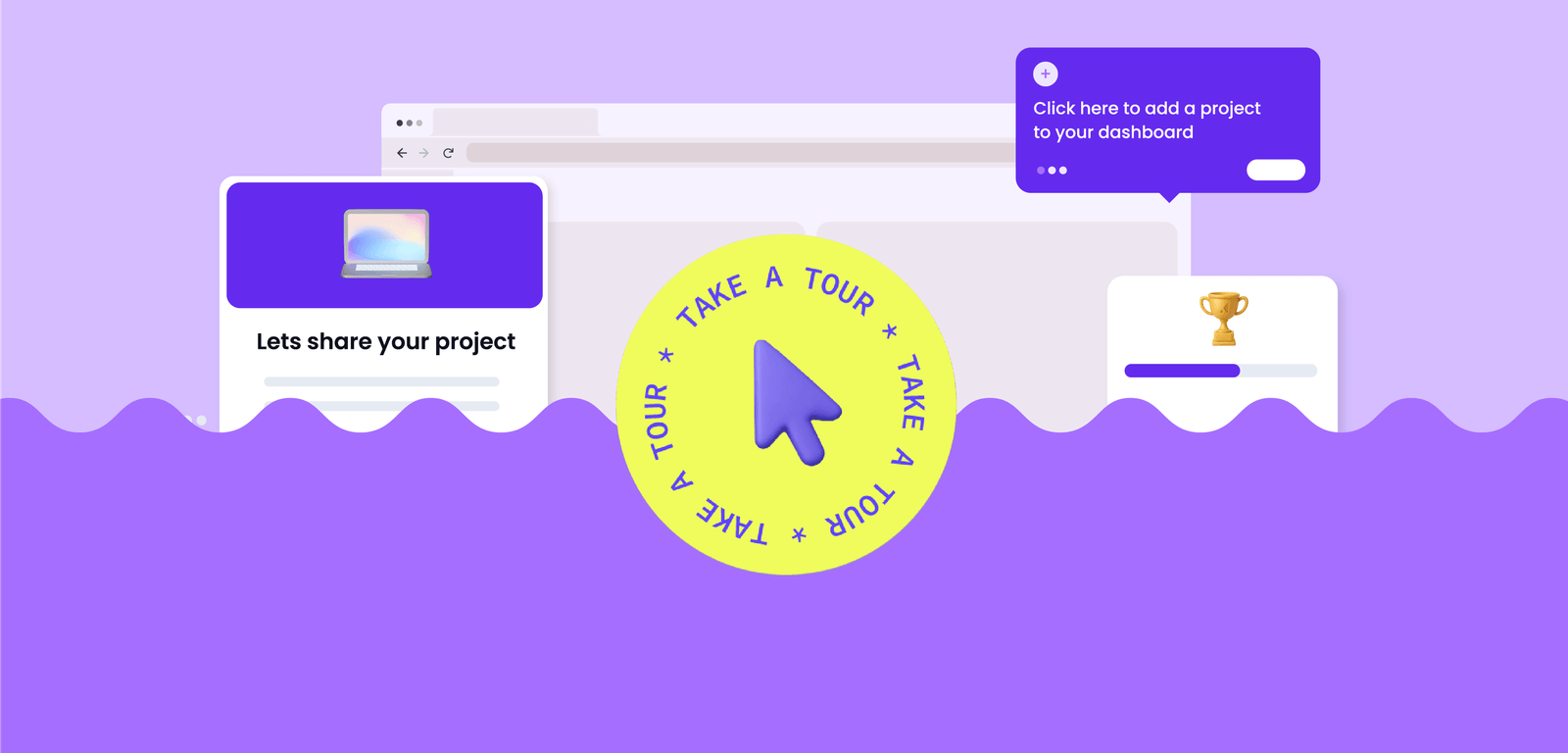
Retention is a category of categories. Customer churn happens at onboarding, mid-lifecycle, renewal, and support - so no single tool covers everything.
14 tools across 7 categories. This guide reviews customer retention tools spanning in-app engagement, health scoring, lifecycle email, feedback, helpdesk, loyalty, and CRM.
Start with your biggest gap. Map where churn actually happens before choosing a tool - the right customer retention software depends on the problem you're solving.
In-app engagement is where most digital product companies should start. That's where user behavior is most visible and the gap between expectation and experience is widest.
Acquiring a new customer costs five to twenty-five times more than keeping an existing one. That's not a new stat - Harvard Business Review has been citing it for years - but most teams still underinvest in retention until churn becomes too expensive to ignore.
The harder truth is that customer retention software isn't a single category. It's a category of categories. Churn breaks down at onboarding, when a feature goes undiscovered, when a support ticket goes sideways, when renewal comes due and no one has touched the account. Each gap requires a different kind of tool.
That's why picking one customer retention software platform and hoping it covers everything rarely works. The teams with the strongest retention rates build deliberate stacks, choosing tools that match their specific gaps and connecting them across the customer journey.
This guide breaks down 14 of the best customer retention software tools across 7 categories - in-app engagement, health scoring, lifecycle messaging, feedback collection, helpdesk, loyalty programs, and CRM - so you can match the right solution to the problem you're actually solving.
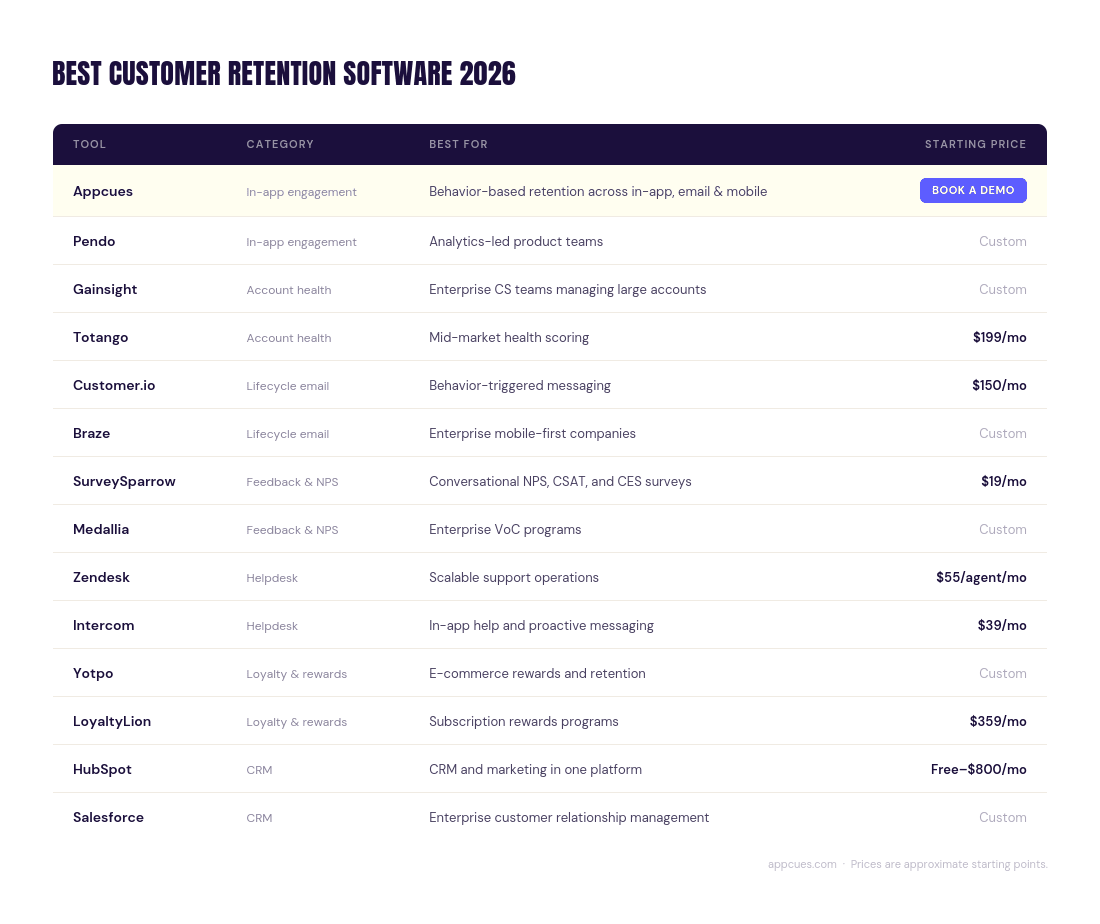
The table below compares 14 customer retention software tools across four dimensions: the tool name, its category within the retention stack, what type of team or use case it's best suited for, and its starting price.
Customer retention software are tools designed to reduce churn, deepen customer relationships, and increase the long-term value of an existing customer base. The category is broad because customers leave for a lot of different reasons.
In practice, customer retention management software works by tracking user behavior and automating responses to it. When a user stops logging in, for example, the right tool can trigger a re-engagement email, surface an in-app prompt highlighting an underused feature, or alert a CS manager to reach out directly. The goal is always the same: catch the signal before the customer is gone, and act on it in a way that feels helpful rather than desperate.
Because retention breaks at so many different points - onboarding, mid-lifecycle, renewal, support - customer retention software spans a wide range of tool types, from in-app engagement platforms to health scoring dashboards to lifecycle messaging systems.
Churn doesn't have one source. A customer who leaves in their first week usually has a broken onboarding experience. One who leaves at month six often stopped finding value when a key feature became harder to reach. One who doesn't renew may have had a rocky support experience, or simply never heard from your team. Three problems, three different tools.
The best customer retention strategies combine multiple solutions through software chosen for specific gaps in the customer journey. They're connected through shared data and operated by the people who are actually close enough to the problem to do something about it.
Before evaluating tools, it helps to identify where your retention gap actually lives. Each category of customer retention management software addresses a different stage of the customer journey, and the right customer retention platform for your team depends on where churn is actually happening.
In-app engagement tools deliver in-product experiences - onboarding Flows, contextual guidance, NPS surveys - designed to help users reach value faster.
Account health scoring tools give CS teams a view of which accounts are healthy and which are at risk, pulling from product usage, support tickets, and CRM signals so teams can prioritize before it's too late.
Lifecycle email and cross-channel messaging tools send messages based on what users do or stop doing in your product, reaching people through email, SMS, or push when they're not in the app.
Customer feedback and NPS tools capture customer satisfaction signals at the right moment.
Helpdesk and support tools are often underrated as retention software. Poor support is a direct driver of customer churn.
Loyalty programs give customers a structural reason to return.
CRM is the connective tissue: capturing purchase history, customer interactions, and account context, and making every other customer retention management tool in your stack smarter.

Appcues is a low-code product engagement platform that helps teams build and deliver in-product experiences like onboarding flows, lifecycle messages, and in-app surveys, all based on what users are actually doing inside the product, without waiting on engineering.
Most customer churn happens in the first week, before users have experienced enough value to stick around. Appcues addresses this with Flows and Checklists that guide users to key milestones, turning new customers into loyal customers before they have a reason to leave.
What separates Appcues from narrower in-app customer retention tools is what happens after onboarding.
Behavioral Email sends lifecycle messages triggered by real product activity.
Banners and Pins surface contextual guidance without disrupting the customer experience.
NPS and Surveys collect in-product feedback when users are most engaged.
Captain AI handles the content creation, targeting suggestions, and general friction of going from idea to live experience.
Key features for retention:
Who it's built for: Product, marketing, and CX teams at companies with 150+ employees who want personalized, behavior-driven experiences without engineering dependency.
Pricing: Three plans - Start (up to 3,000 MAUs), Grow (up to 50,000 MAUs), and Enterprise (custom volume). All plans include the full platform, every feature, and a dedicated CSM.
"As Head of Customer Success at a startup, I'd been looking for something to do what Appcues does so that our engineering team didn't have to spend time building, implementing, maintaining, and tweaking experiences." - Sam McDonnell, Head of Customer Success at Sitemate
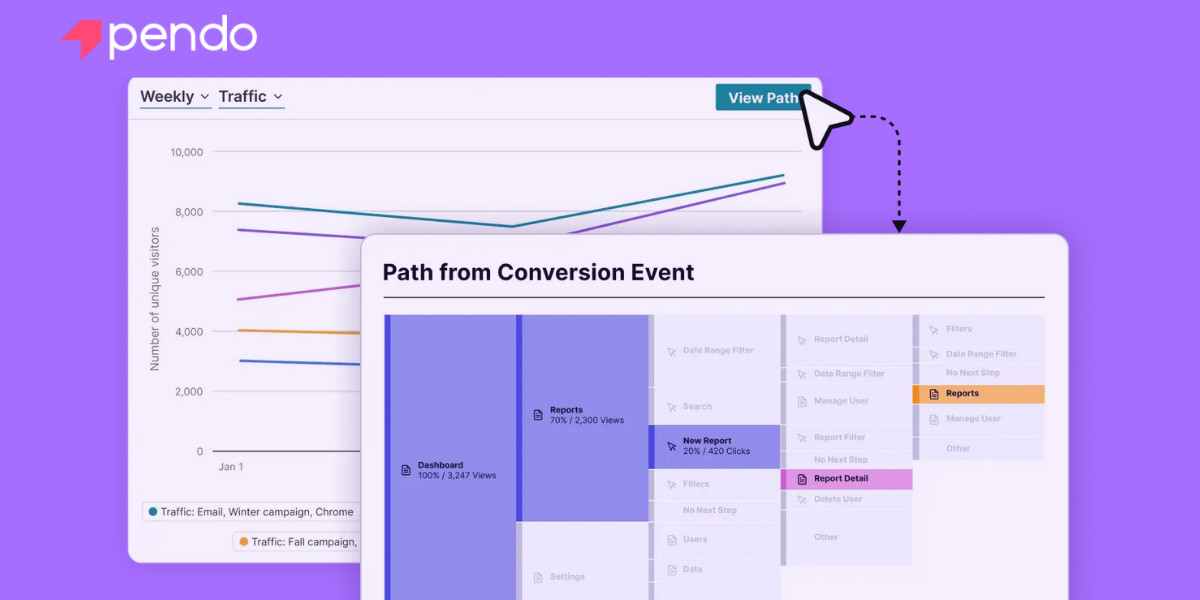
Pendo gives you visibility into where users drop off, which user behavior patterns precede churn, and what features are driving retention. The honest caveat: once you know what's happening, its tools for acting are limited.
Key features: Product analytics, in-app guides, session replay, NPS surveys, roadmap feedback.
Best for: Product and product ops teams wanting user behavior analysis alongside basic in-app guidance.
Pricing: Custom. Contact sales.
What's the difference between Pendo and Appcues? We wrote an honest breakdown to help show how it breaks down.
Account health scoring is where customer success software and customer retention tools overlap most directly. These platforms help CS teams move from reactive firefighting to proactive account management.
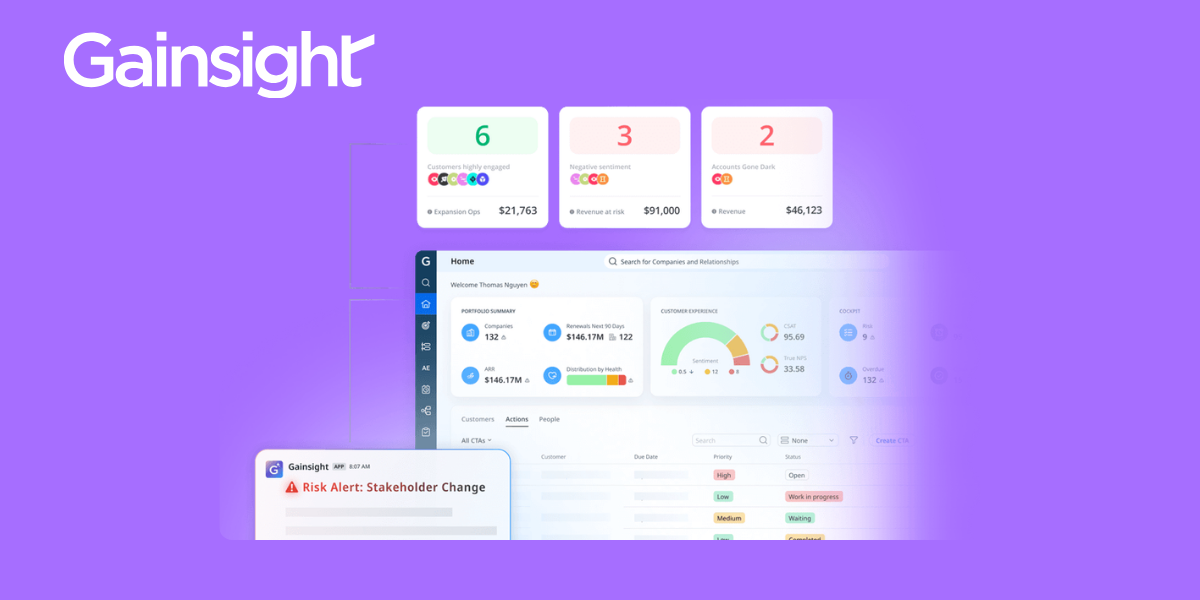
Gainsight is what enterprise customer success teams use when manual account management isn't enough. It builds customer health scores from product usage, CRM signals, support tickets, and customer interactions.
Key features: Customer health scoring, account and renewal tracking, playbook automation, customer data consolidation.
Best for: Enterprise B2B companies with dedicated CS teams managing large accounts.
Pricing: Custom. Expect a significant implementation investment.
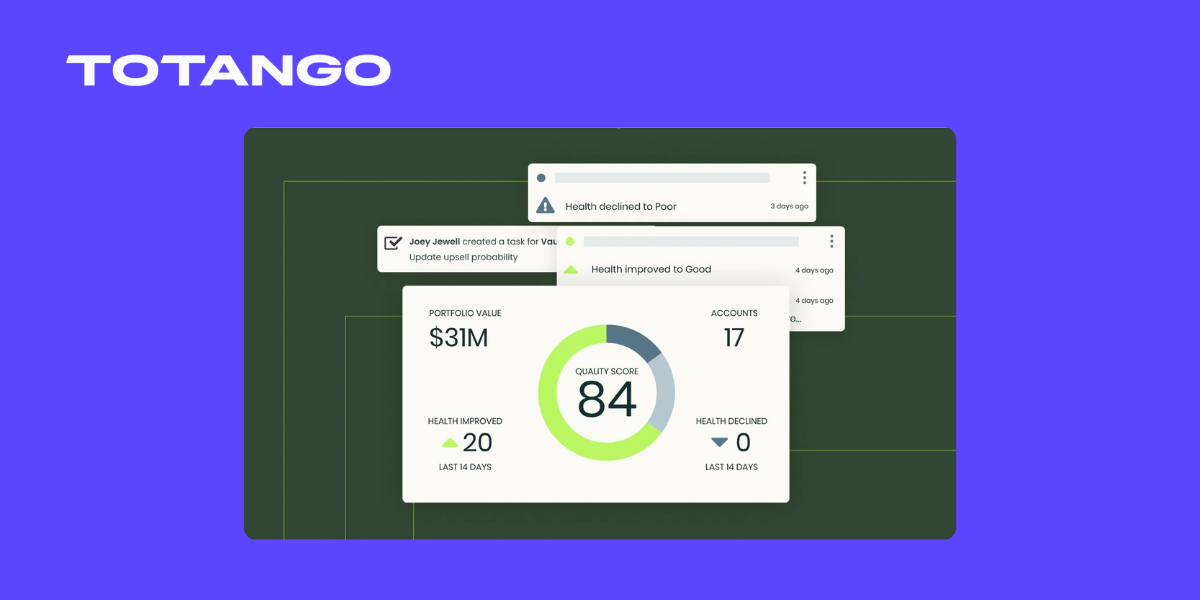
Totango does what Gainsight does at a price and scale that fits mid-market teams.
Key features: Customer health scoring, Customer 360, customer segmentation, automated playbooks.
Best for: Mid-market B2B teams needing account health intelligence without enterprise complexity.
Pricing: Starter at $199/month. Enterprise custom.
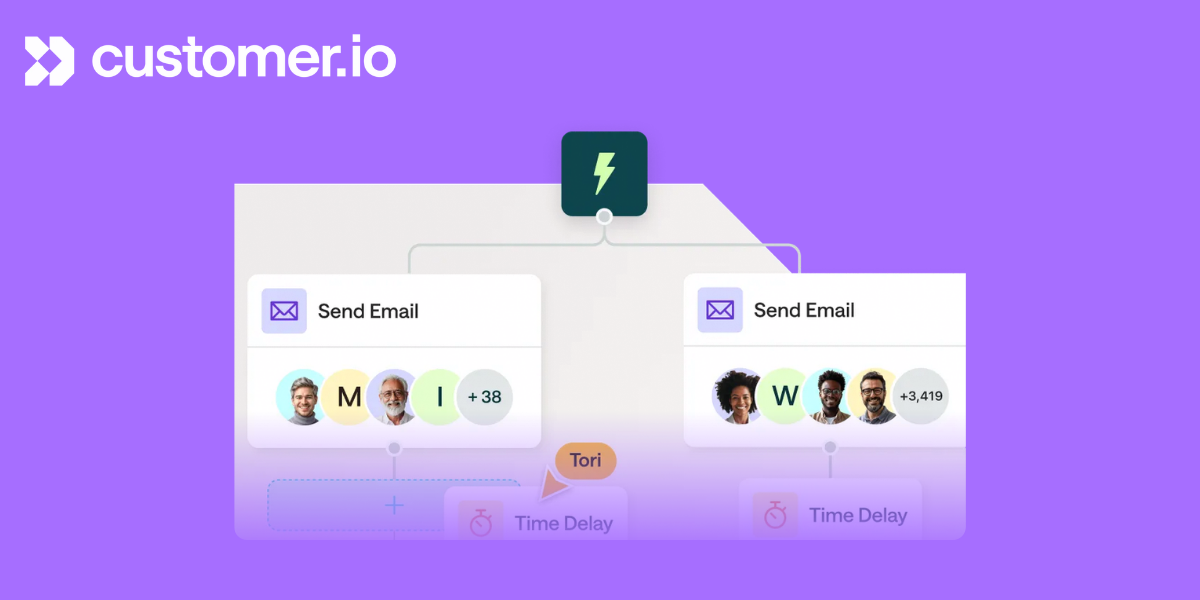
Customer.io sends messages - email, SMS, push notifications - triggered by what users actually do inside your product rather than when a timer runs out.
Key features: Behavior-triggered workflows, multi-channel messaging, customer segmentation, A/B testing.
Best for: Teams that have outgrown generic lifecycle email and want personalized messages driven by real user behavior.
Pricing: Basic starts at $150/month. Premium custom.
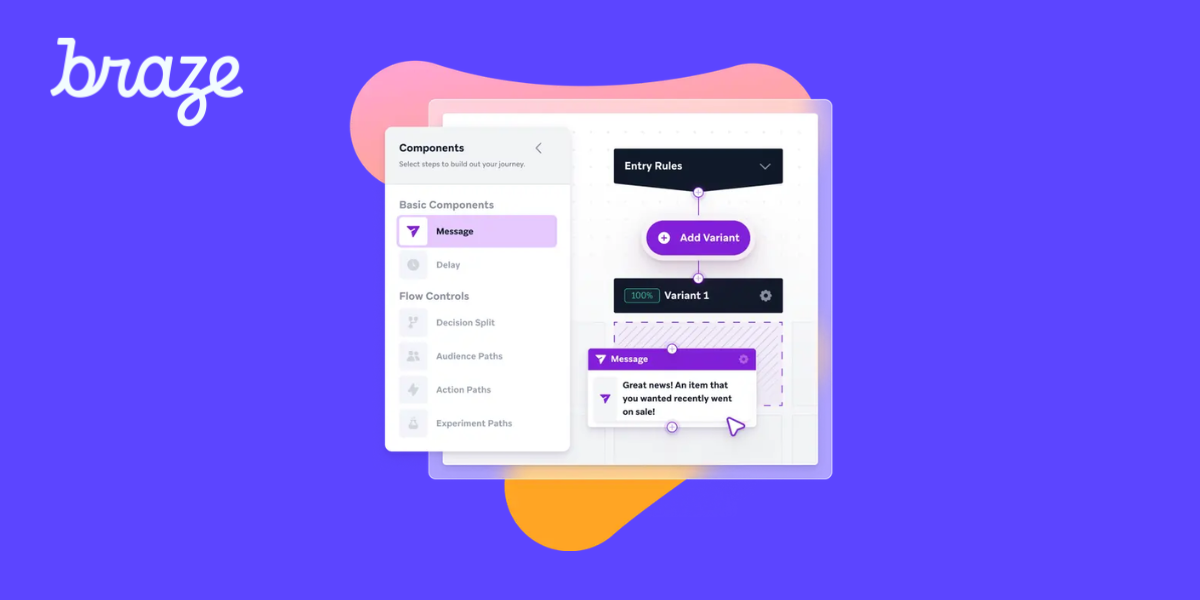
Braze handles email, push notifications, SMS, and in-app messaging across multiple channels for large, mobile-first user bases.
Key features: Cross-channel campaign orchestration, segmentation, real-time data streaming, Canvas journey builder.
Best for: Enterprise B2C companies with large user bases and dedicated growth teams.
Pricing: Custom. Contact sales.
Want to see how Braze compares to Appcues? Check out the full breakdown.
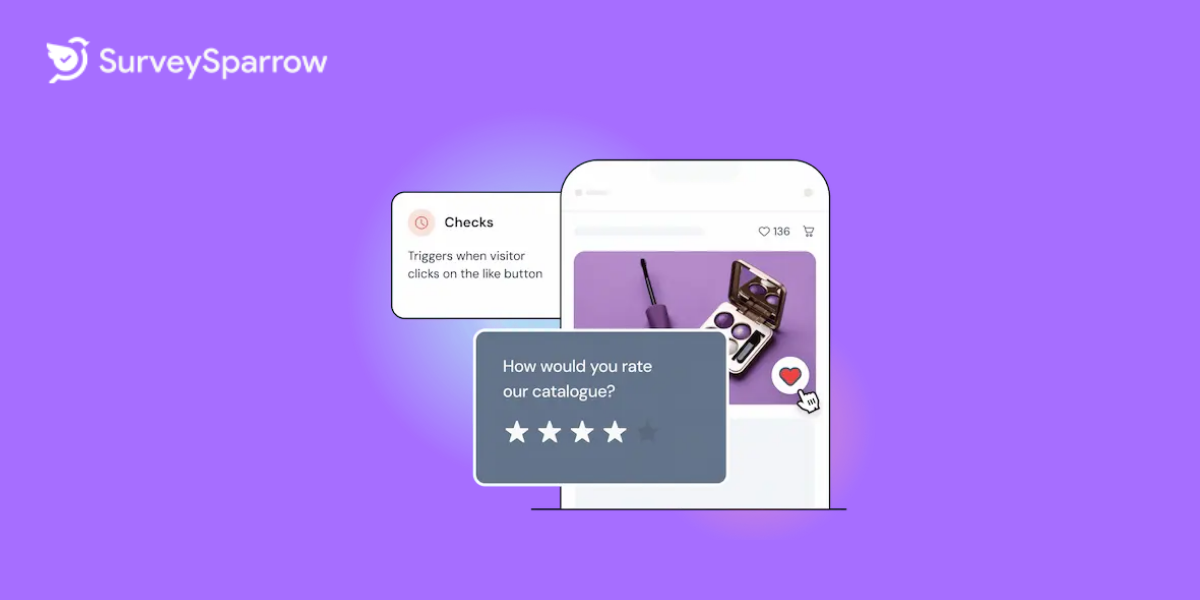
SurveySparrow collects real-time customer feedback - NPS, CSAT, customer effort scores - through a conversational, chat-style interface that tends to get higher response rates than traditional form-based surveys.
Key features: Conversational NPS, CSAT, and CES surveys; multi-channel distribution; AI-powered response analysis (CogniVue); automated follow-ups; integrations with HubSpot, Salesforce, and Slack.
Best for: Companies wanting fast, high-response-rate customer feedback collection without building a full VoC program.
Pricing: Starts at $19/month. Higher tiers require contacting sales.
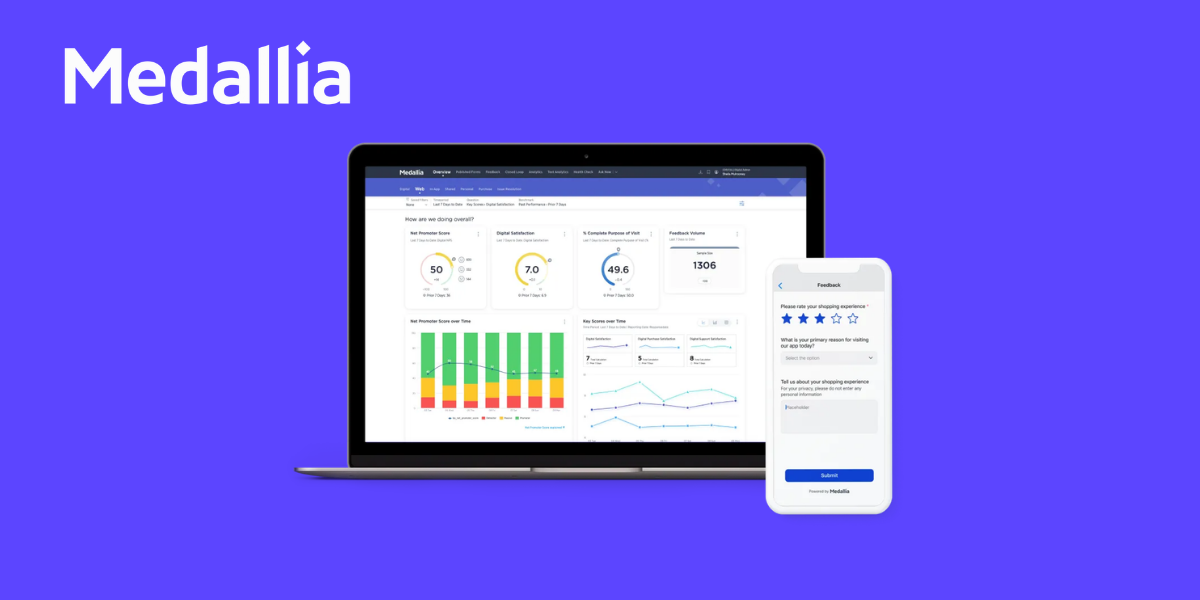
Medallia is for organizations that need to collect feedback at scale across many touchpoints.
Key features: Multi-channel feedback capture, text analytics, predictive analytics, action management.
Best for: Enterprise CX teams managing multi-touchpoint customer feedback programs at scale.
Pricing: Custom. Contact sales.
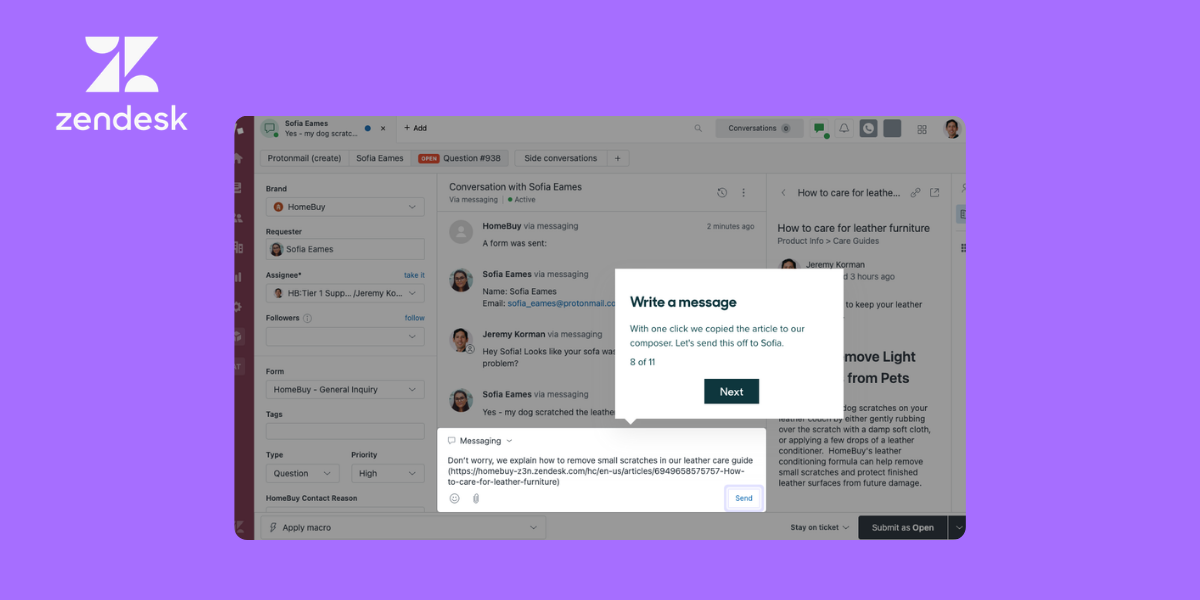
Support quality is one of the clearest drivers of customer loyalty or customer churn. Zendesk makes it possible to scale customer support without letting the customer experience degrade.
Key features: Ticketing, Answer Bot, Help Center, multi-channel support, reporting.
Best for: Support teams managing high volumes across multiple channels who need consistency at scale.
Pricing: Starts at $55/agent/month.
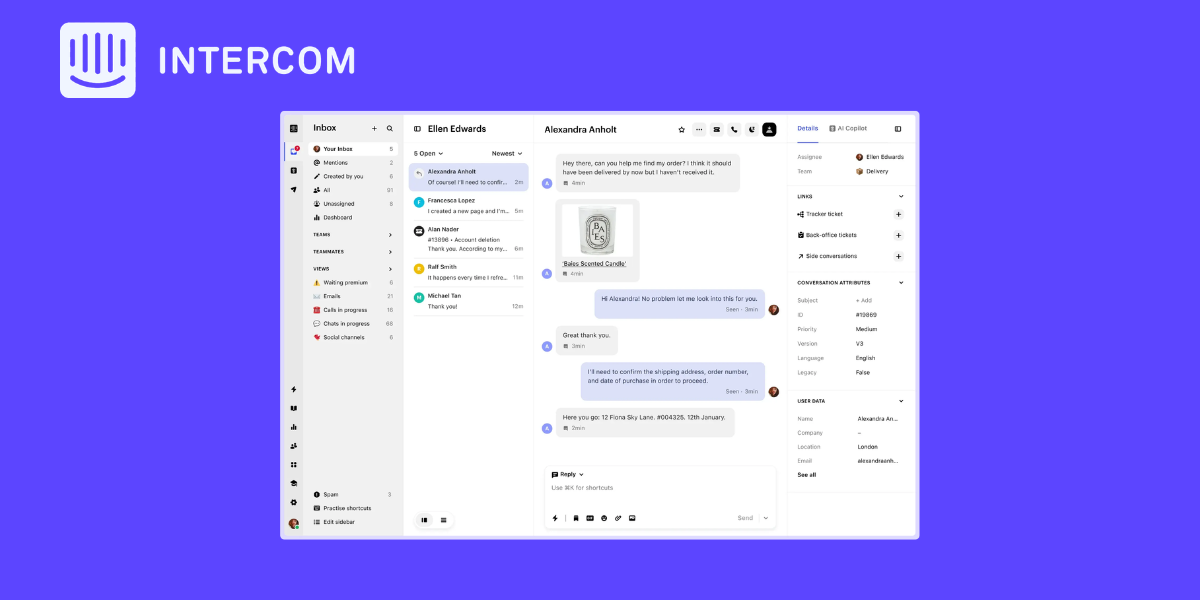
Intercom started as customer support and has expanded into proactive in-app messaging. Its Fin AI chatbot and Help Center handle deflection.
Key features: Live chat, Fin AI chatbot, Help Center, proactive in-app messaging, email.
Best for: Teams wanting customer support alongside proactive in-app messaging in one platform.
Pricing: Starts at $39/month. Enterprise pricing custom.
Want to see the difference between Appcues and Intercom? Check out the breakdown!
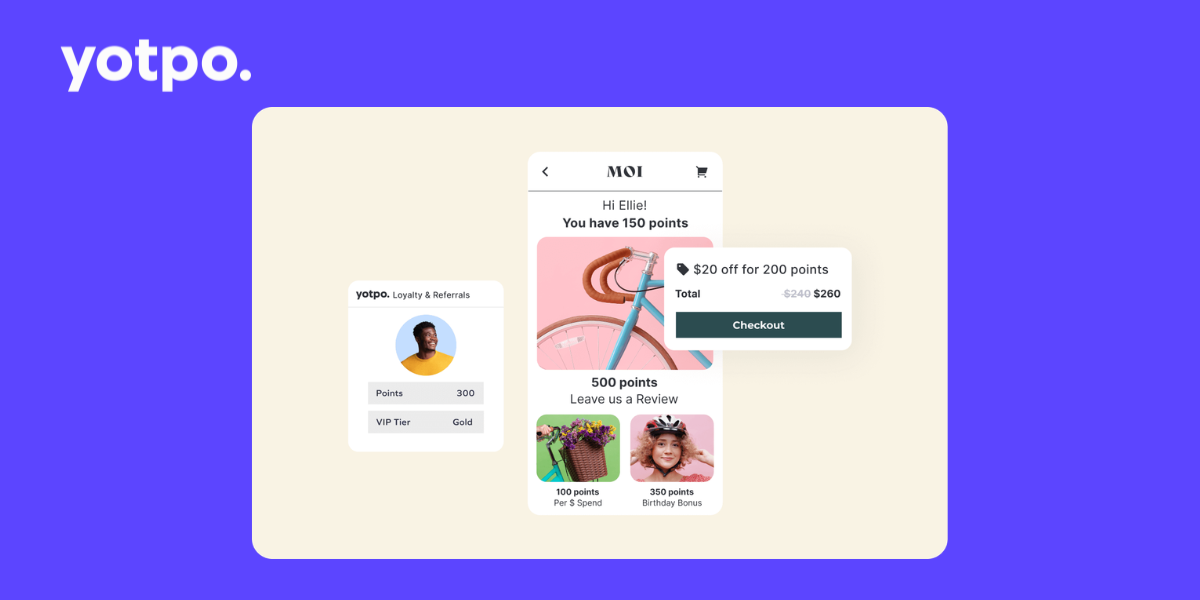
Yotpo helps e-commerce and DTC brands give existing customers a reason to keep coming back. Its loyalty programs - points, tiered rewards, referral bonuses - are built around the repeat purchase.
Key features: Points and rewards programs, tiered loyalty, referral programs, reviews and UGC, SMS.
Best for: E-commerce and DTC brands building customer loyalty, driving repeat purchases, and deepening customer engagement through rewards.
Pricing: Custom. Contact sales.
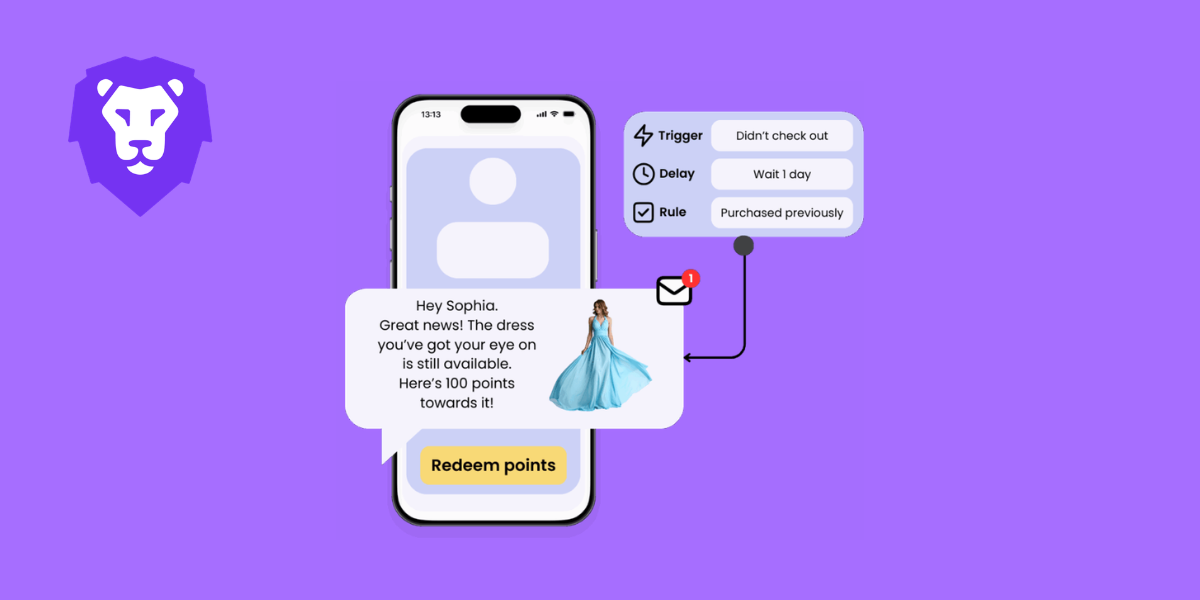
LoyaltyLion is built for subscription and repeat-purchase businesses.
Key features: Points and rewards, subscription loyalty, referral programs, segmented campaigns, retention analytics.
Best for: Subscription businesses and e-commerce brands tying loyalty program activity to customer loyalty and retention metrics.
Pricing: Starts at $359/month.
HubSpot's CRM gives teams a centralized view of customer interactions, purchase history, and lifecycle stage.
Key features: Contact management, deal tracking, marketing automation, Service Hub, reporting.
Best for: Teams wanting customer relationship management and marketing automation in one place without enterprise complexity.
Pricing: CRM is free. Marketing Hub Professional starts at $800/month.
Salesforce is the infrastructure most enterprise retention stacks are built around.
Key features: Account and contact management, opportunity tracking, workflow automation, Customer 360, AppExchange.
Best for: Enterprise B2B companies needing robust customer relationship management across a complex sales and renewal motion.
Pricing: Custom. Contact sales.
Choosing the right customer retention platform starts with three questions: where is churn actually happening (onboarding, mid-lifecycle, or renewal), who on your team will use the tool day to day (product, CS, or marketing), and what does your budget allow? The answers will narrow a field of dozens of customer retention software options down to a handful that actually fit.
Map your customer journey first. Where does the customer experience break down most - during onboarding? Mid-lifecycle, when feature adoption stalls? At renewal? (Here are 13 proactive strategies to reduce churn once you've identified yours.)
A product team needs retention tools they can move quickly with. A CS team needs dashboards that show which accounts to call next.
Customer retention software that can't share data with your existing CRM and analytics tools creates more work.
The retention stacks that work tend to cover multiple moments through onboarding, mid-lifecycle engagement, feedback, renewal readiness.
The key metrics to anchor to aren't subscription costs. They're the revenue difference between your current churn rate and where it needs to be.
The right customer retention software should help you move these numbers, not just display them. (For a deeper dive, see our guide to customer retention metrics.)
The percentage of customers who cancel or don't renew. The most direct measure of retention performance.
Accounts for expansion revenue alongside churn - a fuller picture of whether your existing customer base is growing or contracting.
The total revenue a customer generates over their relationship with your company.
A leading indicator of retention. The best customer retention tools build NPS collection into the product experience rather than treating it as a one-off survey.
The percentage of users who complete the actions associated with getting real value.
What percentage of your customer base is using the features your product is built around?
There's no single customer retention software platform that does everything. The teams with the best customer retention rates build deliberate stacks - choosing retention software that matches their specific gaps, connecting it to the rest of their tools, and making sure it's used by the teams closest to the problem.
That's the "category of categories" framing in practice: retention isn't one problem, so it's never one tool.
Increasingly, AI-powered churn prediction is adding another layer to the retention stack - identifying at-risk accounts before traditional usage signals catch up.
For most digital product companies, the in-product layer is the right place to start. That's where customer behavior is most legible, and where the gap between what users expect and what they experience tends to be widest.
Ready to see how Appcues can help you retain more customers? Book a demo and see the platform in action
Lifecycle Marketing
Retention & Churn
Email Marketing
Customer Journeys
TL;DR
Retention is a category of categories. Customer churn happens at onboarding, mid-lifecycle, renewal, and support - so no single tool covers everything.
14 tools across 7 categories. This guide reviews customer retention tools spanning in-app engagement, health scoring, lifecycle email, feedback, helpdesk, loyalty, and CRM.
Start with your biggest gap. Map where churn actually happens before choosing a tool - the right customer retention software depends on the problem you're solving.
In-app engagement is where most digital product companies should start. That's where user behavior is most visible and the gap between expectation and experience is widest.
Acquiring a new customer costs five to twenty-five times more than keeping an existing one. That's not a new stat - Harvard Business Review has been citing it for years - but most teams still underinvest in retention until churn becomes too expensive to ignore.
The harder truth is that customer retention software isn't a single category. It's a category of categories. Churn breaks down at onboarding, when a feature goes undiscovered, when a support ticket goes sideways, when renewal comes due and no one has touched the account. Each gap requires a different kind of tool.
That's why picking one customer retention software platform and hoping it covers everything rarely works. The teams with the strongest retention rates build deliberate stacks, choosing tools that match their specific gaps and connecting them across the customer journey.
This guide breaks down 14 of the best customer retention software tools across 7 categories - in-app engagement, health scoring, lifecycle messaging, feedback collection, helpdesk, loyalty programs, and CRM - so you can match the right solution to the problem you're actually solving.
The table below compares 14 customer retention software tools across four dimensions: the tool name, its category within the retention stack, what type of team or use case it's best suited for, and its starting price.
Customer retention software are tools designed to reduce churn, deepen customer relationships, and increase the long-term value of an existing customer base. The category is broad because customers leave for a lot of different reasons.
In practice, customer retention management software works by tracking user behavior and automating responses to it. When a user stops logging in, for example, the right tool can trigger a re-engagement email, surface an in-app prompt highlighting an underused feature, or alert a CS manager to reach out directly. The goal is always the same: catch the signal before the customer is gone, and act on it in a way that feels helpful rather than desperate.
Because retention breaks at so many different points - onboarding, mid-lifecycle, renewal, support - customer retention software spans a wide range of tool types, from in-app engagement platforms to health scoring dashboards to lifecycle messaging systems.
Churn doesn't have one source. A customer who leaves in their first week usually has a broken onboarding experience. One who leaves at month six often stopped finding value when a key feature became harder to reach. One who doesn't renew may have had a rocky support experience, or simply never heard from your team. Three problems, three different tools.
The best customer retention strategies combine multiple solutions through software chosen for specific gaps in the customer journey. They're connected through shared data and operated by the people who are actually close enough to the problem to do something about it.
Before evaluating tools, it helps to identify where your retention gap actually lives. Each category of customer retention management software addresses a different stage of the customer journey, and the right customer retention platform for your team depends on where churn is actually happening.
In-app engagement tools deliver in-product experiences - onboarding Flows, contextual guidance, NPS surveys - designed to help users reach value faster.
Account health scoring tools give CS teams a view of which accounts are healthy and which are at risk, pulling from product usage, support tickets, and CRM signals so teams can prioritize before it's too late.
Lifecycle email and cross-channel messaging tools send messages based on what users do or stop doing in your product, reaching people through email, SMS, or push when they're not in the app.
Customer feedback and NPS tools capture customer satisfaction signals at the right moment.
Helpdesk and support tools are often underrated as retention software. Poor support is a direct driver of customer churn.
Loyalty programs give customers a structural reason to return.
CRM is the connective tissue: capturing purchase history, customer interactions, and account context, and making every other customer retention management tool in your stack smarter.
Appcues is a low-code product engagement platform that helps teams build and deliver in-product experiences like onboarding flows, lifecycle messages, and in-app surveys, all based on what users are actually doing inside the product, without waiting on engineering.
Most customer churn happens in the first week, before users have experienced enough value to stick around. Appcues addresses this with Flows and Checklists that guide users to key milestones, turning new customers into loyal customers before they have a reason to leave.
What separates Appcues from narrower in-app customer retention tools is what happens after onboarding.
Behavioral Email sends lifecycle messages triggered by real product activity.
Banners and Pins surface contextual guidance without disrupting the customer experience.
NPS and Surveys collect in-product feedback when users are most engaged.
Captain AI handles the content creation, targeting suggestions, and general friction of going from idea to live experience.
Key features for retention:
Who it's built for: Product, marketing, and CX teams at companies with 150+ employees who want personalized, behavior-driven experiences without engineering dependency.
Pricing: Three plans - Start (up to 3,000 MAUs), Grow (up to 50,000 MAUs), and Enterprise (custom volume). All plans include the full platform, every feature, and a dedicated CSM.
"As Head of Customer Success at a startup, I'd been looking for something to do what Appcues does so that our engineering team didn't have to spend time building, implementing, maintaining, and tweaking experiences." - Sam McDonnell, Head of Customer Success at Sitemate
Pendo gives you visibility into where users drop off, which user behavior patterns precede churn, and what features are driving retention. The honest caveat: once you know what's happening, its tools for acting are limited.
Key features: Product analytics, in-app guides, session replay, NPS surveys, roadmap feedback.
Best for: Product and product ops teams wanting user behavior analysis alongside basic in-app guidance.
Pricing: Custom. Contact sales.
What's the difference between Pendo and Appcues? We wrote an honest breakdown to help show how it breaks down.
Account health scoring is where customer success software and customer retention tools overlap most directly. These platforms help CS teams move from reactive firefighting to proactive account management.
Gainsight is what enterprise customer success teams use when manual account management isn't enough. It builds customer health scores from product usage, CRM signals, support tickets, and customer interactions.
Key features: Customer health scoring, account and renewal tracking, playbook automation, customer data consolidation.
Best for: Enterprise B2B companies with dedicated CS teams managing large accounts.
Pricing: Custom. Expect a significant implementation investment.
Totango does what Gainsight does at a price and scale that fits mid-market teams.
Key features: Customer health scoring, Customer 360, customer segmentation, automated playbooks.
Best for: Mid-market B2B teams needing account health intelligence without enterprise complexity.
Pricing: Starter at $199/month. Enterprise custom.
Customer.io sends messages - email, SMS, push notifications - triggered by what users actually do inside your product rather than when a timer runs out.
Key features: Behavior-triggered workflows, multi-channel messaging, customer segmentation, A/B testing.
Best for: Teams that have outgrown generic lifecycle email and want personalized messages driven by real user behavior.
Pricing: Basic starts at $150/month. Premium custom.
Braze handles email, push notifications, SMS, and in-app messaging across multiple channels for large, mobile-first user bases.
Key features: Cross-channel campaign orchestration, segmentation, real-time data streaming, Canvas journey builder.
Best for: Enterprise B2C companies with large user bases and dedicated growth teams.
Pricing: Custom. Contact sales.
Want to see how Braze compares to Appcues? Check out the full breakdown.
SurveySparrow collects real-time customer feedback - NPS, CSAT, customer effort scores - through a conversational, chat-style interface that tends to get higher response rates than traditional form-based surveys.
Key features: Conversational NPS, CSAT, and CES surveys; multi-channel distribution; AI-powered response analysis (CogniVue); automated follow-ups; integrations with HubSpot, Salesforce, and Slack.
Best for: Companies wanting fast, high-response-rate customer feedback collection without building a full VoC program.
Pricing: Starts at $19/month. Higher tiers require contacting sales.
Medallia is for organizations that need to collect feedback at scale across many touchpoints.
Key features: Multi-channel feedback capture, text analytics, predictive analytics, action management.
Best for: Enterprise CX teams managing multi-touchpoint customer feedback programs at scale.
Pricing: Custom. Contact sales.
Support quality is one of the clearest drivers of customer loyalty or customer churn. Zendesk makes it possible to scale customer support without letting the customer experience degrade.
Key features: Ticketing, Answer Bot, Help Center, multi-channel support, reporting.
Best for: Support teams managing high volumes across multiple channels who need consistency at scale.
Pricing: Starts at $55/agent/month.
Intercom started as customer support and has expanded into proactive in-app messaging. Its Fin AI chatbot and Help Center handle deflection.
Key features: Live chat, Fin AI chatbot, Help Center, proactive in-app messaging, email.
Best for: Teams wanting customer support alongside proactive in-app messaging in one platform.
Pricing: Starts at $39/month. Enterprise pricing custom.
Want to see the difference between Appcues and Intercom? Check out the breakdown!
Yotpo helps e-commerce and DTC brands give existing customers a reason to keep coming back. Its loyalty programs - points, tiered rewards, referral bonuses - are built around the repeat purchase.
Key features: Points and rewards programs, tiered loyalty, referral programs, reviews and UGC, SMS.
Best for: E-commerce and DTC brands building customer loyalty, driving repeat purchases, and deepening customer engagement through rewards.
Pricing: Custom. Contact sales.
LoyaltyLion is built for subscription and repeat-purchase businesses.
Key features: Points and rewards, subscription loyalty, referral programs, segmented campaigns, retention analytics.
Best for: Subscription businesses and e-commerce brands tying loyalty program activity to customer loyalty and retention metrics.
Pricing: Starts at $359/month.
HubSpot's CRM gives teams a centralized view of customer interactions, purchase history, and lifecycle stage.
Key features: Contact management, deal tracking, marketing automation, Service Hub, reporting.
Best for: Teams wanting customer relationship management and marketing automation in one place without enterprise complexity.
Pricing: CRM is free. Marketing Hub Professional starts at $800/month.
Salesforce is the infrastructure most enterprise retention stacks are built around.
Key features: Account and contact management, opportunity tracking, workflow automation, Customer 360, AppExchange.
Best for: Enterprise B2B companies needing robust customer relationship management across a complex sales and renewal motion.
Pricing: Custom. Contact sales.
Choosing the right customer retention platform starts with three questions: where is churn actually happening (onboarding, mid-lifecycle, or renewal), who on your team will use the tool day to day (product, CS, or marketing), and what does your budget allow? The answers will narrow a field of dozens of customer retention software options down to a handful that actually fit.
Map your customer journey first. Where does the customer experience break down most - during onboarding? Mid-lifecycle, when feature adoption stalls? At renewal? (Here are 13 proactive strategies to reduce churn once you've identified yours.)
A product team needs retention tools they can move quickly with. A CS team needs dashboards that show which accounts to call next.
Customer retention software that can't share data with your existing CRM and analytics tools creates more work.
The retention stacks that work tend to cover multiple moments through onboarding, mid-lifecycle engagement, feedback, renewal readiness.
The key metrics to anchor to aren't subscription costs. They're the revenue difference between your current churn rate and where it needs to be.
The right customer retention software should help you move these numbers, not just display them. (For a deeper dive, see our guide to customer retention metrics.)
The percentage of customers who cancel or don't renew. The most direct measure of retention performance.
Accounts for expansion revenue alongside churn - a fuller picture of whether your existing customer base is growing or contracting.
The total revenue a customer generates over their relationship with your company.
A leading indicator of retention. The best customer retention tools build NPS collection into the product experience rather than treating it as a one-off survey.
The percentage of users who complete the actions associated with getting real value.
What percentage of your customer base is using the features your product is built around?
There's no single customer retention software platform that does everything. The teams with the best customer retention rates build deliberate stacks - choosing retention software that matches their specific gaps, connecting it to the rest of their tools, and making sure it's used by the teams closest to the problem.
That's the "category of categories" framing in practice: retention isn't one problem, so it's never one tool.
Increasingly, AI-powered churn prediction is adding another layer to the retention stack - identifying at-risk accounts before traditional usage signals catch up.
For most digital product companies, the in-product layer is the right place to start. That's where customer behavior is most legible, and where the gap between what users expect and what they experience tends to be widest.
Ready to see how Appcues can help you retain more customers? Book a demo and see the platform in action

Sign up for Quickcues and get our monthly updates!
.svg)