.png)

Explore 10 real product-led growth examples from Slack, Figma, Dropbox, and more — and learn the mechanics, metrics, and strategies behind each one.
The way SaaS companies grow has fundamentally changed. Where sales teams and marketing campaigns once owned the entire customer journey, the product itself has taken center stage — driving acquisition, activation, and expansion without requiring a salesperson in the room. That's the core idea behind product-led growth, and if you've watched companies like Slack, Figma, and Dropbox scale at speeds that traditional go-to-market models couldn't match, you've already seen it in action.
But seeing it and understanding it are two different things. Most product and growth teams have heard the term. Fewer understand the specific mechanics that make it work — or how to tell whether it's the right model for their business.
This guide covers both. You'll find real product-led growth examples that illustrate different PLG strategies in action, a clear breakdown of how PLG compares to sales-led and marketing-led approaches, the metrics that tell you whether your PLG motion is actually working, and a practical framework for building or improving your own.
Product-led growth (PLG) is a go-to-market strategy in which the product itself serves as the primary vehicle for customer acquisition, retention, and expansion. Instead of relying on a sales team to close deals or a marketing campaign to generate demand, PLG companies let users experience the product — and let that experience do the selling.
That distinction matters. PLG is not just about offering a free trial or a freemium tier. It's a philosophy that shapes how the product is built, how value is delivered, and how users move through the funnel. A company can have a free plan and still be entirely sales-led in how it operates. What makes a company truly product-led is the deliberate design of the product experience to drive growth outcomes.
Understanding that distinction is the foundation for making sense of everything that follows — the examples, the mechanics, and the frameworks.
Before looking at specific product-led growth examples, it helps to understand the engine underneath them. Most successful PLG companies are running the same core mechanics, even if the surface-level execution looks different.
The foundational rule of PLG is simple: users must experience genuine value from the product before they're asked to pay, upgrade, or commit. This is a direct inversion of the traditional SaaS model, where value is promised during a sales call and only delivered after a contract is signed.
PLG companies engineer their entire onboarding experience around reaching what's often called the "eureka moment" — the specific instant when a user first realizes the product solves their problem. The faster a user reaches that moment, the more likely they are to stick around, convert, and expand. Every friction point between signup and that moment is a leak in the growth engine.
Self-service features — free trials, freemium tiers, in-app onboarding, interactive demos — remove friction from the buyer journey. They allow users to evaluate and adopt the product without ever speaking to a salesperson.
This lowers customer acquisition cost (CAC) and allows PLG companies to scale without proportionally scaling headcount. But self-service isn't just a pricing decision. It requires deliberate product design: clear empty states, intuitive navigation, contextual guidance, and a path to value that doesn't require a human guide.
Some PLG products grow because using them inherently involves inviting others. Collaboration tools, communication platforms, and shared workspaces all have this property — the product only works if your teammates are in it, so adoption spreads naturally.
Others grow because sharing outputs creates brand exposure. Every time someone shares a design, a video, or a document created with a PLG product, they're introducing the product to a new potential user.
It's worth distinguishing between viral loops (where usage drives new user acquisition) and network loops (where the product becomes more valuable as more people use it). Both are powerful, but they work differently and require different product investments.
Activation is the moment a new user completes a key action that correlates with long-term retention. It's one of the most important metrics in a PLG model — and one of the most commonly underinvested.
PLG companies identify their activation milestone through data, then redesign onboarding flows, tooltips, checklists, and in-app messaging to guide every new user toward that milestone as efficiently as possible. The activation milestone isn't a vanity metric — it's a leading indicator of whether a user will convert, retain, and expand.
PLG and sales-led growth aren't just different tactics — they're different operating philosophies. Understanding the tradeoffs helps you make an informed decision about which model fits your business, rather than chasing a trend.
In a sales-led model, the sales team owns acquisition. The product is demonstrated rather than experienced before purchase. In a PLG model, the product owns acquisition, and the sales team — if it exists — enters the conversation after the user has already experienced value.
This affects everything: deal velocity, average contract value, CAC, and the skill sets required across the organization. PLG deals tend to move faster at the individual and team level. Sales-led deals tend to be larger and more complex, with longer procurement cycles.
PLG is not the right model for every company. A sales-led approach remains more appropriate when:
Acknowledging these conditions isn't a concession — it's intellectual honesty. PLG works best when the product can deliver a clear, meaningful experience quickly. When it can't, forcing a PLG model creates a poor user experience and a weak growth engine.
Many mature PLG companies don't choose between PLG and sales-led — they combine them. Product-led sales is the model where PLG and sales-led motions coexist.
The key mechanism is the product-qualified lead (PQL): a user or account that has demonstrated high purchase intent through their product behavior — hitting usage limits, inviting teammates, using premium features during a trial. PLG companies use PQL signals to route high-intent users to a sales team for expansion or enterprise conversion.
This is the natural evolution for many PLG companies as they move upmarket. Slack and Figma both followed this path — starting with pure bottom-up adoption and layering in enterprise sales motions as they scaled.
Marketing-led growth relies on campaigns, content, paid acquisition, and brand to drive awareness and demand. PLG relies on the product experience itself to do that work. The two models differ in where budget is allocated, what metrics matter most, and how the customer journey is structured.
But PLG doesn't eliminate the need for marketing — it changes marketing's role. In a PLG company, marketing shifts from demand generation to demand amplification. The product creates the initial pull; marketing accelerates it.
The most successful PLG companies combine product-led acquisition with content and community strategies. They're not mutually exclusive. Notion's template ecosystem, HubSpot's content library, and Canva's social sharing all demonstrate how marketing and PLG reinforce each other when aligned around the same goal: getting users to value as quickly as possible.
The following examples aren't just company profiles. Each one illustrates a specific PLG mechanic, explains why it worked, and surfaces a lesson you can apply to your own product. Together, they cover the full range of PLG strategies — freemium, viral loops, self-serve onboarding, network effects, and bottom-up enterprise adoption.
Slack didn't enter organizations through IT procurement. It entered through individual teams — a small group would start using it, invite colleagues to join channels, and the workspace would grow organically from there. Free workspaces converted to paid plans not through a sales push, but through natural usage expansion.
The free tier lowered adoption friction to near zero. And the network effect was structural: Slack became more valuable as more teammates joined. The product itself created the pressure to expand.
The lesson: PLG can penetrate enterprise accounts from the bottom up without a traditional sales motion. The product does the land; usage does the expand.
Figma's browser-based, multiplayer design experience meant that every time a designer shared a file, they were introducing a new user to the product. Developers, product managers, and stakeholders could view and comment on files without needing an account upgrade — which expanded Figma's footprint organically across entire organizations.
The free tier wasn't just a pricing decision. It was a distribution strategy. Every shared file was an acquisition event.
The lesson: Removing barriers to collaboration turns your users into your best distribution channel.
Dropbox's referral program gave both the referrer and the new user additional free storage — directly tied to the core value of the product. This is what made it work: the incentive was product-native. More storage meant more value, not just a lower price.
This loop drove exponential early growth and became one of the most cited examples of PLG referral mechanics in SaaS history.
The lesson: The best PLG incentives make the product more valuable, not just cheaper. When the reward is the product itself, the referral loop reinforces the reason people use it in the first place.
Every time a Calendly user sends a scheduling link, the recipient is exposed to the Calendly brand and product experience. This creates a passive but powerful acquisition loop — the product markets itself through normal usage.
Calendly's freemium model means recipients can immediately sign up and start using the product themselves. No sales call required. No friction between exposure and adoption.
The lesson: If your product's output is shared externally, you have a built-in distribution channel. The question is whether you're deliberately engineering it.
Zoom's decision to allow meeting participants to join without creating an account dramatically lowered the barrier to first use. Millions of users experienced the product as guests before they ever signed up — building familiarity and preference that eventually converted to paid accounts.
The guest experience was a top-of-funnel strategy disguised as a product feature. It removed the signup wall at the exact moment when a new user's motivation to try the product was highest.
The lesson: Reducing the friction to experience your product — even for non-users — can be one of the most powerful acquisition strategies available to a PLG company.
Notion's user community created and shared thousands of templates, effectively doing product marketing on Notion's behalf. Templates solved a real activation problem: instead of starting from a blank canvas (a notoriously high-friction experience), new users could start from a proven structure built for their exact use case.
Community content also drove organic search traffic and word-of-mouth referrals — extending Notion's PLG motion well beyond the product itself.
The lesson: Empowering users to create and share content built on your product extends your PLG motion. The community becomes a growth channel.
HubSpot built a suite of free tools — CRM, email marketing, website grader — that delivered standalone value while introducing users to the broader HubSpot ecosystem. These tools captured users who weren't ready to buy but were willing to engage with something useful.
The free tools served as acquisition channels in their own right, not just lead magnets. Users got real value. HubSpot got a relationship.
The lesson: Free tools that solve a real problem can be a powerful PLG acquisition strategy — even for companies that also have a robust sales motion. The two aren't mutually exclusive.
Every Loom video shared externally exposes the recipient to the product, with a clear prompt to create their own account. The product's core use case — sharing video messages — is inherently outward-facing. Every send is an acquisition opportunity.
This isn't accidental. It's a structural PLG advantage that Loom deliberately engineered into the product experience.
The lesson: Products whose primary output is shared content have a built-in distribution advantage. The key is making sure that advantage is designed in, not left to chance.
Airtable's template library and flexible use cases allowed individual contributors to adopt the product for personal or team use — no budget approval required. That organic internal adoption expanded into department-wide and eventually company-wide deployments, which then triggered enterprise sales conversations.
The freemium model enabled experimentation. The product's flexibility enabled expansion. The sales team closed what the product started.
The lesson: PLG and enterprise sales are not mutually exclusive. Product-led adoption can be the first step in a land-and-expand enterprise motion.
Canva's PLG strategy was built on making design accessible to non-designers — a massive, underserved audience. The freemium model, combined with an extremely low time-to-value (users can create something shareable in minutes), drove rapid adoption and word-of-mouth growth.
Sharing designs externally also created brand exposure, adding a viral loop on top of the freemium acquisition engine.
The lesson: PLG works best when the product solves a problem for a large audience that previously had no good solution. Radical simplicity isn't a design choice — it's a growth strategy.
Understanding product-led growth examples is only useful if you can measure whether your own PLG motion is working. These are the metrics that PLG companies track to evaluate the health of their growth engine.
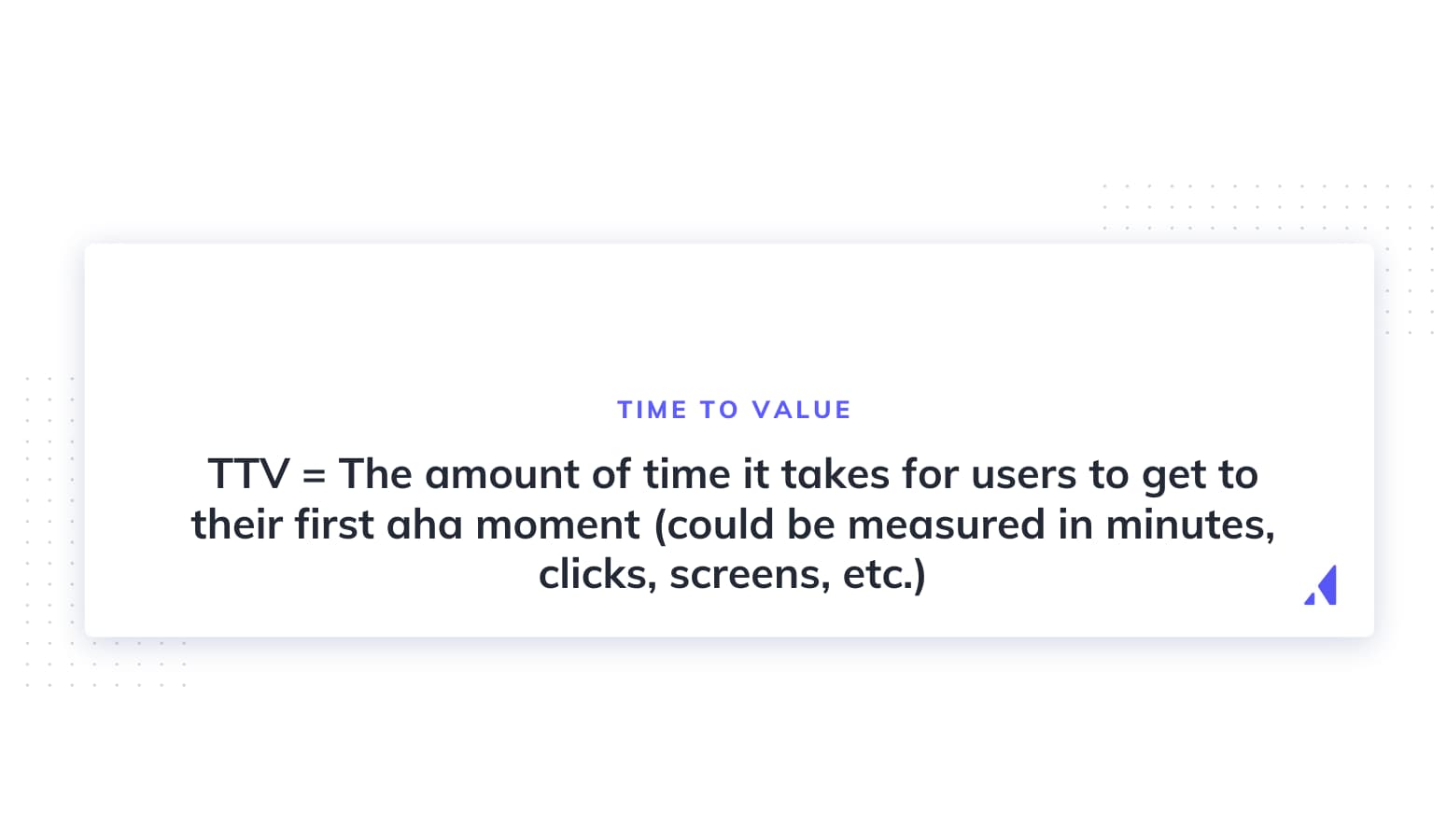
Time-to-value is the elapsed time between a user signing up and reaching the activation milestone or "aha moment." Minimizing TTV is one of the highest-leverage improvements a PLG team can make. Every unnecessary step between signup and value is a drop-off risk.
TTV is measured through onboarding flow analysis and optimized by removing friction, improving empty states, and tightening the path to the first meaningful action.
Activation rate is the percentage of new users who complete the key action(s) associated with long-term retention. It's a leading indicator of conversion and retention — which means improving it has compounding downstream effects.
Identifying the right activation milestone requires cohort analysis: which early actions do retained users take that churned users don't? That's your activation milestone. Everything in onboarding should point toward it.

The free-to-paid conversion rate measures the percentage of free or trial users who convert to a paid plan. The levers that influence it include onboarding quality, feature gating strategy, in-app upgrade prompts, and time-to-value.
What counts as a healthy conversion rate varies by model — freemium and free trial businesses have different benchmarks — but the direction of improvement is always the same: get users to value faster, and make the upgrade feel like a natural next step.
Product-qualified leads are users or accounts that have demonstrated high purchase intent through their product behavior — hitting usage limits, inviting teammates, using premium features during a trial.
PQLs differ from marketing-qualified leads (MQLs) in a critical way: they've already experienced the product. That experience makes them significantly more likely to convert. PLG companies use PQL signals to trigger sales outreach or automated upgrade campaigns at exactly the right moment.
In a PLG model, growth doesn't stop at the initial conversion. It continues through seat expansion, tier upgrades, and cross-sells. Net revenue retention (NRR) measures the percentage of revenue retained from existing customers after accounting for churn, downgrades, and expansion.
NRR above 100% means your existing customer base is growing — even without adding new customers. That's the hallmark of a healthy PLG business, and it's driven by product value and usage-based pricing that scales with how customers use the product.
Understanding the examples and metrics is the foundation. This section is the diagnostic: where are you now, and what should you do next?
PLG levers are the specific product, pricing, and onboarding decisions that drive acquisition, activation, conversion, and expansion. Auditing which levers you've already pulled — and which remain untapped — is the starting point for any PLG improvement effort.
Key levers to evaluate:
Most companies have pulled some of these levers. Few have pulled all of them deliberately.
The activation milestone is the single most important action a new user can take — the one most correlated with long-term retention and conversion. Finding it requires product analytics: look at the behaviors that distinguish retained users from churned users in the first week or two after signup.
Once you've identified it, redesign the onboarding experience around guiding users to that milestone as efficiently as possible. This is an ongoing process, not a one-time exercise. As the product evolves, the activation milestone may shift.
Engineering the product experience so that new users reach their "aha moment" quickly and reliably is one of the highest-leverage investments a PLG team can make. The tactics that support this include:
Reducing cognitive load in the early user journey directly improves activation and retention. Every unnecessary decision or step is a reason to quit.
PLG is a team sport. It's not just a product strategy — it's an organizational model that requires cross-functional alignment across product, growth, design, data and analytics, marketing, and (in hybrid models) sales.
PLG companies often structure these teams differently from traditional SaaS organizations — typically around a dedicated growth team or pod that owns the full funnel from acquisition through expansion. Without organizational buy-in and shared metrics, even the best PLG product mechanics will underperform. The strategy only compounds when the whole organization is pulling in the same direction.
The most successful PLG companies don't just acquire users efficiently — they retain them by continuously deepening the product's value and making it harder to replace.
This is the concept of the feature moat: the accumulation of capabilities, integrations, data, and workflows that make a product increasingly sticky over time. Companies like Figma, Notion, and Airtable have built moats not just through features, but through ecosystems — templates, integrations, community content, and API extensibility that create switching costs without requiring lock-in tactics.
The feature moat is a long-term PLG strategy that compounds over time. It requires deliberate product investment in depth, not just breadth. A product that does one thing exceptionally well and integrates with everything a user already uses is far harder to replace than a product that does many things adequately.
Building the moat is what separates PLG companies that sustain growth from those that plateau after the initial viral burst.
Understanding PLG examples and frameworks is the starting point. The real challenge is implementing the in-product experiences that drive activation, conversion, and expansion at scale — and doing it fast enough to actually move the needle.
Appcues enables product teams to build, test, and iterate on onboarding flows — product tours, checklists, tooltips, and modals — without requiring engineering resources. This directly addresses one of the most common PLG bottlenecks: the inability to quickly experiment with onboarding to improve time-to-value and activation rates.
When your team can ship an onboarding change in hours instead of weeks, you can run more experiments, learn faster, and compound improvements over time. That velocity is a competitive advantage in a PLG model.
Appcues allows teams to trigger contextual in-app messages based on user behavior — surfacing upgrade prompts when users hit feature limits, celebrating milestones to reinforce value, or prompting power users to invite teammates.
This behavioral targeting turns passive product usage into an active conversion and expansion engine. It's the mechanism that connects PQL signals to action — and that drives the NRR growth that defines a healthy PLG business.
A new free user needs a different experience than a power user approaching an upgrade threshold. One-size-fits-all onboarding leaves conversion opportunities on the table.
Appcues enables teams to segment users by behavior, role, plan, or lifecycle stage and deliver personalized in-app experiences to each segment. The result is an onboarding and engagement experience that feels relevant — which means users are more likely to reach activation, convert, and expand.
Appcues provides built-in analytics on flow completion, engagement, and conversion, giving product and growth teams the data they need to measure the impact of their in-app experiences and iterate quickly.
This closes the feedback loop that PLG teams depend on. You can see what's working, cut what isn't, and ship improvements — without waiting in an engineering queue for every change. That independence is what makes continuous improvement possible at the pace PLG requires.
Across all the product-led growth examples in this guide, a few patterns emerge consistently. The best PLG companies share a relentless focus on delivering value before asking for anything in return. They design product experiences to reach the activation milestone as quickly as possible. They build in sharing or collaboration mechanics that turn users into a distribution channel. And they treat growth as a metrics-driven, continuously improving system — not a one-time launch.
PLG is not a single tactic. It's a compounding system. The companies that do it best treat every part of the product experience — onboarding, in-app messaging, feature gating, referral mechanics — as a growth lever. And they invest in the tools and team structures that let them pull those levers quickly and measure the results.
If you're ready to build the in-product experiences that power a PLG motion, Appcues is built for exactly that. Whether you're just getting started with onboarding optimization or looking to scale a mature growth engine, you can explore Appcues with an interactive demo — and experience the value before you commit. That's the PLG philosophy in practice.
Lifecycle Marketing
Upsell & Cross-sell
Customer Journeys
Retention & Churn
TL;DR
Explore 10 real product-led growth examples from Slack, Figma, Dropbox, and more — and learn the mechanics, metrics, and strategies behind each one.
The way SaaS companies grow has fundamentally changed. Where sales teams and marketing campaigns once owned the entire customer journey, the product itself has taken center stage — driving acquisition, activation, and expansion without requiring a salesperson in the room. That's the core idea behind product-led growth, and if you've watched companies like Slack, Figma, and Dropbox scale at speeds that traditional go-to-market models couldn't match, you've already seen it in action.
But seeing it and understanding it are two different things. Most product and growth teams have heard the term. Fewer understand the specific mechanics that make it work — or how to tell whether it's the right model for their business.
This guide covers both. You'll find real product-led growth examples that illustrate different PLG strategies in action, a clear breakdown of how PLG compares to sales-led and marketing-led approaches, the metrics that tell you whether your PLG motion is actually working, and a practical framework for building or improving your own.
Product-led growth (PLG) is a go-to-market strategy in which the product itself serves as the primary vehicle for customer acquisition, retention, and expansion. Instead of relying on a sales team to close deals or a marketing campaign to generate demand, PLG companies let users experience the product — and let that experience do the selling.
That distinction matters. PLG is not just about offering a free trial or a freemium tier. It's a philosophy that shapes how the product is built, how value is delivered, and how users move through the funnel. A company can have a free plan and still be entirely sales-led in how it operates. What makes a company truly product-led is the deliberate design of the product experience to drive growth outcomes.
Understanding that distinction is the foundation for making sense of everything that follows — the examples, the mechanics, and the frameworks.
Before looking at specific product-led growth examples, it helps to understand the engine underneath them. Most successful PLG companies are running the same core mechanics, even if the surface-level execution looks different.
The foundational rule of PLG is simple: users must experience genuine value from the product before they're asked to pay, upgrade, or commit. This is a direct inversion of the traditional SaaS model, where value is promised during a sales call and only delivered after a contract is signed.
PLG companies engineer their entire onboarding experience around reaching what's often called the "eureka moment" — the specific instant when a user first realizes the product solves their problem. The faster a user reaches that moment, the more likely they are to stick around, convert, and expand. Every friction point between signup and that moment is a leak in the growth engine.
Self-service features — free trials, freemium tiers, in-app onboarding, interactive demos — remove friction from the buyer journey. They allow users to evaluate and adopt the product without ever speaking to a salesperson.
This lowers customer acquisition cost (CAC) and allows PLG companies to scale without proportionally scaling headcount. But self-service isn't just a pricing decision. It requires deliberate product design: clear empty states, intuitive navigation, contextual guidance, and a path to value that doesn't require a human guide.
Some PLG products grow because using them inherently involves inviting others. Collaboration tools, communication platforms, and shared workspaces all have this property — the product only works if your teammates are in it, so adoption spreads naturally.
Others grow because sharing outputs creates brand exposure. Every time someone shares a design, a video, or a document created with a PLG product, they're introducing the product to a new potential user.
It's worth distinguishing between viral loops (where usage drives new user acquisition) and network loops (where the product becomes more valuable as more people use it). Both are powerful, but they work differently and require different product investments.
Activation is the moment a new user completes a key action that correlates with long-term retention. It's one of the most important metrics in a PLG model — and one of the most commonly underinvested.
PLG companies identify their activation milestone through data, then redesign onboarding flows, tooltips, checklists, and in-app messaging to guide every new user toward that milestone as efficiently as possible. The activation milestone isn't a vanity metric — it's a leading indicator of whether a user will convert, retain, and expand.
PLG and sales-led growth aren't just different tactics — they're different operating philosophies. Understanding the tradeoffs helps you make an informed decision about which model fits your business, rather than chasing a trend.
In a sales-led model, the sales team owns acquisition. The product is demonstrated rather than experienced before purchase. In a PLG model, the product owns acquisition, and the sales team — if it exists — enters the conversation after the user has already experienced value.
This affects everything: deal velocity, average contract value, CAC, and the skill sets required across the organization. PLG deals tend to move faster at the individual and team level. Sales-led deals tend to be larger and more complex, with longer procurement cycles.
PLG is not the right model for every company. A sales-led approach remains more appropriate when:
Acknowledging these conditions isn't a concession — it's intellectual honesty. PLG works best when the product can deliver a clear, meaningful experience quickly. When it can't, forcing a PLG model creates a poor user experience and a weak growth engine.
Many mature PLG companies don't choose between PLG and sales-led — they combine them. Product-led sales is the model where PLG and sales-led motions coexist.
The key mechanism is the product-qualified lead (PQL): a user or account that has demonstrated high purchase intent through their product behavior — hitting usage limits, inviting teammates, using premium features during a trial. PLG companies use PQL signals to route high-intent users to a sales team for expansion or enterprise conversion.
This is the natural evolution for many PLG companies as they move upmarket. Slack and Figma both followed this path — starting with pure bottom-up adoption and layering in enterprise sales motions as they scaled.
Marketing-led growth relies on campaigns, content, paid acquisition, and brand to drive awareness and demand. PLG relies on the product experience itself to do that work. The two models differ in where budget is allocated, what metrics matter most, and how the customer journey is structured.
But PLG doesn't eliminate the need for marketing — it changes marketing's role. In a PLG company, marketing shifts from demand generation to demand amplification. The product creates the initial pull; marketing accelerates it.
The most successful PLG companies combine product-led acquisition with content and community strategies. They're not mutually exclusive. Notion's template ecosystem, HubSpot's content library, and Canva's social sharing all demonstrate how marketing and PLG reinforce each other when aligned around the same goal: getting users to value as quickly as possible.
The following examples aren't just company profiles. Each one illustrates a specific PLG mechanic, explains why it worked, and surfaces a lesson you can apply to your own product. Together, they cover the full range of PLG strategies — freemium, viral loops, self-serve onboarding, network effects, and bottom-up enterprise adoption.
Slack didn't enter organizations through IT procurement. It entered through individual teams — a small group would start using it, invite colleagues to join channels, and the workspace would grow organically from there. Free workspaces converted to paid plans not through a sales push, but through natural usage expansion.
The free tier lowered adoption friction to near zero. And the network effect was structural: Slack became more valuable as more teammates joined. The product itself created the pressure to expand.
The lesson: PLG can penetrate enterprise accounts from the bottom up without a traditional sales motion. The product does the land; usage does the expand.
Figma's browser-based, multiplayer design experience meant that every time a designer shared a file, they were introducing a new user to the product. Developers, product managers, and stakeholders could view and comment on files without needing an account upgrade — which expanded Figma's footprint organically across entire organizations.
The free tier wasn't just a pricing decision. It was a distribution strategy. Every shared file was an acquisition event.
The lesson: Removing barriers to collaboration turns your users into your best distribution channel.
Dropbox's referral program gave both the referrer and the new user additional free storage — directly tied to the core value of the product. This is what made it work: the incentive was product-native. More storage meant more value, not just a lower price.
This loop drove exponential early growth and became one of the most cited examples of PLG referral mechanics in SaaS history.
The lesson: The best PLG incentives make the product more valuable, not just cheaper. When the reward is the product itself, the referral loop reinforces the reason people use it in the first place.
Every time a Calendly user sends a scheduling link, the recipient is exposed to the Calendly brand and product experience. This creates a passive but powerful acquisition loop — the product markets itself through normal usage.
Calendly's freemium model means recipients can immediately sign up and start using the product themselves. No sales call required. No friction between exposure and adoption.
The lesson: If your product's output is shared externally, you have a built-in distribution channel. The question is whether you're deliberately engineering it.
Zoom's decision to allow meeting participants to join without creating an account dramatically lowered the barrier to first use. Millions of users experienced the product as guests before they ever signed up — building familiarity and preference that eventually converted to paid accounts.
The guest experience was a top-of-funnel strategy disguised as a product feature. It removed the signup wall at the exact moment when a new user's motivation to try the product was highest.
The lesson: Reducing the friction to experience your product — even for non-users — can be one of the most powerful acquisition strategies available to a PLG company.
Notion's user community created and shared thousands of templates, effectively doing product marketing on Notion's behalf. Templates solved a real activation problem: instead of starting from a blank canvas (a notoriously high-friction experience), new users could start from a proven structure built for their exact use case.
Community content also drove organic search traffic and word-of-mouth referrals — extending Notion's PLG motion well beyond the product itself.
The lesson: Empowering users to create and share content built on your product extends your PLG motion. The community becomes a growth channel.
HubSpot built a suite of free tools — CRM, email marketing, website grader — that delivered standalone value while introducing users to the broader HubSpot ecosystem. These tools captured users who weren't ready to buy but were willing to engage with something useful.
The free tools served as acquisition channels in their own right, not just lead magnets. Users got real value. HubSpot got a relationship.
The lesson: Free tools that solve a real problem can be a powerful PLG acquisition strategy — even for companies that also have a robust sales motion. The two aren't mutually exclusive.
Every Loom video shared externally exposes the recipient to the product, with a clear prompt to create their own account. The product's core use case — sharing video messages — is inherently outward-facing. Every send is an acquisition opportunity.
This isn't accidental. It's a structural PLG advantage that Loom deliberately engineered into the product experience.
The lesson: Products whose primary output is shared content have a built-in distribution advantage. The key is making sure that advantage is designed in, not left to chance.
Airtable's template library and flexible use cases allowed individual contributors to adopt the product for personal or team use — no budget approval required. That organic internal adoption expanded into department-wide and eventually company-wide deployments, which then triggered enterprise sales conversations.
The freemium model enabled experimentation. The product's flexibility enabled expansion. The sales team closed what the product started.
The lesson: PLG and enterprise sales are not mutually exclusive. Product-led adoption can be the first step in a land-and-expand enterprise motion.
Canva's PLG strategy was built on making design accessible to non-designers — a massive, underserved audience. The freemium model, combined with an extremely low time-to-value (users can create something shareable in minutes), drove rapid adoption and word-of-mouth growth.
Sharing designs externally also created brand exposure, adding a viral loop on top of the freemium acquisition engine.
The lesson: PLG works best when the product solves a problem for a large audience that previously had no good solution. Radical simplicity isn't a design choice — it's a growth strategy.
Understanding product-led growth examples is only useful if you can measure whether your own PLG motion is working. These are the metrics that PLG companies track to evaluate the health of their growth engine.
Time-to-value is the elapsed time between a user signing up and reaching the activation milestone or "aha moment." Minimizing TTV is one of the highest-leverage improvements a PLG team can make. Every unnecessary step between signup and value is a drop-off risk.
TTV is measured through onboarding flow analysis and optimized by removing friction, improving empty states, and tightening the path to the first meaningful action.
Activation rate is the percentage of new users who complete the key action(s) associated with long-term retention. It's a leading indicator of conversion and retention — which means improving it has compounding downstream effects.
Identifying the right activation milestone requires cohort analysis: which early actions do retained users take that churned users don't? That's your activation milestone. Everything in onboarding should point toward it.
The free-to-paid conversion rate measures the percentage of free or trial users who convert to a paid plan. The levers that influence it include onboarding quality, feature gating strategy, in-app upgrade prompts, and time-to-value.
What counts as a healthy conversion rate varies by model — freemium and free trial businesses have different benchmarks — but the direction of improvement is always the same: get users to value faster, and make the upgrade feel like a natural next step.
Product-qualified leads are users or accounts that have demonstrated high purchase intent through their product behavior — hitting usage limits, inviting teammates, using premium features during a trial.
PQLs differ from marketing-qualified leads (MQLs) in a critical way: they've already experienced the product. That experience makes them significantly more likely to convert. PLG companies use PQL signals to trigger sales outreach or automated upgrade campaigns at exactly the right moment.
In a PLG model, growth doesn't stop at the initial conversion. It continues through seat expansion, tier upgrades, and cross-sells. Net revenue retention (NRR) measures the percentage of revenue retained from existing customers after accounting for churn, downgrades, and expansion.
NRR above 100% means your existing customer base is growing — even without adding new customers. That's the hallmark of a healthy PLG business, and it's driven by product value and usage-based pricing that scales with how customers use the product.
Understanding the examples and metrics is the foundation. This section is the diagnostic: where are you now, and what should you do next?
PLG levers are the specific product, pricing, and onboarding decisions that drive acquisition, activation, conversion, and expansion. Auditing which levers you've already pulled — and which remain untapped — is the starting point for any PLG improvement effort.
Key levers to evaluate:
Most companies have pulled some of these levers. Few have pulled all of them deliberately.
The activation milestone is the single most important action a new user can take — the one most correlated with long-term retention and conversion. Finding it requires product analytics: look at the behaviors that distinguish retained users from churned users in the first week or two after signup.
Once you've identified it, redesign the onboarding experience around guiding users to that milestone as efficiently as possible. This is an ongoing process, not a one-time exercise. As the product evolves, the activation milestone may shift.
Engineering the product experience so that new users reach their "aha moment" quickly and reliably is one of the highest-leverage investments a PLG team can make. The tactics that support this include:
Reducing cognitive load in the early user journey directly improves activation and retention. Every unnecessary decision or step is a reason to quit.
PLG is a team sport. It's not just a product strategy — it's an organizational model that requires cross-functional alignment across product, growth, design, data and analytics, marketing, and (in hybrid models) sales.
PLG companies often structure these teams differently from traditional SaaS organizations — typically around a dedicated growth team or pod that owns the full funnel from acquisition through expansion. Without organizational buy-in and shared metrics, even the best PLG product mechanics will underperform. The strategy only compounds when the whole organization is pulling in the same direction.
The most successful PLG companies don't just acquire users efficiently — they retain them by continuously deepening the product's value and making it harder to replace.
This is the concept of the feature moat: the accumulation of capabilities, integrations, data, and workflows that make a product increasingly sticky over time. Companies like Figma, Notion, and Airtable have built moats not just through features, but through ecosystems — templates, integrations, community content, and API extensibility that create switching costs without requiring lock-in tactics.
The feature moat is a long-term PLG strategy that compounds over time. It requires deliberate product investment in depth, not just breadth. A product that does one thing exceptionally well and integrates with everything a user already uses is far harder to replace than a product that does many things adequately.
Building the moat is what separates PLG companies that sustain growth from those that plateau after the initial viral burst.
Understanding PLG examples and frameworks is the starting point. The real challenge is implementing the in-product experiences that drive activation, conversion, and expansion at scale — and doing it fast enough to actually move the needle.
Appcues enables product teams to build, test, and iterate on onboarding flows — product tours, checklists, tooltips, and modals — without requiring engineering resources. This directly addresses one of the most common PLG bottlenecks: the inability to quickly experiment with onboarding to improve time-to-value and activation rates.
When your team can ship an onboarding change in hours instead of weeks, you can run more experiments, learn faster, and compound improvements over time. That velocity is a competitive advantage in a PLG model.
Appcues allows teams to trigger contextual in-app messages based on user behavior — surfacing upgrade prompts when users hit feature limits, celebrating milestones to reinforce value, or prompting power users to invite teammates.
This behavioral targeting turns passive product usage into an active conversion and expansion engine. It's the mechanism that connects PQL signals to action — and that drives the NRR growth that defines a healthy PLG business.
A new free user needs a different experience than a power user approaching an upgrade threshold. One-size-fits-all onboarding leaves conversion opportunities on the table.
Appcues enables teams to segment users by behavior, role, plan, or lifecycle stage and deliver personalized in-app experiences to each segment. The result is an onboarding and engagement experience that feels relevant — which means users are more likely to reach activation, convert, and expand.
Appcues provides built-in analytics on flow completion, engagement, and conversion, giving product and growth teams the data they need to measure the impact of their in-app experiences and iterate quickly.
This closes the feedback loop that PLG teams depend on. You can see what's working, cut what isn't, and ship improvements — without waiting in an engineering queue for every change. That independence is what makes continuous improvement possible at the pace PLG requires.
Across all the product-led growth examples in this guide, a few patterns emerge consistently. The best PLG companies share a relentless focus on delivering value before asking for anything in return. They design product experiences to reach the activation milestone as quickly as possible. They build in sharing or collaboration mechanics that turn users into a distribution channel. And they treat growth as a metrics-driven, continuously improving system — not a one-time launch.
PLG is not a single tactic. It's a compounding system. The companies that do it best treat every part of the product experience — onboarding, in-app messaging, feature gating, referral mechanics — as a growth lever. And they invest in the tools and team structures that let them pull those levers quickly and measure the results.
If you're ready to build the in-product experiences that power a PLG motion, Appcues is built for exactly that. Whether you're just getting started with onboarding optimization or looking to scale a mature growth engine, you can explore Appcues with an interactive demo — and experience the value before you commit. That's the PLG philosophy in practice.

Sign up for Quickcues and get our monthly updates!
.svg)