We say "launch" probably 40 times a day. Launch plan, launch tier, launch calendar, soft launch, relaunch, launch time, "is this a launch or just a release?”. It’s a part of the vocabulary, like rugs or drapes. But where does it come from?
It turns out the history of "launch" is a pretty good map of how product marketing got to where it is, and holds a hint about where it needs to go next.
Launch comes from the Late Latin lanceare: to wield a lance, or to throw a spear. It was built on lancea, the light spear itself. So before it was anything else, launch was a word about movement. Object in hand, then object in air.
From there it leapt through Old French lancier and Norman French lancher, both meaning to hurl or fling. English “borrowed” it in the Middle Ages, and took it to a poetic extreme on the water: launching a ship. A hull that had only ever sat on land slid down the slipways and, hopefully, floated.
Then “launch” started drifting inland. By 1649, writers were using "launch" to mean setting something, anything, going: there’s a grumpy royalist text complaining of efforts to "launch presbytery in England." Skip ahead and, by 1913, Webster's dictionary, everyone’s favorite essay assistant, listed launching as two definitions: "a son in the world" and launching "a business project or enterprise."
Still, although an immense word, it implied a quiet trajectory. Spears, ships, and the occasional enterprise where you push the something away from yourself and then watch where it goes.
Some of the biggest product moments in history didn't call themselves launches at all. Before the term, a market was considered more of a polite garden party than a space race.
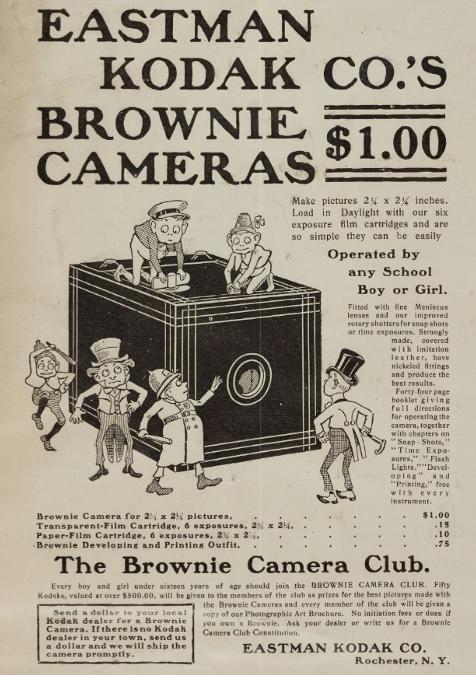
When Coca-Cola showed up in 1886 and Kodak put the $1 Brownie camera on shelves in 1900, the newspaper ads were refreshing in how blunt they were. "Introducing." "The New.” Here's a thing and here's why you want it.
Then there's the Ford Model A. After Ford ended the Model T, it kept the next car under wraps for months. When the Model A was finally "unveiled" in December 1927, Ford reported that roughly 10 million people came to see it in the first 36 hours. That's about one in every twelve Americans at the time, lining up at showrooms to look at a car.
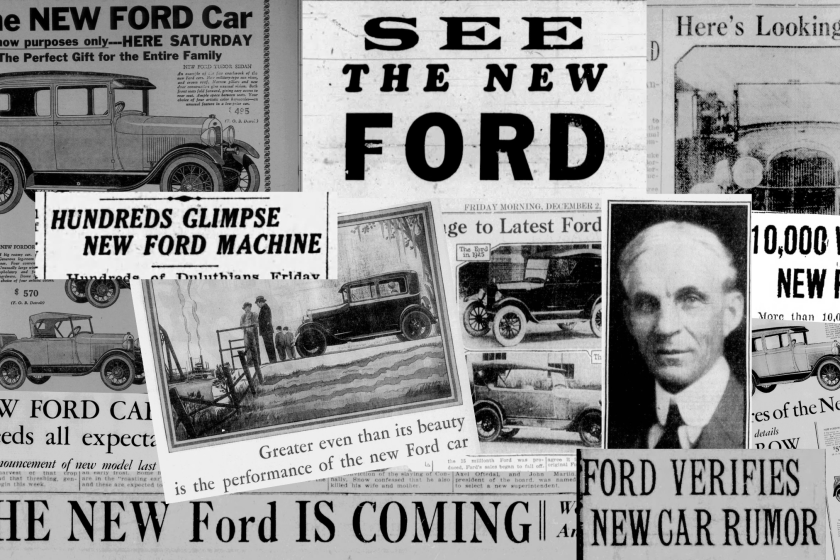
By our modern definition, that was a launch as we once knew it: massive, coordinated, and built on anticipation as a core principle.
Launch meant "start something" for 300 years. And the different products, businesses, and yes, still ships, were exciting in their own right. But the word itself didn’t inspire. But we only have to wait; flash forward to the 1950s and '60s, when modern consumer marketing and advertising saw an opportunity to take the word beyond standard vocabulary.
There’s no better marketing tool than collective public imagination. After Sputnik in 1957, “launch” had sailed far beyond its seaward origins. “Launch” had transformed, as we all did, towards what was now possible. How could anything go back to how it was, when launching became a famous countdown and a pillar of fire up into the sky, and beyond to worlds only dreamed of. Now the small punchy word was a shorthand for grand, evocative, explosive, and groundbreaking.
Marketing, never one to pass up a great metaphor, took the rocket and flew.
And, like most advancement in tech, this next part goes out to Steve Jobs.
In January 1984, Apple ran its "1984" commercial during the Super Bowl, then unveiled the Macintosh on stage two days later. The press (and Apple's own marketing team) called the whole production the Macintosh "launch," and set the template in stone for every Silicon Valley product event since: the countdown, the stage, and the spectacle.
Others scrambled to fall in behind, for better and for worse. In April 1985, Coca-Cola planned New Coke as a massive "product launch," complete with a star-studded press conference at Lincoln Center. It also gave us the most famous relaunch in history: the original formula came back as Coca-Cola Classic 79 days later.
And in 1995, Microsoft spent a reported $300 million turning Windows 95 into a global cultural event. It licensed the Rolling Stones' "Start Me Up" and lit up the Empire State Building. By then, "launch" was needed no introduction, and declared itself across every headline and press release.
Three companies with three very different outcomes, that one little word covering them all.
Today, a launch is… a new feature. Sometimes you even get a new toggle.
That's not a complaint (okay, maybe a little). But shipping got faster. Much faster. In our State of Product Launches research, 75% of marketers told us they're shipping faster than they were a year ago. Only 7% said their launch process keeps up.
Which raises a question the rocket metaphor is no longer able to answer: what does a launch mean when the sky is already full? When every company is counting down every week, who’s going to bother looking up?
If the history of this word tells us anything, it's that "launch" bends to whatever we need it to mean. So here are a few futures, borrowing from where the word came from and where our most recent breakthroughs are headed.
Not every release needs to clear the atmosphere. Some just need something underneath them to catch the people who'd actually care. More of a safety net than a big to-do.
One big ship carrying a lot of cargo. Instead of announcing every feature on its own, you load the related ones onto a single voyage with one story. (45% of the teams we surveyed already batch customer updates this way.)
For the drowning PMM, just trying to stay above water. You know who you are.
When you look through a telescope, you're seeing light that left its source a long time ago. A telescopic launch is built to be judged the same way: by how far it travels and how long it lasts, not by how bright it was on day one.
Scientists are finding ways to break down PFAS, the "forever chemicals" that won't go away on their own. And our digital products aren’t exempt, holding onto old features, stale messaging, and launch debt nobody cleaned up. A breaker is the launch that retires something on purpose and tells customers why.
Personalized mRNA cancer vaccines are the opposite of a mass launch: each one is designed for a single patient. But they only work because they're built on a shared platform everyone agreed on first. A plural launch halts hand-crafting tiny launches for tiny features. Agree on one bigger story for a bigger rollout, then personalize how each customer meets it.
We've come a long way from the ocean. But with so many rockets going up, a lot of us are right back where we started: in the water, trying not to drown.
But if there’s one thing everyone loves to say, it’s that time is a circle. The oldest meaning of launch is a spear leaving your hand. And nobody in all of spear history cared about the throw. What matters is that the spear hits.
For the last 40 years, product marketing has been in the throwing business. They’ve inherited the language of the rocket with the stage, the countdown, and the spectacle. But the rocket, although impressive, isn’t what it used to be. When the atmosphere is this crowded, the throw comes down to who it reaches, and whether they do anything with what they’ve caught.
Launching is great for ships and rockets. Now is the time for product people to expand our collective vocabulary, and focus on sticking the landing.
Product Adoption
We say "launch" probably 40 times a day. Launch plan, launch tier, launch calendar, soft launch, relaunch, launch time, "is this a launch or just a release?”. It’s a part of the vocabulary, like rugs or drapes. But where does it come from?
It turns out the history of "launch" is a pretty good map of how product marketing got to where it is, and holds a hint about where it needs to go next.
Launch comes from the Late Latin lanceare: to wield a lance, or to throw a spear. It was built on lancea, the light spear itself. So before it was anything else, launch was a word about movement. Object in hand, then object in air.
From there it leapt through Old French lancier and Norman French lancher, both meaning to hurl or fling. English “borrowed” it in the Middle Ages, and took it to a poetic extreme on the water: launching a ship. A hull that had only ever sat on land slid down the slipways and, hopefully, floated.
Then “launch” started drifting inland. By 1649, writers were using "launch" to mean setting something, anything, going: there’s a grumpy royalist text complaining of efforts to "launch presbytery in England." Skip ahead and, by 1913, Webster's dictionary, everyone’s favorite essay assistant, listed launching as two definitions: "a son in the world" and launching "a business project or enterprise."
Still, although an immense word, it implied a quiet trajectory. Spears, ships, and the occasional enterprise where you push the something away from yourself and then watch where it goes.
Some of the biggest product moments in history didn't call themselves launches at all. Before the term, a market was considered more of a polite garden party than a space race.
When Coca-Cola showed up in 1886 and Kodak put the $1 Brownie camera on shelves in 1900, the newspaper ads were refreshing in how blunt they were. "Introducing." "The New.” Here's a thing and here's why you want it.
Then there's the Ford Model A. After Ford ended the Model T, it kept the next car under wraps for months. When the Model A was finally "unveiled" in December 1927, Ford reported that roughly 10 million people came to see it in the first 36 hours. That's about one in every twelve Americans at the time, lining up at showrooms to look at a car.
By our modern definition, that was a launch as we once knew it: massive, coordinated, and built on anticipation as a core principle.
Launch meant "start something" for 300 years. And the different products, businesses, and yes, still ships, were exciting in their own right. But the word itself didn’t inspire. But we only have to wait; flash forward to the 1950s and '60s, when modern consumer marketing and advertising saw an opportunity to take the word beyond standard vocabulary.
There’s no better marketing tool than collective public imagination. After Sputnik in 1957, “launch” had sailed far beyond its seaward origins. “Launch” had transformed, as we all did, towards what was now possible. How could anything go back to how it was, when launching became a famous countdown and a pillar of fire up into the sky, and beyond to worlds only dreamed of. Now the small punchy word was a shorthand for grand, evocative, explosive, and groundbreaking.
Marketing, never one to pass up a great metaphor, took the rocket and flew.
And, like most advancement in tech, this next part goes out to Steve Jobs.
In January 1984, Apple ran its "1984" commercial during the Super Bowl, then unveiled the Macintosh on stage two days later. The press (and Apple's own marketing team) called the whole production the Macintosh "launch," and set the template in stone for every Silicon Valley product event since: the countdown, the stage, and the spectacle.
Others scrambled to fall in behind, for better and for worse. In April 1985, Coca-Cola planned New Coke as a massive "product launch," complete with a star-studded press conference at Lincoln Center. It also gave us the most famous relaunch in history: the original formula came back as Coca-Cola Classic 79 days later.
And in 1995, Microsoft spent a reported $300 million turning Windows 95 into a global cultural event. It licensed the Rolling Stones' "Start Me Up" and lit up the Empire State Building. By then, "launch" was needed no introduction, and declared itself across every headline and press release.
Three companies with three very different outcomes, that one little word covering them all.
Today, a launch is… a new feature. Sometimes you even get a new toggle.
That's not a complaint (okay, maybe a little). But shipping got faster. Much faster. In our State of Product Launches research, 75% of marketers told us they're shipping faster than they were a year ago. Only 7% said their launch process keeps up.
Which raises a question the rocket metaphor is no longer able to answer: what does a launch mean when the sky is already full? When every company is counting down every week, who’s going to bother looking up?
If the history of this word tells us anything, it's that "launch" bends to whatever we need it to mean. So here are a few futures, borrowing from where the word came from and where our most recent breakthroughs are headed.
Not every release needs to clear the atmosphere. Some just need something underneath them to catch the people who'd actually care. More of a safety net than a big to-do.
One big ship carrying a lot of cargo. Instead of announcing every feature on its own, you load the related ones onto a single voyage with one story. (45% of the teams we surveyed already batch customer updates this way.)
For the drowning PMM, just trying to stay above water. You know who you are.
When you look through a telescope, you're seeing light that left its source a long time ago. A telescopic launch is built to be judged the same way: by how far it travels and how long it lasts, not by how bright it was on day one.
Scientists are finding ways to break down PFAS, the "forever chemicals" that won't go away on their own. And our digital products aren’t exempt, holding onto old features, stale messaging, and launch debt nobody cleaned up. A breaker is the launch that retires something on purpose and tells customers why.
Personalized mRNA cancer vaccines are the opposite of a mass launch: each one is designed for a single patient. But they only work because they're built on a shared platform everyone agreed on first. A plural launch halts hand-crafting tiny launches for tiny features. Agree on one bigger story for a bigger rollout, then personalize how each customer meets it.
We've come a long way from the ocean. But with so many rockets going up, a lot of us are right back where we started: in the water, trying not to drown.
But if there’s one thing everyone loves to say, it’s that time is a circle. The oldest meaning of launch is a spear leaving your hand. And nobody in all of spear history cared about the throw. What matters is that the spear hits.
For the last 40 years, product marketing has been in the throwing business. They’ve inherited the language of the rocket with the stage, the countdown, and the spectacle. But the rocket, although impressive, isn’t what it used to be. When the atmosphere is this crowded, the throw comes down to who it reaches, and whether they do anything with what they’ve caught.
Launching is great for ships and rockets. Now is the time for product people to expand our collective vocabulary, and focus on sticking the landing.

Sign up for Quickcues and get our monthly updates!