

Circus, Speero’s conference for product, engineering and experimentation leaders, rolled into Austin in October and pitched its tent at a bar I consider my backyard. I don’t know about you, but when the circus comes to town, I have no choice but to attend. So I grabbed a notebook and wandered over.
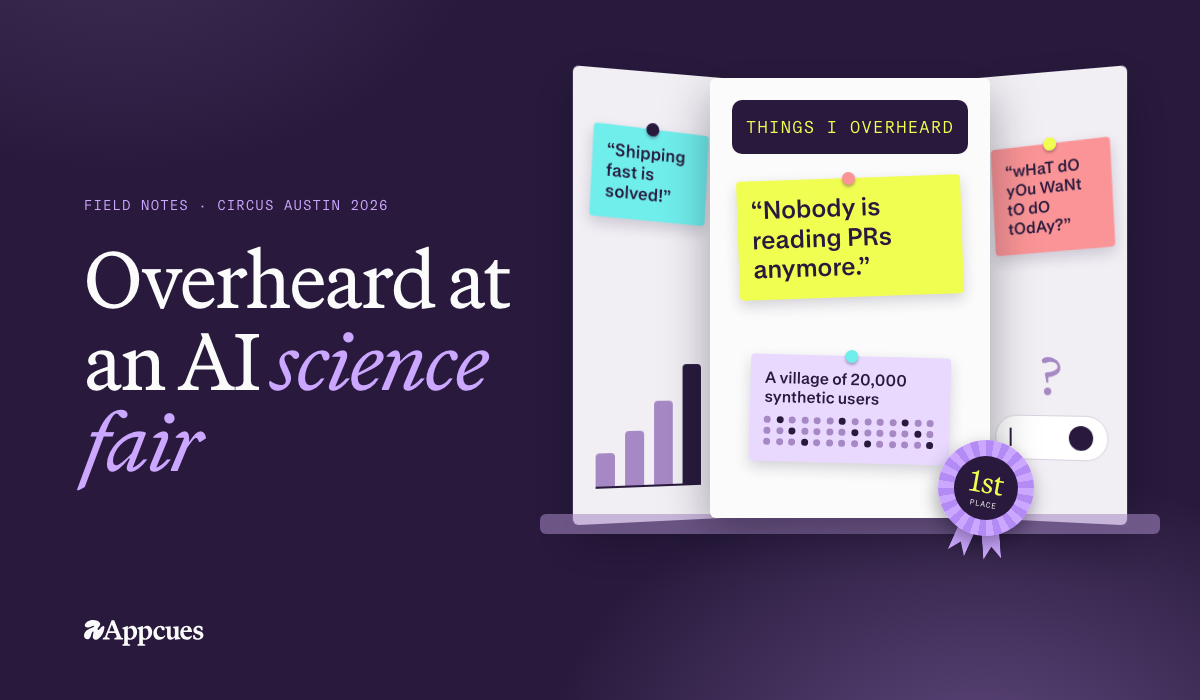
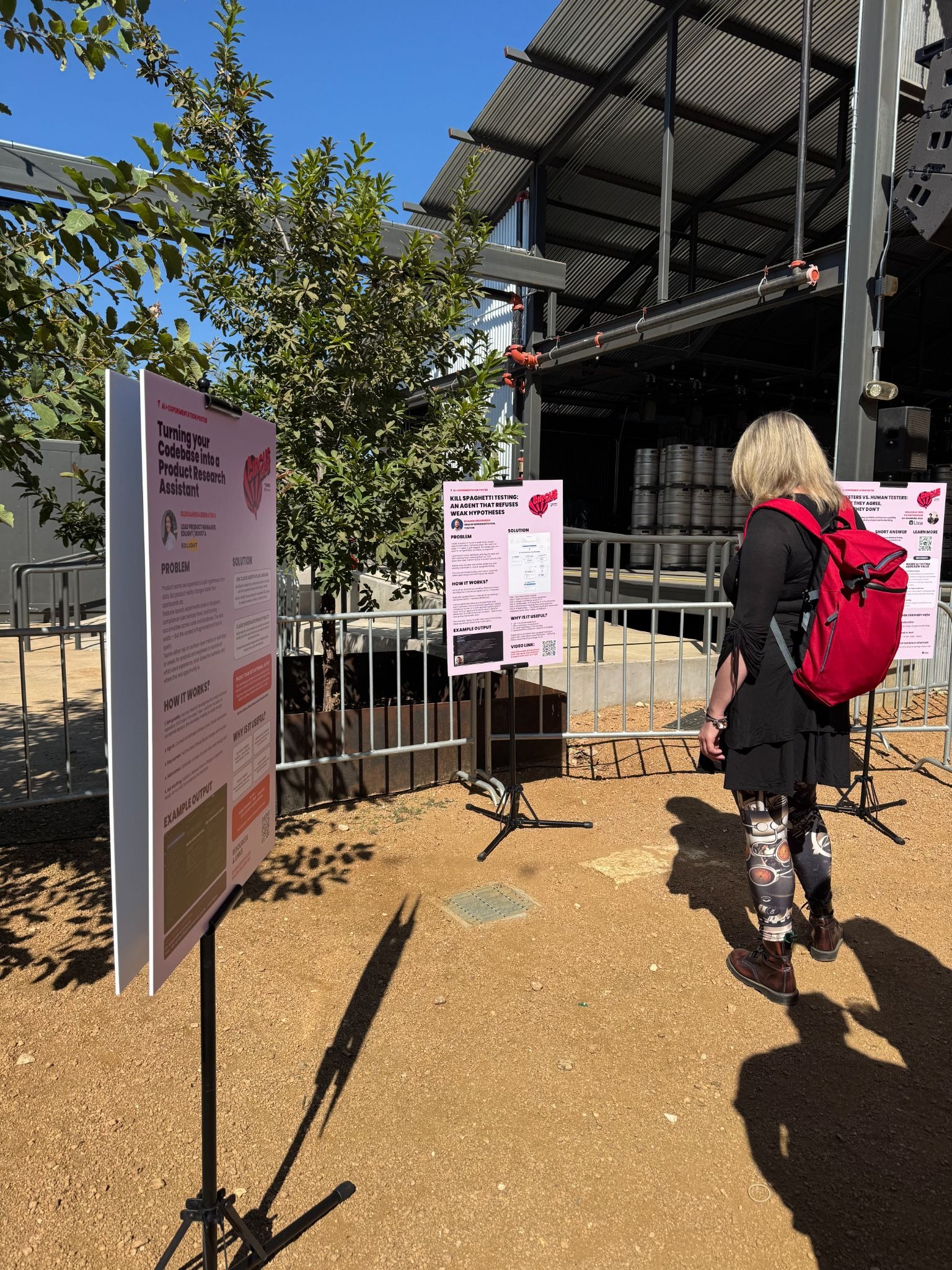
Picture a science fair where the baking soda volcanoes have been traded for tri-fold boards about autonomous agents. Here are the most intriguing things I heard between sessions, at the bar, and occasionally in line for the bathroom.
If the day had a chorus, this was it. Speakers exclaimed about shipping velocity throughout the Circus and brought McKinsey and Atlassian research as backup. The verses went something like this:
It sounded awfully familiar. When we surveyed 60 PMMs for our State of Product Launches report, 75% said they’re shipping faster than last year, and only 7% (!!) said their launch process is keeping up.
Right behind the chorus came the bridge: “The hard part now is deciding what to build, and what outcomes to tie things to.” The engine got a turbo upgrade while the steering wheel stayed the same.
The elephant, hippo, and full zoo at every table was simply: why are teams shipping these AI features in the first place?
“Some go totally unused by customers, and some just don’t work.”
The answers I overheard were rarely “because customers asked for it.” People mentioned the “AI productivity paradox” constantly, along with a related worry: “AI usage itself is becoming a goal.” Somewhere along the way, a lot of product roadmaps started taking orders from the boardroom. A few folks from big companies said feedback on their AI chatbots had soured from “I’m excited about this” to “you’re shoving unnecessary AI down my throat.”
As a marketer, I recognized the pattern right away. We’ve all launched a campaign because a competitor did, or because a channel was hot that quarter, and then watched it fizzle because nobody stopped to ask who it was for. The marketing version costs a few weeks and some budget. The product version gets baked into the day to day customer experience, so customers have to step around it every time they log in.
So what’s the fix? The answer that kept coming up is basic but with so many organizations losing the plot entirely, teams should slap sticky notes on their monitors to remember: define the happy path and what a happy customer looks like before you ship.
The advice sounds obvious, yet it clearly isn’t happening. Defining a happy customer forces you to answer the “why” question before a single line of code ships. If the only happy person you can picture is the exec presenting the launch, that feature probably belongs in the “maybe later” pile.
Over and over, I heard about companies trading their menus and traditional navigation for agentic interfaces. Some have great reasons: a simpler user journey, faster onboarding and more power in every user’s hands. In reality, the theme I kept hearing was “active users are getting lost in the sauce.”
Plenty of these interfaces are still half-baked, and the push often comes from higher up the org chart than the customer base. So a task that used to take two clicks now starts with a question typed into the abyss. The agent buffers for a few minutes (or more), then drops you somewhere farther from where you wanted to go. The people who knew exactly where to click lost their navigation and the workflows they’d built their days around.
A blank prompt is an empty lot. What people actually want is a home base with their name on the mailbox and their favorite things where they left them.
We have all this AI power, so why is everyone getting dropped onto the same generic agentic screen? After listening in on these product conversations, my bet is that the next big interface trend will be personalization. Each customer gets a home base built around their role and their habits, plus the next thing they need, so nobody has to type their life story into a prompt box first.
Want to split a room of experimentation nerds down the middle? Bring up synthetic users. Tools like Squoosh and Synthetic Users build “villages” of about 20,000 AI shoppers that click through your product or site, each one modeled on your ICP and analytics and calibrated against past tests. Westworld, but for A/B tests.
The appeal is easy to see. Product teams want to test way more variants than their live traffic allows (in-app messaging included) without waiting weeks for significance.
My brain lit up at that part. B2B website tests often run on painfully small samples. A demo page might need months to reach significance, and by then the season, the campaign and half the copy have changed. A village of synthetic visitors could help me weed out the obvious losers before I spend precious real traffic on them.
Then someone described using villages to shape product direction, and my enthusiasm abruptly curdled. Deciding what a company builds based on simulated customers feels like planning a dinner party around guests you made up. Surely they’ll LOVE whatever you serve, because you designed their taste buds. Real customers will tell you about problems you didn’t think to model, and that’s the point of talking to them.
In theory, I think I am pro-keeping the village for crowd work: like stress-testing pages, ranking headlines, and sorting through variants when the real crowd is too small. But the big questions about what to build next still belong to actual humans on actual calls. Whether a simulated customer can ever earn that seat is a debate I’d bet gets louder in 2027.
Oh, is it?? I heard this quote from a data scientist at Home Depot, and spent some time noodling on it.
Marketers chase the truth too. When I run a growth experiment, I want a clean, statistically significant answer as much as anyone with “data” in their title. The difference is that the question always comes with a price tag attached. Did this page drive more demo requests? Did this email move pipeline? A winning test should show up in revenue eventually, or it’s back to the whiteboard.
At an experimentation conference, I expected to hear that same revenue-impact goal setting everywhere. Instead, most of the product folks I talked to described tests that ended at the answer itself. Which variant did users prefer? Did the feature work? The revenue question lived somewhere further down the hall, in another team’s dashboard.
My best guess for this friction is organizational distance from revenue. A marketing test sits only a few steps from the cash register, so the line from experiment to dollars is short and easier to draw. Product tests often happen deep in the [metaphorical, we’re talking about tech] store, in the aisles where people decide whether to come back next month. That payoff takes longer to show up and is harder to pin on any single test. “Telling the truth” might be how product teams protect their tests from the opposite problem: pressure to prove that leadership’s AI bets are already paying off.
Still, it left me wondering who connects these experiment results to business outcomes. Product experiments answer “what did users do, and why?” Marketing experiments answer “did this drive revenue?” Both answers matter, but someone has to connect them. Otherwise, teams end up with accurate test results and no clear view of whether any of them helped the company grow.
My prediction: over the next year, winning teams will build for customers instead of the exec slide, and their platforms will get radically more customized.
Generic agentic screens and one-size-fits-all chatbots will give way to experiences shaped around each user’s role, habits, and next step. The AI power is already here. The next phase is aiming it at the person who’s logged in.
Product Development
TL;DR
Circus, Speero’s conference for product, engineering and experimentation leaders, rolled into Austin in October and pitched its tent at a bar I consider my backyard. I don’t know about you, but when the circus comes to town, I have no choice but to attend. So I grabbed a notebook and wandered over.
Picture a science fair where the baking soda volcanoes have been traded for tri-fold boards about autonomous agents. Here are the most intriguing things I heard between sessions, at the bar, and occasionally in line for the bathroom.
If the day had a chorus, this was it. Speakers exclaimed about shipping velocity throughout the Circus and brought McKinsey and Atlassian research as backup. The verses went something like this:
It sounded awfully familiar. When we surveyed 60 PMMs for our State of Product Launches report, 75% said they’re shipping faster than last year, and only 7% (!!) said their launch process is keeping up.
Right behind the chorus came the bridge: “The hard part now is deciding what to build, and what outcomes to tie things to.” The engine got a turbo upgrade while the steering wheel stayed the same.
The elephant, hippo, and full zoo at every table was simply: why are teams shipping these AI features in the first place?
“Some go totally unused by customers, and some just don’t work.”
The answers I overheard were rarely “because customers asked for it.” People mentioned the “AI productivity paradox” constantly, along with a related worry: “AI usage itself is becoming a goal.” Somewhere along the way, a lot of product roadmaps started taking orders from the boardroom. A few folks from big companies said feedback on their AI chatbots had soured from “I’m excited about this” to “you’re shoving unnecessary AI down my throat.”
As a marketer, I recognized the pattern right away. We’ve all launched a campaign because a competitor did, or because a channel was hot that quarter, and then watched it fizzle because nobody stopped to ask who it was for. The marketing version costs a few weeks and some budget. The product version gets baked into the day to day customer experience, so customers have to step around it every time they log in.
So what’s the fix? The answer that kept coming up is basic but with so many organizations losing the plot entirely, teams should slap sticky notes on their monitors to remember: define the happy path and what a happy customer looks like before you ship.
The advice sounds obvious, yet it clearly isn’t happening. Defining a happy customer forces you to answer the “why” question before a single line of code ships. If the only happy person you can picture is the exec presenting the launch, that feature probably belongs in the “maybe later” pile.
Over and over, I heard about companies trading their menus and traditional navigation for agentic interfaces. Some have great reasons: a simpler user journey, faster onboarding and more power in every user’s hands. In reality, the theme I kept hearing was “active users are getting lost in the sauce.”
Plenty of these interfaces are still half-baked, and the push often comes from higher up the org chart than the customer base. So a task that used to take two clicks now starts with a question typed into the abyss. The agent buffers for a few minutes (or more), then drops you somewhere farther from where you wanted to go. The people who knew exactly where to click lost their navigation and the workflows they’d built their days around.
A blank prompt is an empty lot. What people actually want is a home base with their name on the mailbox and their favorite things where they left them.
We have all this AI power, so why is everyone getting dropped onto the same generic agentic screen? After listening in on these product conversations, my bet is that the next big interface trend will be personalization. Each customer gets a home base built around their role and their habits, plus the next thing they need, so nobody has to type their life story into a prompt box first.
Want to split a room of experimentation nerds down the middle? Bring up synthetic users. Tools like Squoosh and Synthetic Users build “villages” of about 20,000 AI shoppers that click through your product or site, each one modeled on your ICP and analytics and calibrated against past tests. Westworld, but for A/B tests.
The appeal is easy to see. Product teams want to test way more variants than their live traffic allows (in-app messaging included) without waiting weeks for significance.
My brain lit up at that part. B2B website tests often run on painfully small samples. A demo page might need months to reach significance, and by then the season, the campaign and half the copy have changed. A village of synthetic visitors could help me weed out the obvious losers before I spend precious real traffic on them.
Then someone described using villages to shape product direction, and my enthusiasm abruptly curdled. Deciding what a company builds based on simulated customers feels like planning a dinner party around guests you made up. Surely they’ll LOVE whatever you serve, because you designed their taste buds. Real customers will tell you about problems you didn’t think to model, and that’s the point of talking to them.
In theory, I think I am pro-keeping the village for crowd work: like stress-testing pages, ranking headlines, and sorting through variants when the real crowd is too small. But the big questions about what to build next still belong to actual humans on actual calls. Whether a simulated customer can ever earn that seat is a debate I’d bet gets louder in 2027.
Oh, is it?? I heard this quote from a data scientist at Home Depot, and spent some time noodling on it.
Marketers chase the truth too. When I run a growth experiment, I want a clean, statistically significant answer as much as anyone with “data” in their title. The difference is that the question always comes with a price tag attached. Did this page drive more demo requests? Did this email move pipeline? A winning test should show up in revenue eventually, or it’s back to the whiteboard.
At an experimentation conference, I expected to hear that same revenue-impact goal setting everywhere. Instead, most of the product folks I talked to described tests that ended at the answer itself. Which variant did users prefer? Did the feature work? The revenue question lived somewhere further down the hall, in another team’s dashboard.
My best guess for this friction is organizational distance from revenue. A marketing test sits only a few steps from the cash register, so the line from experiment to dollars is short and easier to draw. Product tests often happen deep in the [metaphorical, we’re talking about tech] store, in the aisles where people decide whether to come back next month. That payoff takes longer to show up and is harder to pin on any single test. “Telling the truth” might be how product teams protect their tests from the opposite problem: pressure to prove that leadership’s AI bets are already paying off.
Still, it left me wondering who connects these experiment results to business outcomes. Product experiments answer “what did users do, and why?” Marketing experiments answer “did this drive revenue?” Both answers matter, but someone has to connect them. Otherwise, teams end up with accurate test results and no clear view of whether any of them helped the company grow.
My prediction: over the next year, winning teams will build for customers instead of the exec slide, and their platforms will get radically more customized.
Generic agentic screens and one-size-fits-all chatbots will give way to experiences shaped around each user’s role, habits, and next step. The AI power is already here. The next phase is aiming it at the person who’s logged in.

Sign up for Quickcues and get our monthly updates!